

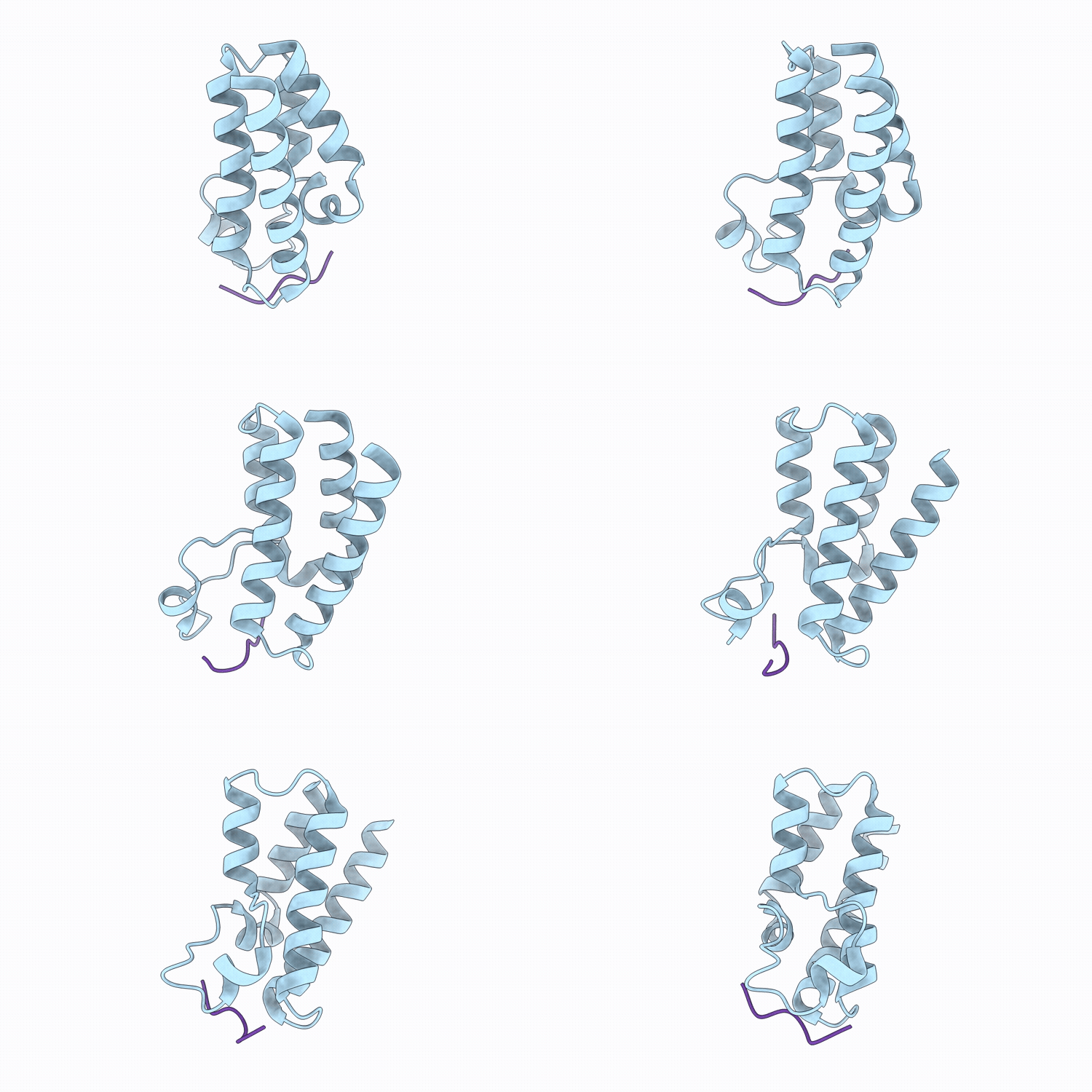
23AG image
Deposition Date 2026-01-29
Release Date 2026-08-12
Last Version Date 2026-08-12
Entry Detail
PDB ID:
23AG
Keywords:
Title:
Crystal structure of BAZ2A in complex with an S-HDAg_K72ac peptide
Biological Source:
Source Organism(s):
Expression System(s):
Method Details:
Experimental Method:
Resolution:
1.61 Å
R-Value Free:
0.20
R-Value Work:
0.18
R-Value Observed:
0.18
Space Group:
P 31 2 1

Macromolecular Entities
Polymer Type:polypeptide(L)
Molecule:Bromodomain adjacent to zinc
Gene (Uniprot):BAZ2A
Chain IDs:A
Chain Length:0
Number of Molecules:1
Biological Source:Homo sapiens
Polymer Type:polypeptide(L)
Molecule:Small delta antigen
Chain IDs:B
Chain Length:0
Number of Molecules:1
Biological Source:Hepatitis delta virus
Modified Residue
Compound ID Chain ID Parent Comp ID Details 2D Image
ALY B LYS modified residue
Primary Citation
Structural insights into histone mimicry by the small hepatitis delta antigen.
J.Biol.Chem. 302 113252 113252 (2026)
PMID: 42285512 DOI: 10.1016/j.jbc.2026.113252

Abstact

Hepatitis delta virus (HDV) is a satellite RNA virus that requires hepatitis B virus (HBV) for propagation but replicates its genome independently in the nucleus. The small form of the hepatitis delta antigen (S-HDAg) is essential for replication and is regulated by post-translational modifications. Acetylation at lysine 72 (K72ac) enables S-HDAg to interact with the bromodomain (BRD) of the host chromatin remodeler bromodomain adjacent to zinc finger domain protein 2B (BAZ2B) to promote viral replication. However, the structural basis for this interaction has remained elusive. Here, we provide structural and biophysical insights into this interaction through quantitative binding assays and X-ray crystallography. Isothermal titration calorimetry revealed that BRDs of BAZ2B and its close homolog BAZ2A bind to the viral peptide weakly, with BAZ2A-BRD exhibiting a modestly higher affinity. The crystal structure of BAZ2A-BRD in complex with the S-HDAg-K72ac peptide demonstrates an inverted binding orientation relative to canonical histone ligands, rationalizing the weak interaction. Mutagenesis studies confirmed the critical binding interface both in vitro and in cells. These findings elucidate the molecular mechanism by which HDV co-opts host BAZ2 bromodomains via a unique, weak-affinity interaction, providing a structural framework for understanding viral replication.

Legend

Protein

Chemical

Disease

Primary Citation of related structures
Feedback Form
Name
Email
Institute
Feedback