

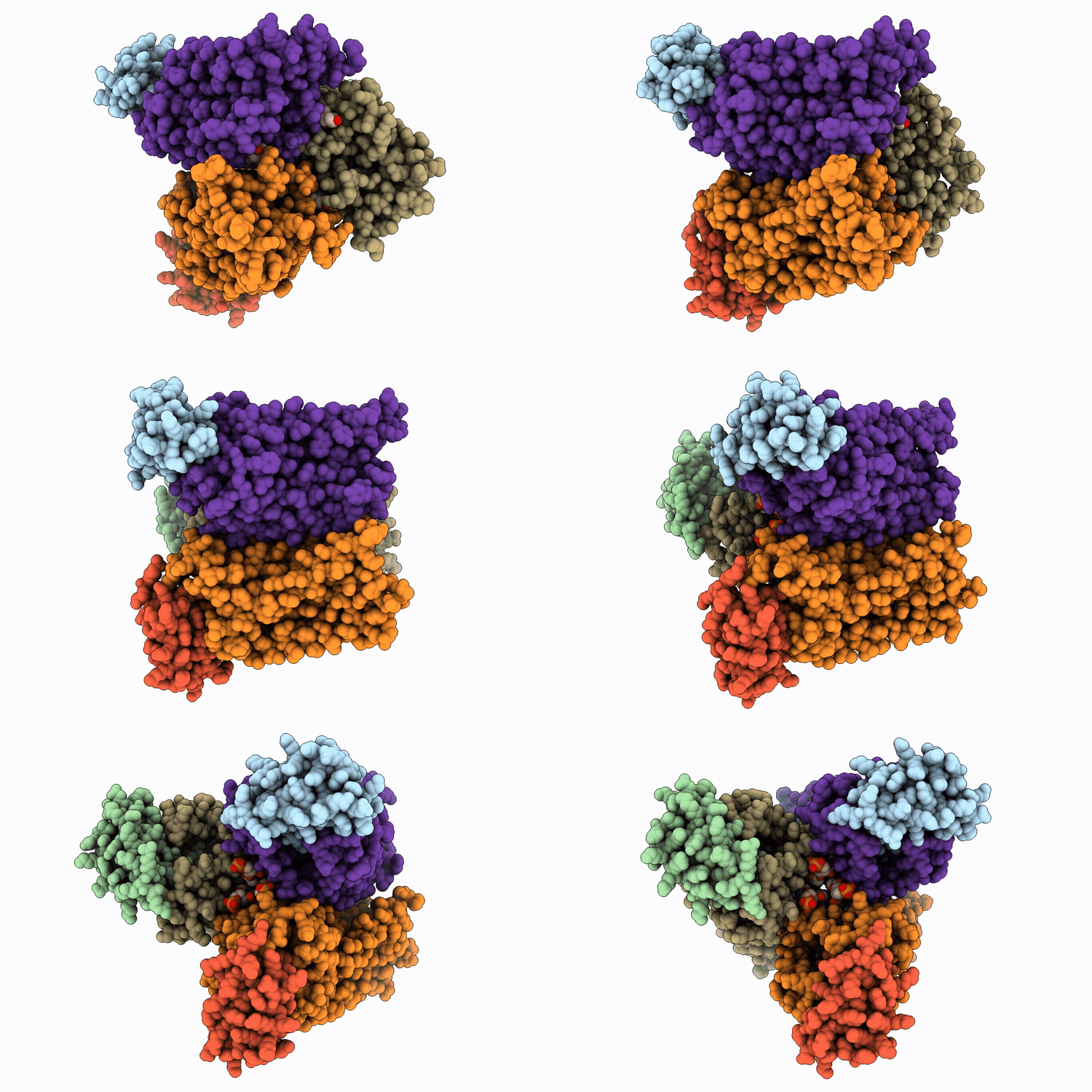
22XC image
Deposition Date 2026-01-26
Release Date 2026-04-22
Last Version Date 2026-06-03
Entry Detail
PDB ID:
22XC
Title:
Structure of CXCR4 in complex with a de-novo designed mini-protein antagonist
Biological Source:
Source Organism(s):
Method Details:
Experimental Method:
Resolution:
3.28 Å
Aggregation State:
PARTICLE
Reconstruction Method:
SINGLE PARTICLE
Macromolecular Entities
Protein Blast
Polymer Type:polypeptide(L)
Molecule:dCX001 binder antagonist
Chain IDs:A, B, D
Chain Length:87
Number of Molecules:3
Biological Source:synthetic construct
Structures with similar UniProt ID
Protein Blast
Polymer Type:polypeptide(L)
Molecule:C-X-C chemokine receptor type
Gene (Uniprot):CXCR4
Chain IDs:C, E (auth: G), F (auth: R)
Chain Length:408
Number of Molecules:3
Biological Source:Homo sapiens
Primary Citation

Abstact

G protein-coupled receptors (GPCRs) play key roles in physiology and are central targets for drug discovery and development(1,2), but the design of protein agonists and antagonists has been challenging as GPCRs are integral membrane proteins and conformationally dynamic(3-6). Here we describe computational de novo design methods and a high-throughput "receptor diversion" microscopy-based screen for generating GPCR binding miniproteins with high affinity, potency and selectivity. We design miniprotein agonists that activate receptors involved in itch and pain, as well as antagonists that inhibit receptors implicated in cancer, metabolic disorders such as diabetes and obesity, and migraine. Cryo-electron microscopy (cryo-EM) structures of five receptor-bound designs are close to the computational design models. A designed chemokine receptor antagonist mobilizes hematopoietic stem and progenitor cells in vivo at a level comparable to a clinically used drug, with fewer adverse effects.

Legend

Protein

Chemical

Disease

Primary Citation of related structures
Feedback Form
Name
Email
Institute
Feedback