

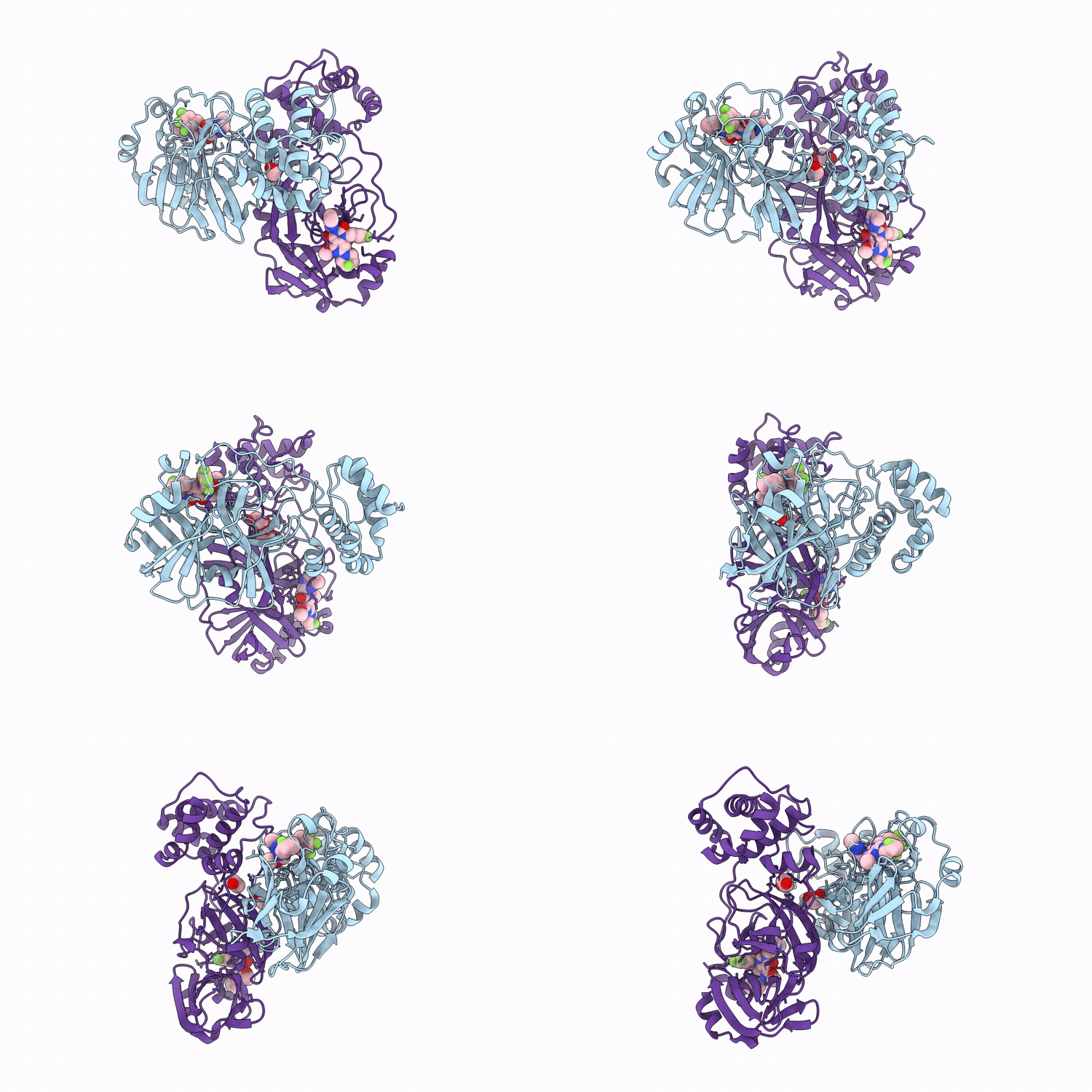
22DR image
Deposition Date 2026-01-07
Release Date 2026-03-25
Last Version Date 2026-03-25
Entry Detail
PDB ID:
22DR
Keywords:
Title:
Crystal structure of SARS-CoV-2 3CL protease in complex with compound 7c
Biological Source:
Expression System(s):
Method Details:
Experimental Method:
Resolution:
1.90 Å
R-Value Free:
0.24
R-Value Work:
0.19
R-Value Observed:
0.20
Space Group:
P 1 21 1

Macromolecular Entities
Structures with similar UniProt ID
Protein Blast
Polymer Type:polypeptide(L)
Molecule:3C-like proteinase
Chain IDs:A, B
Chain Length:308
Number of Molecules:2
Biological Source:Severe acute respiratory syndrome coronavirus 2
Primary Citation
Optimization of pyridopyrimidinedione derivatives as non-covalent SARS-CoV-2 3CL protease inhibitors.
Bioorg. Med. Chem. Lett. 136 130619 130619 (2026)
PMID: 41819156 DOI: 10.1016/j.bmcl.2026.130619

Abstact

COVID-19, an infectious disease caused by SARS-CoV-2, first identified in Wuhan, China, in 2019 and rapidly spread around the world. In response to this worldwide crisis, the research and development of antiviral drugs advanced together with vaccines, and several medications are currently being used for treatment. This study aimed to explore the structure-activity relationships (SAR) of non-covalent inhibitors of the SARS-CoV-2 3CL protease (3CL(pro)) and to develop more potent inhibitors starting from ensitrelvir, a potent non-peptide small-molecule 3CL(pro) inhibitor discovered by Shionogi & Co., Ltd. Although a previously reported dihydrofuran-ring-fused tricyclic compound 1 exhibited high antiviral activity, there were issues with its metabolic stability and solubility. Therefore, we focused on compound 2, which has a pyridopyrimidinedione scaffold, and tried to optimize its structure. Here we report compounds that have improved antiviral activity while maintaining enzyme inhibitory activity and enhanced solubility. In particular, compound 18f demonstrated a balance of potent activity, high solubility, and excellent metabolic stability. Its favorable pharmacokinetics were also confirmed in rat PK tests, suggesting that this compound offers promise as a new therapeutic agent.

Legend

Protein

Chemical

Disease

Primary Citation of related structures
Feedback Form
Name
Email
Institute
Feedback