

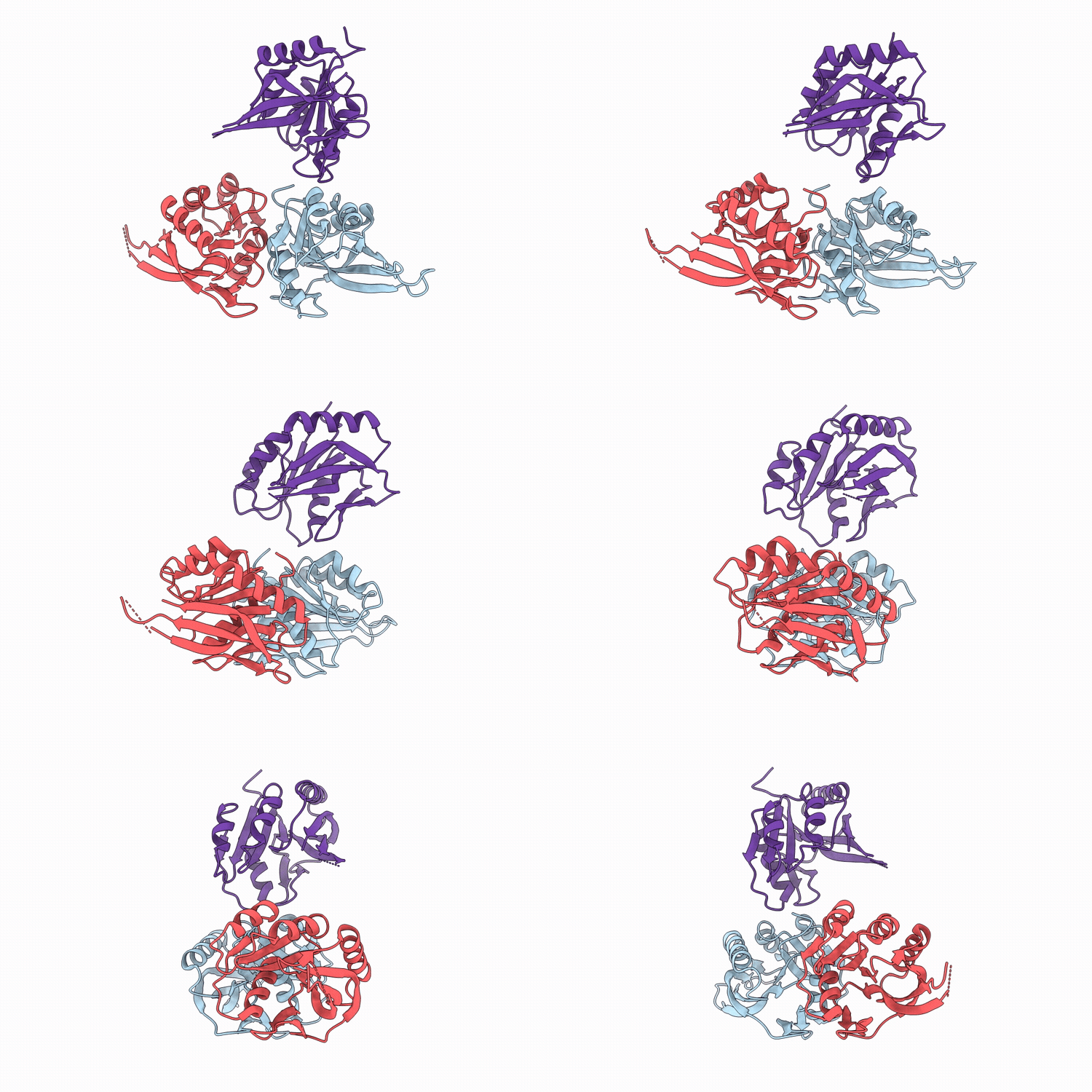
22AO image
Deposition Date 2026-01-05
Release Date 2026-04-22
Last Version Date 2026-04-29
Entry Detail
PDB ID:
22AO
Keywords:
Title:
Crystal structure of Bacillus cereus GmaR in the apo form
Biological Source:
Source Organism(s):
Bacillus cereus (Taxon ID: 1396)
Expression System(s):
Method Details:
Experimental Method:
Resolution:
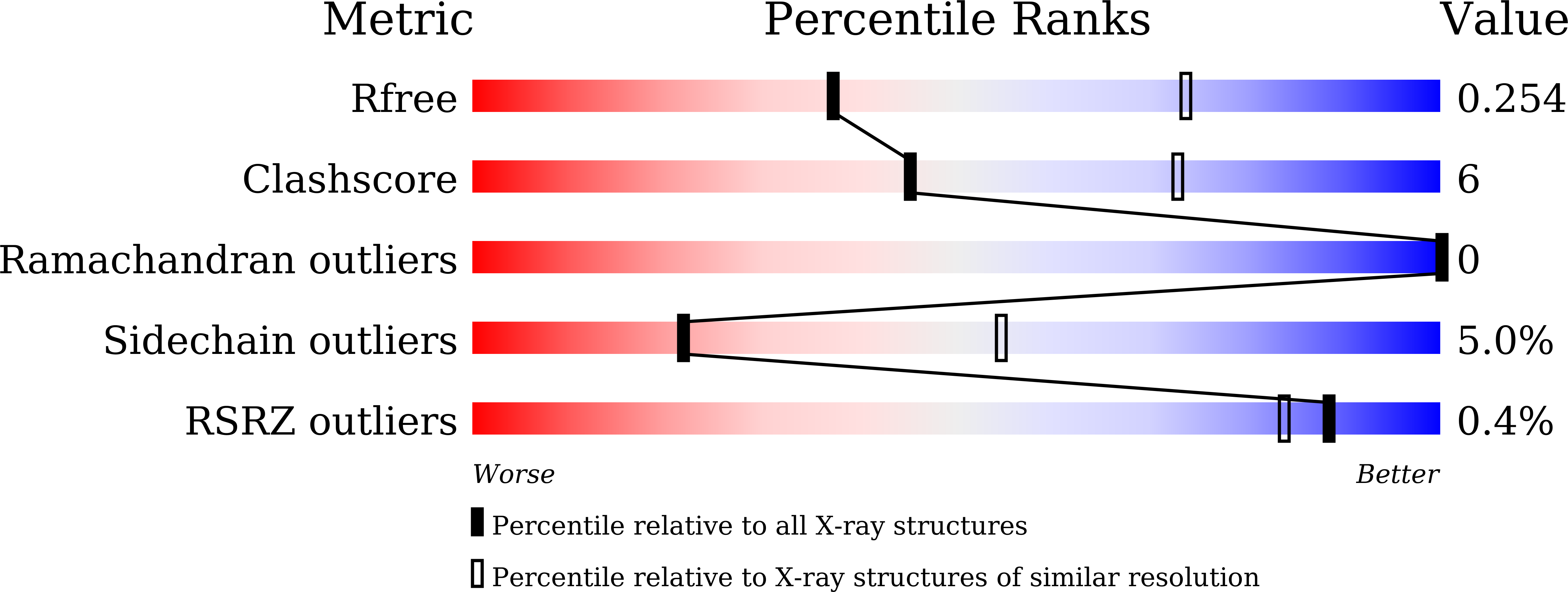
2.80 Å
R-Value Free:
0.25
R-Value Work:
0.20
R-Value Observed:
0.20
Space Group:
P 43 21 2
Macromolecular Entities
Protein Blast
Polymer Type:polypeptide(L)
Molecule:GmaR
Chain IDs:A, B, C
Chain Length:204
Number of Molecules:3
Biological Source:Bacillus cereus
Primary Citation
Bacillus cereus GmaR glycosylates flagellin through a unique structural motif but is uncoupled from MogR regulation.
Int.J.Biol.Macromol. 360 151808 151808 (2026)
PMID: 41937015 DOI: 10.1016/j.ijbiomac.2026.151808

Abstact

GmaR was identified in Listeria monocytogenes as an essential dual-function protein that regulates the MogR-mediated repression of flagellar gene expression and catalyzes the glycosylation of the flagellar protein flagellin. To elucidate the structural and molecular basis of GmaR function, we determined the crystal structure of Bacillus cereus GmaR (bcGmaR) and investigated its glycosyltransferase and regulatory activities through structure-based biochemical and mutational analyses. Unexpectedly, bcGmaR does not interact with MogR and is unlikely to function as a MogR regulator in contrast to L. monocytogenes GmaR. Instead, bcGmaR catalyzes Mg(2+)-dependent O-linked N-acetylglucosamine (GlcNAc) transfer to B. cereus flagellin, substantially increasing its thermostability. The N-terminal glycosyltransferase (GT) domain of bcGmaR adopts a three-layer GT-A type fold with a pocket, which accommodates Mg(2+) and the sugar donor UDP-GlcNAc through the canonical DxD and C-His motifs conserved among GT-A enzymes, as well as a bcGmaR-specific phiHE motif located within a unique beta-hairpin structure. Notably, the phiHE motif is critical for catalysis, potentially by providing the catalytic base. In addition to the GT domain, the tetratricopeptide repeat domain is also required for full enzymatic activity. These findings highlight the functional divergence of GmaRs among bacterial species and underscore their unique catalytic features.

Legend

Protein

Chemical

Disease

Primary Citation of related structures
Feedback Form
Name
Email
Institute
Feedback