

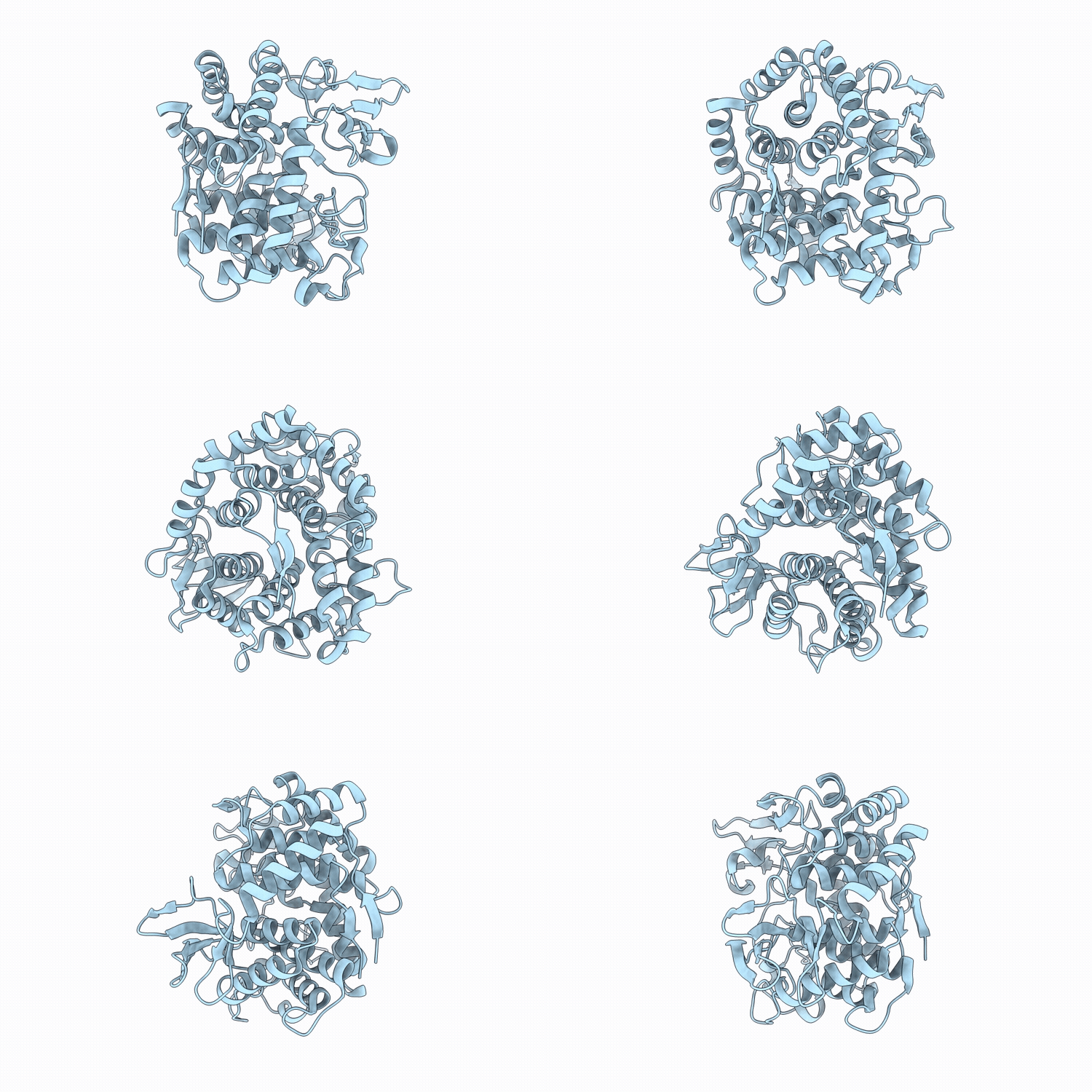
21XQ image
Deposition Date 2026-01-03
Release Date 2026-05-13
Last Version Date 2026-05-20
Entry Detail
PDB ID:
21XQ
Keywords:
Title:
a novel GH8 family endoxylanase BgXyn8A
Biological Source:
Source Organism(s):
Expression System(s):
Method Details:
Experimental Method:
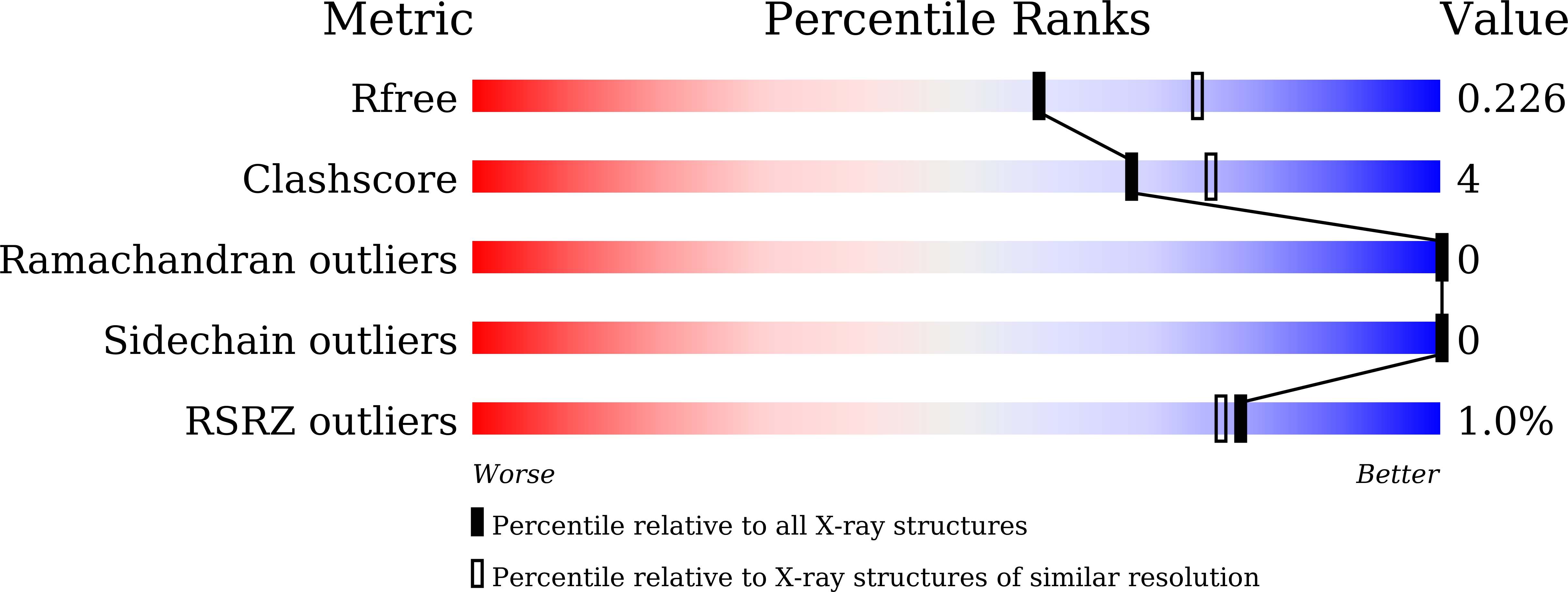
Resolution:
2.20 Å
R-Value Free:
0.22
R-Value Work:
0.19
R-Value Observed:
0.19
Space Group:
P 32 2 1
Macromolecular Entities
Polymer Type:polypeptide(L)
Molecule:Glycosyl hydrolase family 8
Gene (Uniprot):AB447_216495, P8828_09935
Chain IDs:A
Chain Length:402
Number of Molecules:1
Biological Source:Bacillus glycinifermentans
Ligand Molecules
Primary Citation
Biochemical and structural characterization of a novel glycoside hydrolase family 8 endoxylanase with broad-spectrum xylooligosaccharide production.
Bioresour Technol 454 134780 134780 (2026)
PMID: 42086152 DOI: 10.1016/j.biortech.2026.134780

Abstact

Glycoside hydrolase family 8 (GH8) xylanases exhibit substantial diversity in catalytic mode and product distribution, yet the structural basis underlying this functional divergence remains poorly understood. Here, we report the identification and characterization of BgXyn8A, a GH8 xylanase from Bacillus glycinifermentans that exhibits a distinct preference for endo-type cleavage. BgXyn8A hydrolyzes xylan and alkali-pretreated corncob into a broad spectrum of xylooligosaccharides (XOSs) with degrees of polymerization ranging from 2 to 10, without detectable xylose formation. Comparative structural analysis with the exo-biased homolog BiXyn8A demonstrated that differences in product specificity are not governed by catalytic residues but arise from non-catalytic structural features surrounding the substrate-binding cleft. Specifically, three beta-sheet-rich peripheral regions form a rigid substrate-binding cleft that constrains substrate positioning and limits conformational flexibility, thereby favoring internal cleavage and early product release. In addition, a short entrance motif reduces stabilizing interactions with the substrate's reducing end, disfavoring iterative cleavage required for xylose formation. Consistently, transplantation of these features into BiXyn8A reprograms its product spectrum toward longer-chain XOSs while suppressing xylose production. This study extends the current structural understanding of GH8 xylanases and provides a foundation for the rational engineering of enzymes tailored for selective oligosaccharide production.

Legend

Protein

Chemical

Disease

Primary Citation of related structures
Feedback Form
Name
Email
Institute
Feedback