

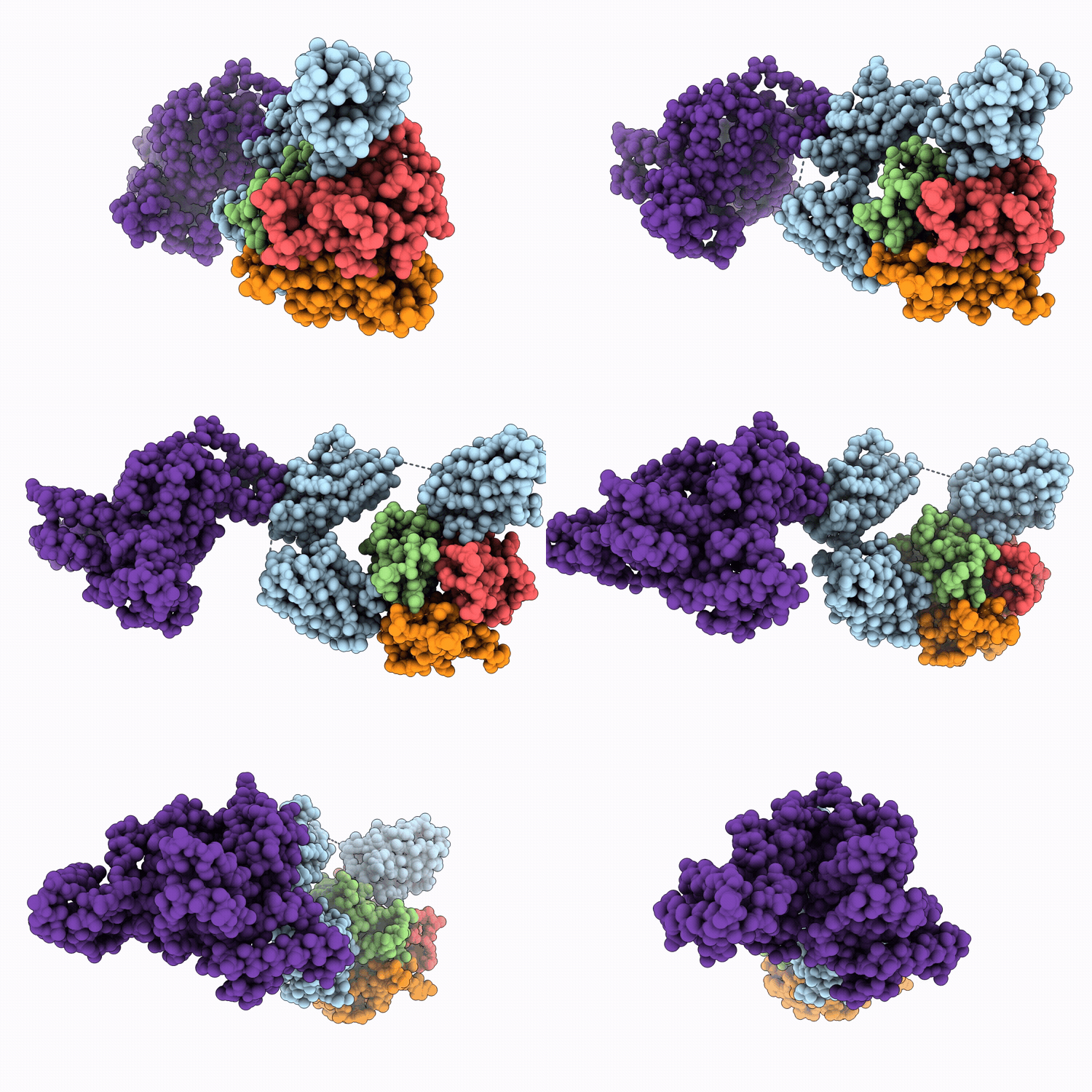
21TV image
Deposition Date 2025-12-26
Release Date 2026-04-29
Last Version Date 2026-04-29
Entry Detail
PDB ID:
21TV
Keywords:
Title:
Cryo-EM structure of the TNF-alpha-Ozoralizumab (OZR)-HSA complex
Biological Source:
Source Organism(s):
Homo sapiens (Taxon ID: 9606)
Expression System(s):
Method Details:
Experimental Method:
Resolution:
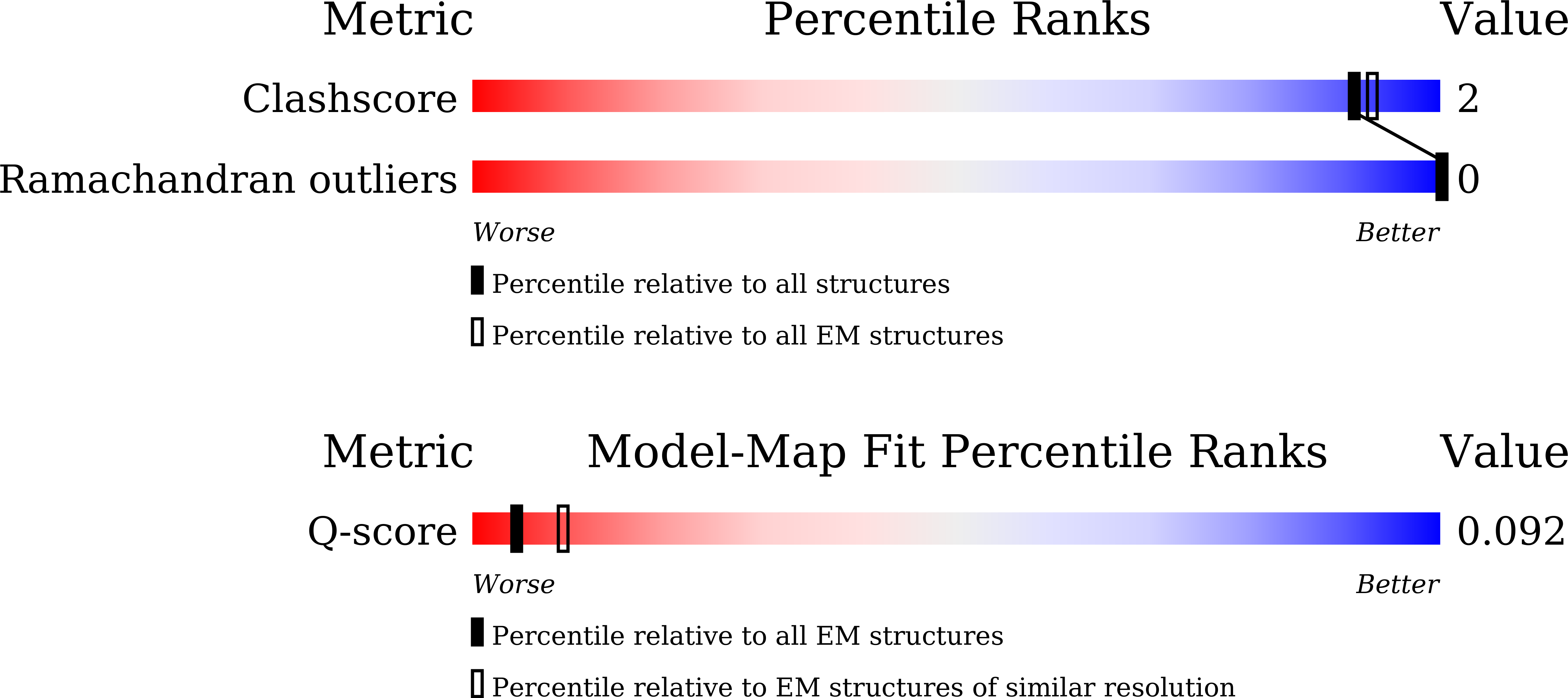
6.19 Å
Aggregation State:
PARTICLE
Reconstruction Method:
SINGLE PARTICLE
Macromolecular Entities
Protein Blast
Polymer Type:polypeptide(L)
Molecule:Ozoralizumab (OZR)
Chain IDs:A
Chain Length:363
Number of Molecules:1
Biological Source:Homo sapiens
Structures with similar UniProt ID
Protein Blast
Polymer Type:polypeptide(L)
Molecule:Tumor necrosis factor
Gene (Uniprot):TNF
Chain IDs:B, C, D
Chain Length:158
Number of Molecules:3
Biological Source:Homo sapiens
Structures with similar UniProt ID
Protein Blast
Polymer Type:polypeptide(L)
Molecule:Serum albumin
Gene (Uniprot):ALB
Chain IDs:E
Chain Length:585
Number of Molecules:1
Biological Source:Homo sapiens
Ligand Molecules
Primary Citation
Cryo-EM elucidates the interaction mechanism of ozoralizumab, a humanized anti-TNF alpha NANOBODY® compound.
Biochem.Biophys.Res.Commun. 816 153572 153572 (2026)
PMID: 41935434 DOI: 10.1016/j.bbrc.2026.153572

Abstact

Ozoralizumab (OZR) is a next-generation TNF inhibitor composed of two identical humanized anti-TNFalpha NANOBODY(R) molecules (TNF30s) recombinantly linked via one humanized anti-human serum albumin (HSA) NANOBODY(R) molecule (ALB8) and two peptide linkers. OZR is designed as a unique format to exert potent inhibitory effects against TNFalpha with long plasma half-life. However, the three-dimensional structure of OZR-TNFalpha-HSA complex has not yet been elucidated, and a complete understanding of its interaction mechanism with TNFalpha is yet to be gained. In this study, we successfully observed the formation of the OZR-TNFalpha-HSA ternary complex by single-particle cryo-electron microscopy. The single-particle analysis revealed that the two TNF30 molecules of OZR simultaneously bind bivalently to TNFalpha in a 1:1-bivalent binding mode, while the ALB8 molecule binds to HSA, forming a ternary complex. Thus, OZR exhibits a binding mode significantly different from that of other IgG-type TNFalpha inhibitors. Furthermore, surface plasmon resonance (SPR) analysis demonstrated that the 1:1-bivalent binding mode confers an exceptionally slow dissociation rate, thereby contributing to the potent TNFalpha-neutralizing activity of OZR. These findings not only lend support to the favorable clinical efficacy of OZR from a structural standpoint but also lay the foundation for the rational design and development of next-generation TNFalpha inhibitors with enhanced and sustained efficacy.

Legend

Protein

Chemical

Disease

Primary Citation of related structures
Feedback Form
Name
Email
Institute
Feedback