

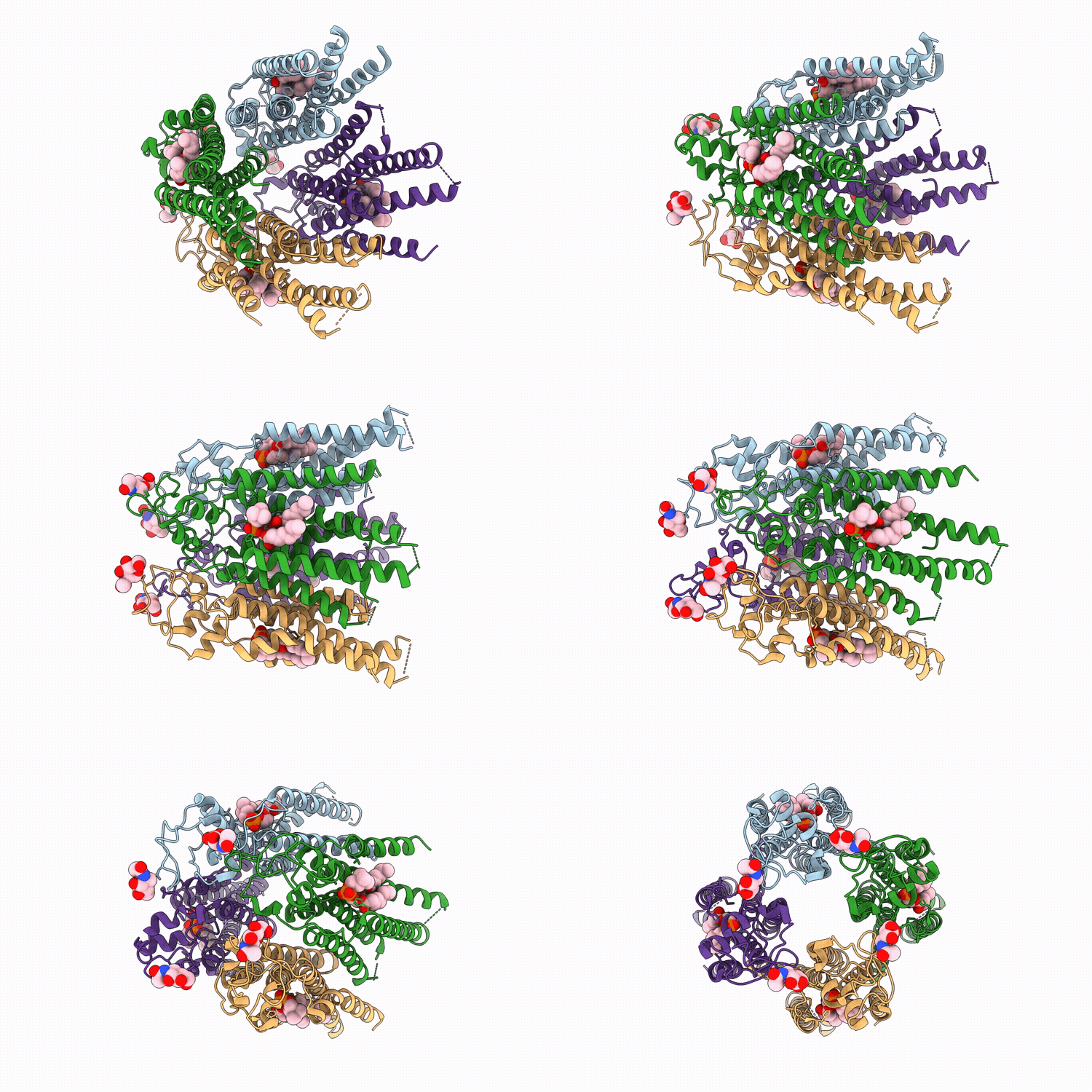
21NW image
Deposition Date 2025-12-21
Release Date 2026-05-06
Last Version Date 2026-06-17
Entry Detail
PDB ID:
21NW
Keywords:
Title:
Cryo-EM structure of human Lipid Phosphate Phosphatase 2
Biological Source:
Source Organism(s):
Homo sapiens (Taxon ID: 9606)
Expression System(s):
Method Details:
Experimental Method:
Resolution:
2.90 Å
Aggregation State:
PARTICLE
Reconstruction Method:
SINGLE PARTICLE

Macromolecular Entities
Structures with similar UniProt ID
Protein Blast
Polymer Type:polypeptide(L)
Molecule:Phospholipid phosphatase 2
Gene (Uniprot):PLPP2
Chain IDs:A, B, C, D
Chain Length:288
Number of Molecules:4
Biological Source:Homo sapiens
Primary Citation
Cryo-EM structure of human lipid phosphate phosphatase 2.
Structure 34 955 ? (2026)
PMID: 42068977 DOI: 10.1016/j.str.2026.04.003

Abstact

Lipid phosphate phosphatases (LPPs) dephosphorylate lipid phosphates to regulate signaling and metabolism. Among the three mammalian isoforms, LPP1, LPP2, and LPP3, LPP2 has been strongly associated with cancer, making it a potential therapeutic target. However, the molecular mechanisms underlying its structural organization, substrate recognition, and catalysis remain elusive. Here, we report the cryo-EM structure of human LPP2 (hLPP2). hLPP2 assembles as a homo-tetramer, with phosphatidylcholine bound in the substrate pocket. The tetrameric arrangement provides a structural basis for LPP oligomerization. The wide, open-ended substrate pocket explains the enzyme's broad substrate specificity. Structural comparison with PAP2 family members, including hG6PC1 and ecPgpB, suggests a conserved catalytic mechanism and highlights the regulatory role of residue E159 in stabilizing the catalytic center and phosphate release. Collectively, these findings advance our understanding of the structural basis and enzymatic mechanism of LPPs and may provide insights for the development of novel cancer therapies.

Legend

Protein

Chemical

Disease

Primary Citation of related structures
Feedback Form
Name
Email
Institute
Feedback