

21KR image
Deposition Date 2025-12-17
Release Date 2026-06-03
Last Version Date 2026-06-03
Entry Detail
PDB ID:
21KR
Title:
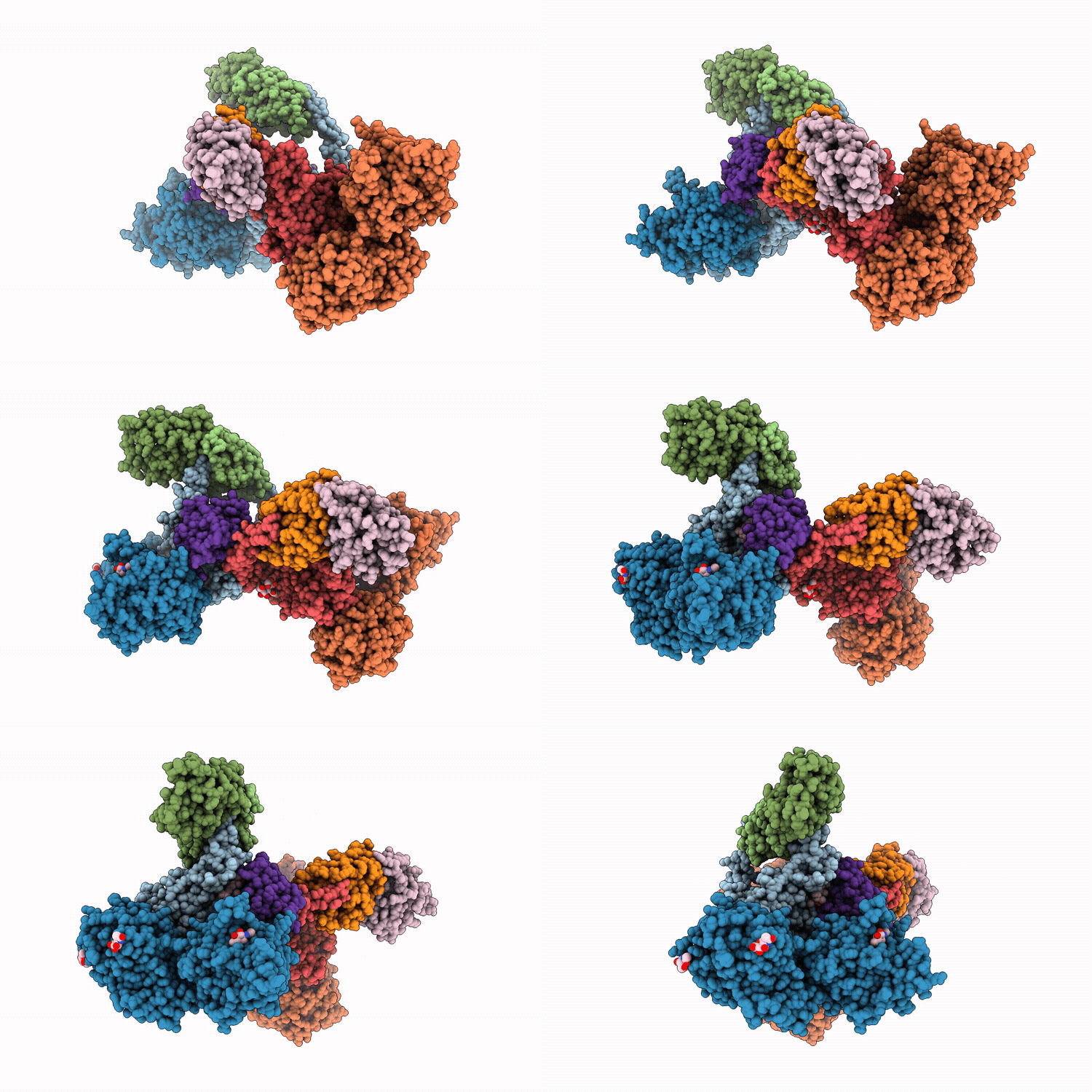
A Wnt3a/Fzd8-CRD/LRP6-E3E4 complex with FKBP
Biological Source:
Source Organism(s):
Mus musculus (Taxon ID: 10090)
Homo sapiens (Taxon ID: 9606)
Expression System(s):
Method Details:
Experimental Method:
Resolution:
2.90 Å
Aggregation State:
PARTICLE
Reconstruction Method:
SINGLE PARTICLE
Macromolecular Entities
Structures with similar UniProt ID
Protein Blast
Polymer Type:polypeptide(L)
Molecule:Protein Wnt-3a
Gene (Uniprot):Wnt3a
Mutagens:C178S
Chain IDs:A, E
Chain Length:334
Number of Molecules:2
Biological Source:Mus musculus
Protein Blast
Polymer Type:polypeptide(L)
Molecule:Low-density lipoprotein recep
Gene (Uniprot):MTOR, LRP6
Mutagens:C715S
Chain IDs:B, F
Chain Length:752
Number of Molecules:2
Biological Source:Homo sapiens
Protein Blast
Polymer Type:polypeptide(L)
Molecule:Frizzled-8,Peptidyl-prolyl ci
Gene (Uniprot):FKBP1A, FZD8
Mutagens:C178S
Chain IDs:C, D, G, H, I
Chain Length:271
Number of Molecules:5
Biological Source:Homo sapiens
Primary Citation
Structural basis of Wnt signalosome extracellular complex assembly.
Cell ? ? ? (2026)
PMID: 42202788 DOI: 10.1016/j.cell.2026.05.006

Abstact

Recognition of Wnt proteins by Frizzled (Fzd) receptors and the low-density lipoprotein receptor-related protein 5/6 (LRP5/6) co-receptor is essential for canonical Wnt signaling. It remains enigmatic how Wnt simultaneously interacts with Fzd and LRP5/6 and activates intracellular Wnt/beta-catenin signaling. Here, we report cryo-electron microscopy (cryo-EM) structures of Wnt3a/Fzd8/LRP6 extracellular complexes captured in a 2:4:2 stoichiometry, consisting of a Wnt3a-Wnt3a homodimer, whereby each Wnt3a monomer binds to two Fzd8 receptors and one LRP6 co-receptor. This implies that Wnt3a induces Fzd cystine-rich domain (Fzd-CRD) tetramerization, which in turn could promote recruitment of oligomeric Disheveled (Dvl) to Fzd on the cytoplasmic side. Indeed, mutations of key Wnt3a-Wnt3a interface residues abolish Fzd-LRP clustering and downstream signaling, supporting a critical role of Wnt3a-Wnt3a dimerization in Wnt signalosome assembly and signaling. Our structures also show how the Wnt3a N-helical domain recognizes the LRP6 extracellular domain (LRP6-ECD) E3 beta-propeller, while the Wnt3a N-C hairpin interacts with the valley between LRP6-E3 and -E4 propellers, underpinning the development of targeted Wnt therapeutics.

Legend

Protein

Chemical

Disease

Primary Citation of related structures
Feedback Form
Name
Email
Institute
Feedback