

21JU image
Deposition Date 2025-12-15
Release Date 2026-04-29
Last Version Date 2026-04-29
Entry Detail
PDB ID:
21JU
Keywords:
Title:
Alcohol Oxidase Mod1p from Ogataea methanolica
Biological Source:
Source Organism(s):
Method Details:
Experimental Method:
Resolution:
1.00 Å
Aggregation State:
PARTICLE
Reconstruction Method:
SINGLE PARTICLE
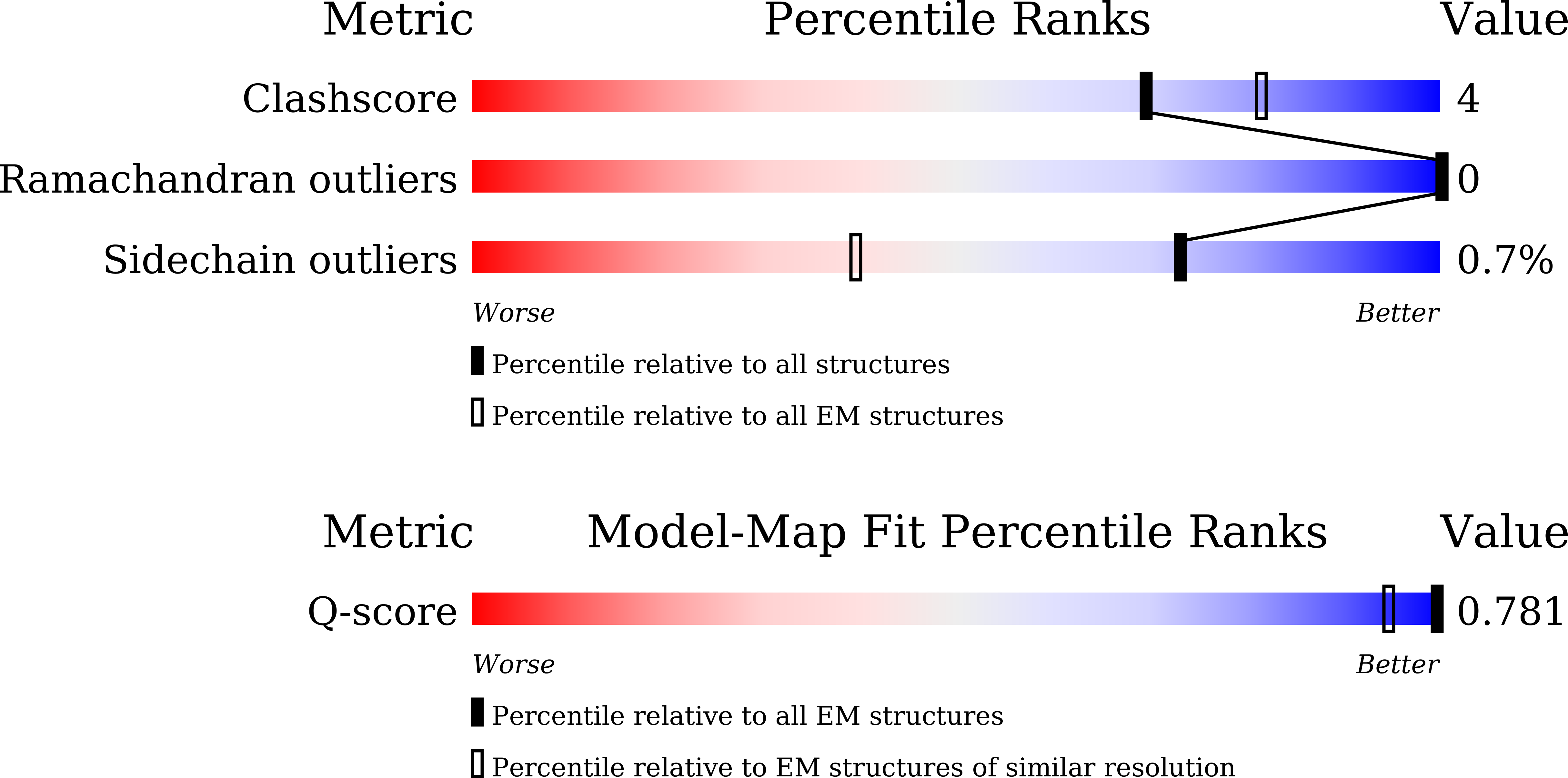
Macromolecular Entities
Structures with similar UniProt ID
Protein Blast
Polymer Type:polypeptide(L)
Molecule:alcohol oxidase
Gene (Uniprot):MOD1
Chain IDs:A, B, C, D, E, F, G, H
Chain Length:664
Number of Molecules:8
Biological Source:Ogataea methanolica
Ligand Molecules
Primary Citation
Cryo-EM Structures of Alcohol Oxidase Isozymes Reveal Structural Determinants of Cofactor Variation and Enzymatic Activity in Ogataea methanolica.
Microb Biotechnol 19 e70355 e70355 (2026)
PMID: 41999200 DOI: 10.1111/1751-7915.70355

Abstact

Ogataea methanolica is a methylotrophic yeast that can produce diverse recombinant proteins using methanol as the sole carbon and energy source. Unlike most yeast species, which possess a single alcohol oxidase, O. methanolica encodes two isoenzymes, Mod1p and Mod2p. This study examines the structural and functional differences between Mod1p and Mod2p homooctamers. Both enzymes were purified from MOD-disrupted strains and analysed using cryogenic electron microscopy, achieving resolutions of 1.9 and 2.7 A for Mod1p and Mod2p, respectively. The two isozymes assemble as tetramers of dimers stabilized by extensive intersubunit interactions, largely mediated by protruding loop regions and C-terminal extensions. Despite overall structural similarities, Mod1p and Mod2p exhibit subtle differences in surface charge distribution and sequence composition within the FAD-binding domain. These variations correlate with distinct cofactor preferences, with Mod1p binding arabityl FAD and Mod2p binding canonical FAD. Thin-section electron microscopy further revealed that Mod1p and Mod2p form both homomeric and hybrid octamers that assemble into peroxisomal crystalloids essential for methanol metabolism. Collectively, our findings provide mechanistic insight into alcohol oxidase diversity in methylotrophic yeasts, advancing our understanding of methanol utilization and its applications in biotechnology.

Legend

Protein

Chemical

Disease

Primary Citation of related structures
Feedback Form
Name
Email
Institute
Feedback