

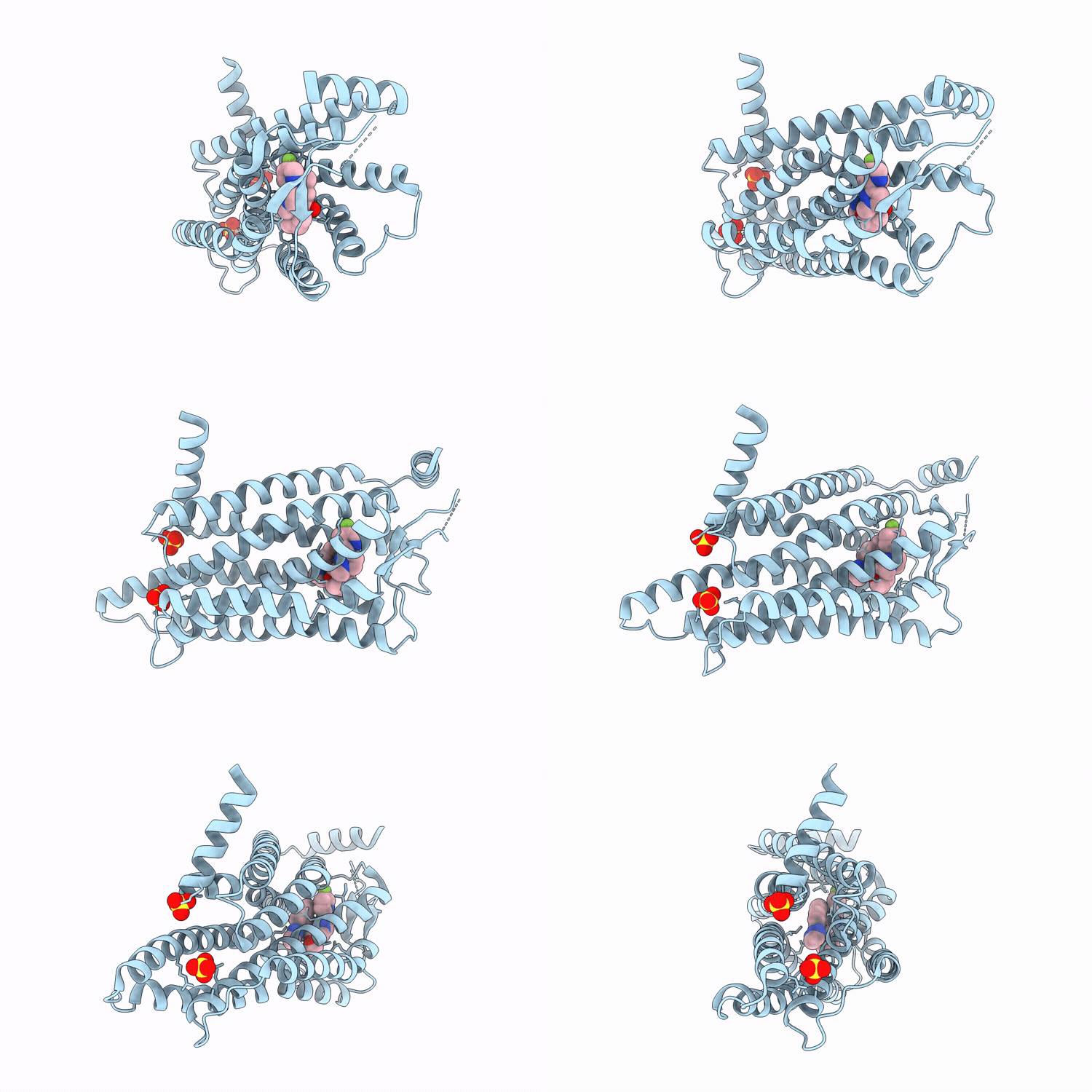
21CI image
Deposition Date 2025-12-08
Release Date 2026-06-03
Last Version Date 2026-06-10
Entry Detail
PDB ID:
21CI
Title:
Crystal structure of human orexin type 2 receptor in complex with vornorexant
Biological Source:
Source Organism(s):
Homo sapiens (Taxon ID: 9606)
Expression System(s):
Method Details:
Experimental Method:
Resolution:
3.29 Å
R-Value Free:
0.29
R-Value Work:
0.24
R-Value Observed:
0.24
Space Group:
P 21 21 21
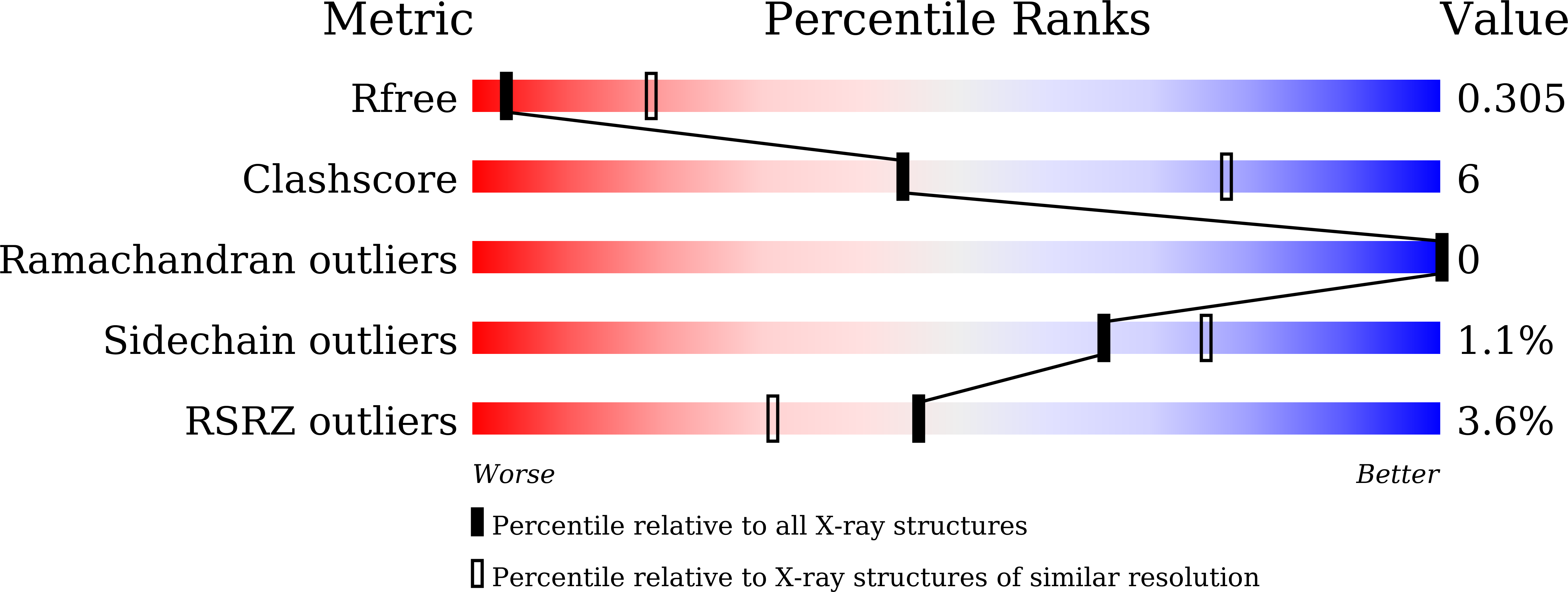
Macromolecular Entities
Structures with similar UniProt ID
Protein Blast
Polymer Type:polypeptide(L)
Molecule:Orexin receptor type 2
Gene (Uniprot):HCRTR2
Mutagens:D100A, L143W, C147A, N202Q
Chain IDs:A
Chain Length:341
Number of Molecules:1
Biological Source:Homo sapiens
Primary Citation
Structural insights into the binding mode of the hypnotic drug vornorexant to orexin receptors.
Acta Crystallogr.,Sect.F 82 201 207 (2026)
PMID: 42059114 DOI: 10.1107/S2053230X26003432

Abstact

Insomnia is a widespread sleep disorder that significantly impairs quality of life and imposes a societal burden. Although benzodiazepines and Z-drugs are commonly used for treating insomnia, these drugs often have side effects, such as excessive muscle relaxation and dependency. The orexin signaling pathway has emerged as a promising therapeutic target for insomnia, with dual orexin receptor antagonists (DORAs) offering an alternative approach to treatment. To reduce the potential of these drugs for next-day residual effects, we developed vornorexant, a novel DORA with a high receptor affinity and a short elimination half-life. In this study, we investigated the molecular interactions of this drug with human orexin receptors through crystal structure analysis of its binding to orexin type 2 receptor (OX(2)R) and a docking simulation of the drug with orexin type 1 receptor (OX(1)R). The crystal structure of the OX(2)R-vornorexant complex revealed a conserved U-shaped conformation stabilized by hydrophobic and hydrogen-bonding interactions, including key contacts with Asn324, His350 and Pro131. OX(1)R-vornorexant docking simulations indicated a similar binding mode to OX(1)R, with no steric hindrance observed, supporting a balanced dual antagonism. These results provide a structural basis for the high-affinity dual antagonism of vornorexant and offer insights for the design of orexin receptor antagonists.

Legend

Protein

Chemical

Disease

Primary Citation of related structures
Feedback Form
Name
Email
Institute
Feedback