

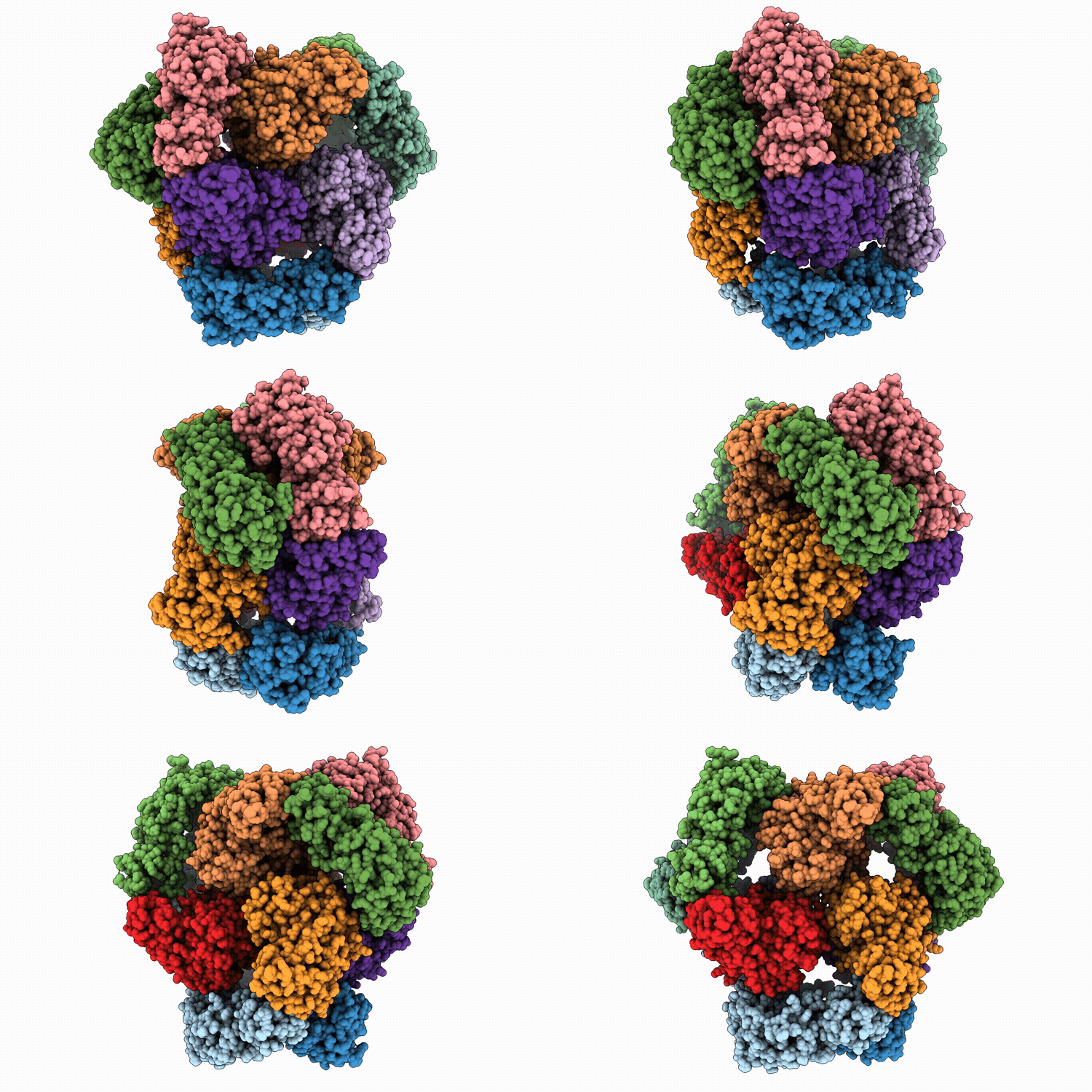
21AK image
Deposition Date 2025-12-04
Release Date 2026-03-25
Last Version Date 2026-05-13
Entry Detail
PDB ID:
21AK
Keywords:
Title:
Cryo-EM structure of the E. coli ArnA hexamer
Biological Source:
Source Organism(s):
Escherichia coli (Taxon ID: 562)
Expression System(s):
Method Details:
Experimental Method:
Resolution:
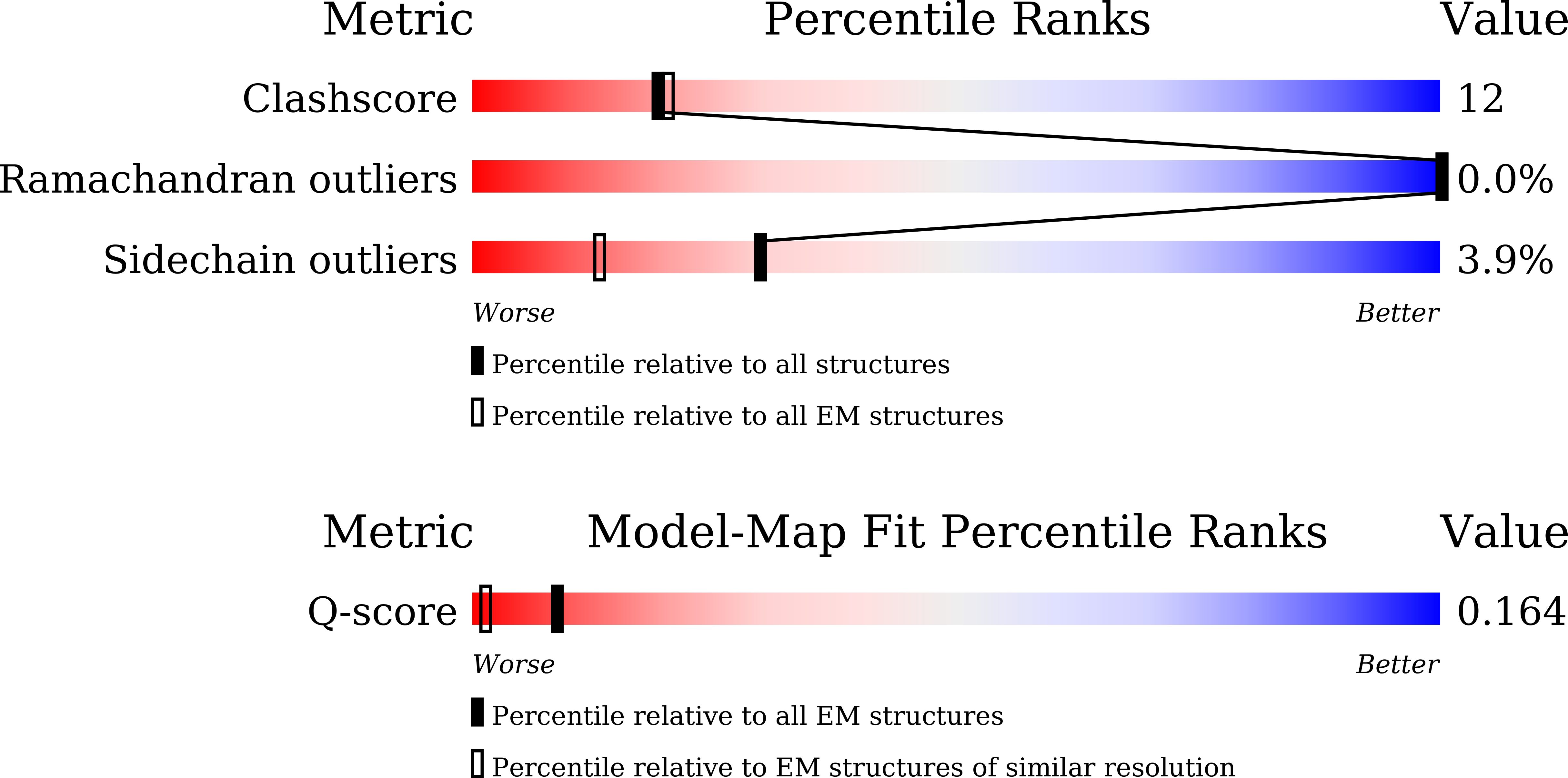
3.23 Å
Aggregation State:
PARTICLE
Reconstruction Method:
SINGLE PARTICLE
Macromolecular Entities
Structures with similar UniProt ID
Protein Blast
Polymer Type:polypeptide(L)
Molecule:Bifunctional polymyxin resist
Gene (Uniprot):arnA
Chain IDs:A, B, C, D, E, F, G, H, I, J, K, L
Chain Length:660
Number of Molecules:12
Biological Source:Escherichia coli
Ligand Molecules
Primary Citation
Cryo-EM reveals ArnA contamination during purification of a ciliary protein complex.
Acta Crystallogr D Struct Biol 82 404 410 (2026)
PMID: 41984507 DOI: 10.1107/S2059798326002846

Abstact

Endogenous Escherichia coli proteins can co-purify with recombinant targets and dominate cryo-EM datasets, yet often escape detection during standard biochemical quality control. In parallel to the recent report by Caliseki and coworkers [Caliseki et al. (2025), Acta Cryst. D81, 545-557], we independently identified ArnA contamination while purifying a soluble, low-yield KIF17-IFT70 complex, ultimately obtaining a 3.23 A resolution cryo-EM structure of ArnA rather than the intended target. Our results reinforce that ArnA enrichment reflects general features of His-tag affinity purification and can become particularly problematic in cryo-EM workflows when the intended target is low in yield or conformationally heterogeneous. By comparing biochemical behavior and cryo-EM outcomes, we outline why ArnA may evade SDS-PAGE and size-exclusion chromatography, and be underappreciated in routine mass spectrometry-based quality control, yet becomes structurally dominant in cryo-EM. These findings broaden the scope of the original study and highlight the need for early cryo-EM screening and improved contaminant awareness in structural biology.

Legend

Protein

Chemical

Disease

Primary Citation of related structures
Feedback Form
Name
Email
Institute
Feedback