

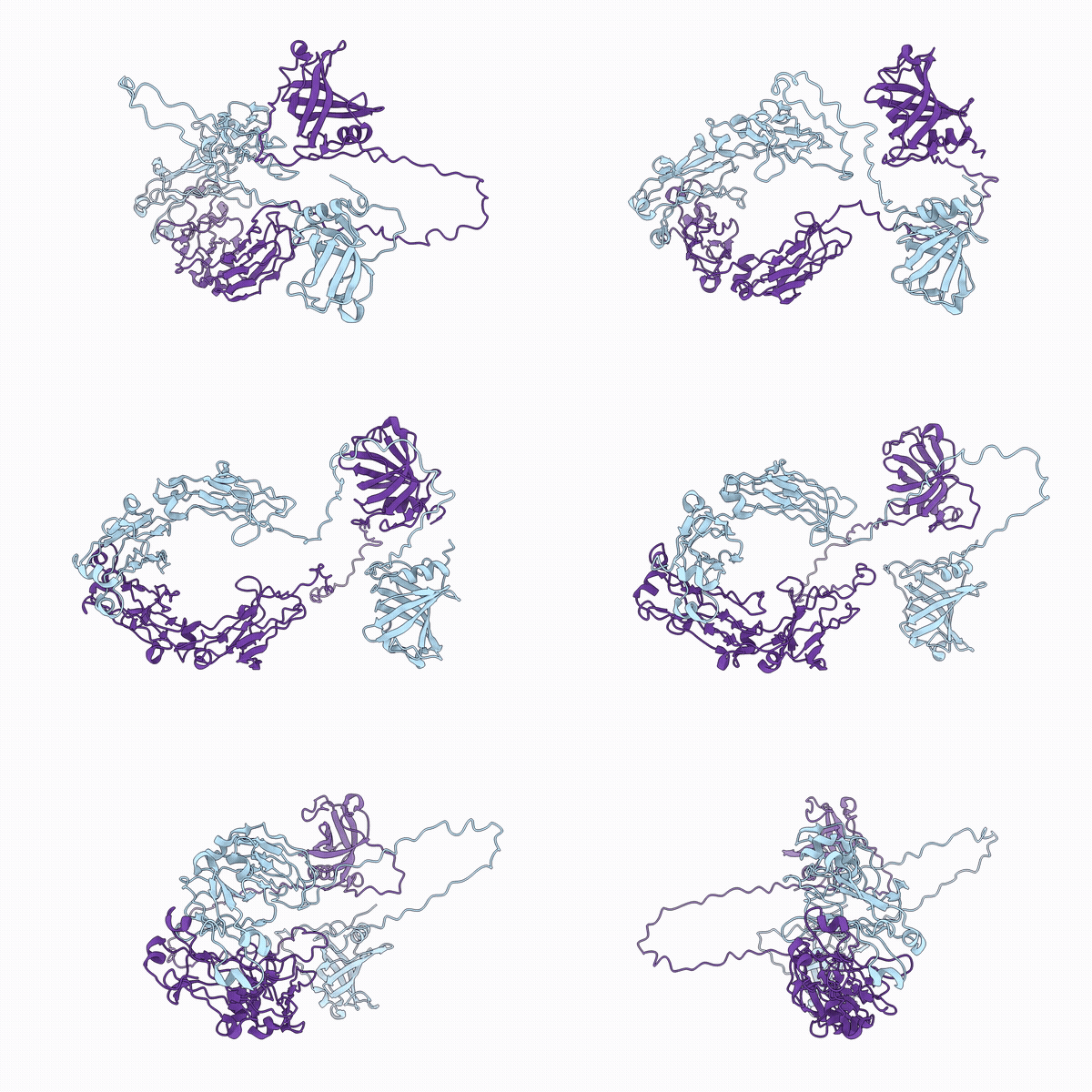
21AA image
Deposition Date 2025-12-04
Release Date 2026-10-14
Last Version Date 2026-10-14
Entry Detail
PDB ID:
21AA
Keywords:
Title:
Structure of Human Aspartate--tRNA ligase 3-154 with linker and FC : ATYR0101
Biological Source:
Source Organism(s):
Homo sapiens (Taxon ID: 9606)
Expression System(s):
Method Details:
Experimental Method:
Resolution:
4.96 Å
Aggregation State:
PARTICLE
Reconstruction Method:
SINGLE PARTICLE
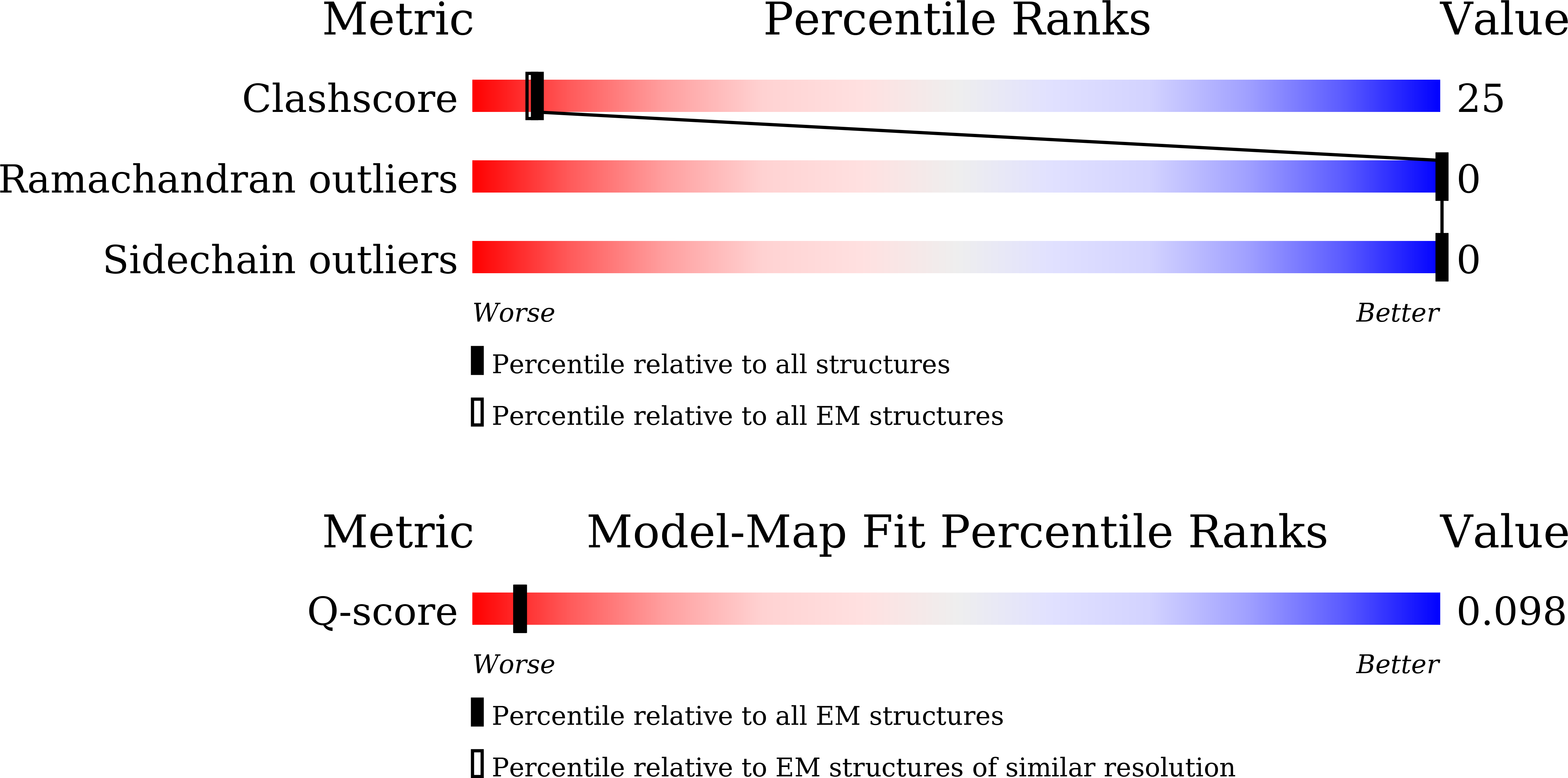
Macromolecular Entities
Polymer Type:polypeptide(L)
Molecule:Aspartate--tRNA ligase, cytop
Gene (Uniprot):DARS1
Chain IDs:A, B
Chain Length:412
Number of Molecules:2
Biological Source:Homo sapiens
Ligand Molecules
Primary Citation

Abstact

Fibrosis remains a major global health challenge with limited therapies that only slow disease progression. While the aminoacyl-tRNA synthetase (aaRS) family is known to utilize evolutionarily appended domains as extracellular signaling molecules, their role in regulating the homeostasis of the fibrotic process is poorly defined. We identify a natural proteolytic fragment of aspartyl-tRNA synthetase (DARS), termed DARS-N1, that selectively triggers apoptosis in myofibroblasts by targeting latent-transforming growth factor beta binding protein 1 (LTBP-1) on the extracellular matrix (ECM). This active N-terminal fragment of DARS reduces focal adhesion kinase (FAK) activation in undifferentiated fibroblasts and myofibroblasts, while only myofibroblasts exhibit inadequate cell-matrix attachment leading to loss of anchorage-dependent survival and promotion of apoptosis. We utilized ATYR0101, a therapeutic form of DARS-N1 engineered for extended serum exposure, to demonstrate anti-fibrotic activity in lung (bleomycin). Spatial transcriptomics analysis showed that ATYR0101 activates a restorative program promoting the return to a healthy state. These findings highlight ATYR0101's potential as a transformative therapy for disrupting the process of chronic tissue fibrosis.

Legend

Protein

Chemical

Disease

Primary Citation of related structures
Feedback Form
Name
Email
Institute
Feedback