

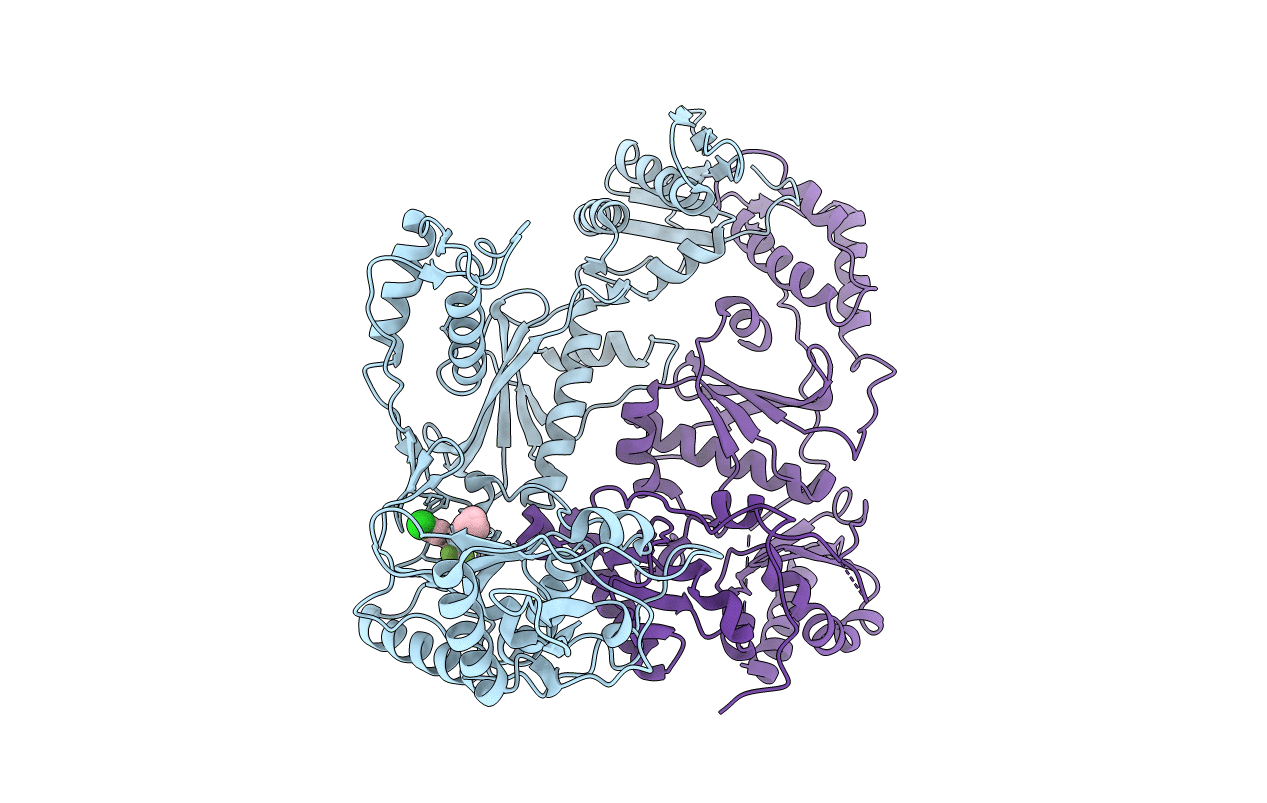
1fko image
Deposition Date 2000-08-10
Release Date 2000-11-03
Last Version Date 2024-10-30
Entry Detail
PDB ID:
1FKO
Keywords:
Title:
CRYSTAL STRUCTURE OF NNRTI RESISTANT K103N MUTANT HIV-1 REVERSE TRANSCRIPTASE IN COMPLEX WITH DMP-266(EFAVIRENZ)
Biological Source:
Source Organism(s):
Expression System(s):
Method Details:
Experimental Method:
Resolution:
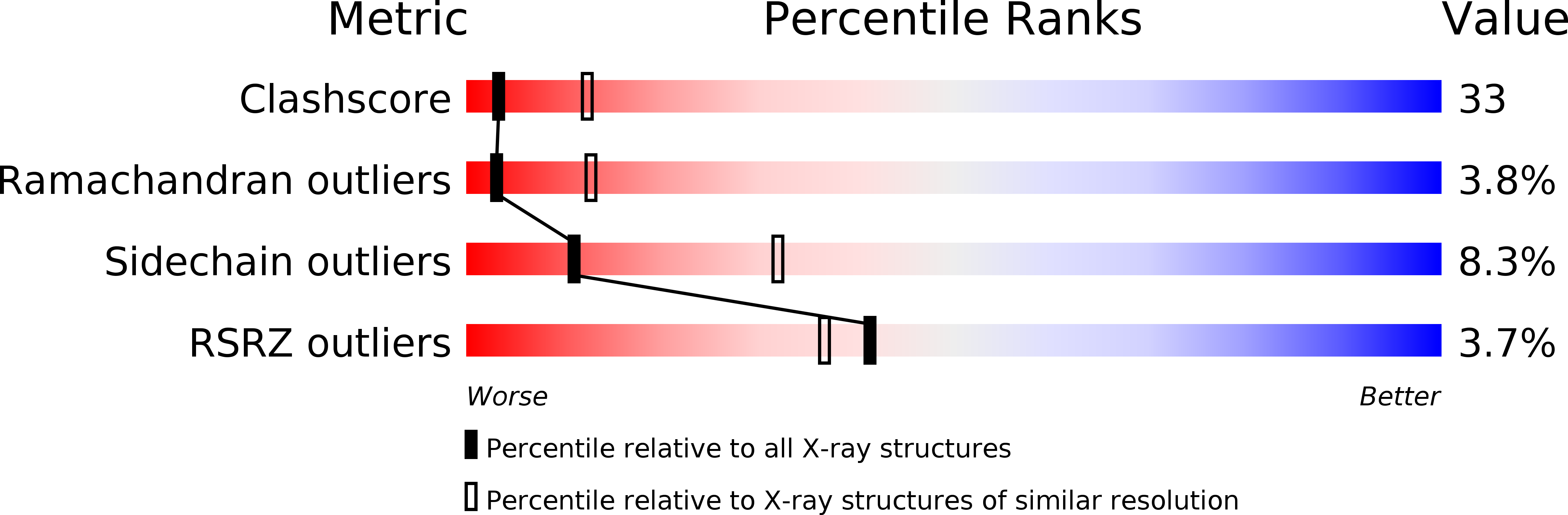
2.90 Å
R-Value Free:
0.28
R-Value Work:
0.20
R-Value Observed:
0.20
Space Group:
P 21 21 21
Macromolecular Entities
Structures with similar UniProt ID
Protein Blast
Polymer Type:polypeptide(L)
Molecule:HIV-1 RT, A-CHAIN
Gene (Uniprot):gag-pol
Mutagens:L103N
Chain IDs:A
Chain Length:543
Number of Molecules:1
Biological Source:Human immunodeficiency virus 1
Structures with similar UniProt ID
Protein Blast
Polymer Type:polypeptide(L)
Molecule:HIV-1 RT, B-CHAIN
Gene (Uniprot):gag-pol
Mutagens:L103N
Chain IDs:B
Chain Length:440
Number of Molecules:1
Biological Source:Human immunodeficiency virus 1
Modified Residue
Compound ID Chain ID Parent Comp ID Details 2D Image
CSD A CYS 3-SULFINOALANINE
Ligand Molecules
Primary Citation
Structural basis for the resilience of efavirenz (DMP-266) to drug resistance mutations in HIV-1 reverse transcriptase.
Structure Fold.Des. 8 1089 1094 (2000)
PMID: 11080630 DOI: 10.1016/S0969-2126(00)00513-X

Abstact

BACKGROUND: Efavirenz is a second-generation non-nucleoside inhibitor of HIV-1 reverse transcriptase (RT) that has recently been approved for use against HIV-1 infection. Compared with first-generation drugs such as nevirapine, efavirenz shows greater resilience to drug resistance mutations within HIV-1 RT. In order to understand the basis for this resilience at the molecular level and to help the design of further-improved anti-AIDS drugs, we have determined crystal structures of efavirenz and nevirapine with wild-type RT and the clinically important K103N mutant. RESULTS: The relatively compact efavirenz molecule binds, as expected, within the non-nucleoside inhibitor binding pocket of RT. There are significant rearrangements of the drug binding site within the mutant RT compared with the wild-type enzyme. These changes, which lead to the repositioning of the inhibitor, are not seen in the interaction with the first-generation drug nevirapine. CONCLUSIONS: The repositioning of efavirenz within the drug binding pocket of the mutant RT, together with conformational rearrangements in the protein, could represent a general mechanism whereby certain second-generation non-nucleoside inhibitors are able to reduce the effect of drug-resistance mutations on binding potency.

Legend

Protein

Chemical

Disease

Primary Citation of related structures
Feedback Form
Name
Email
Institute
Feedback