

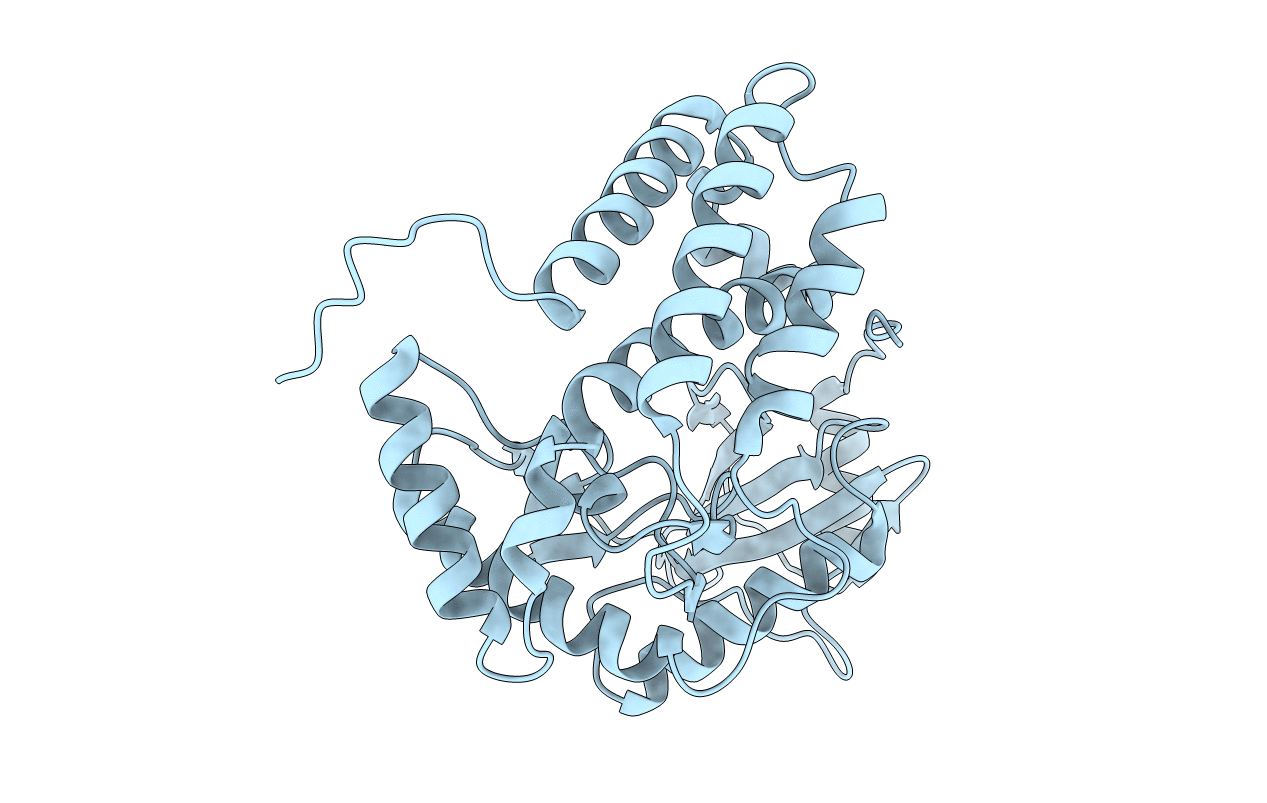
1ZYL image
Deposition Date 2005-06-10
Release Date 2006-09-19
Last Version Date 2024-02-14
Entry Detail
PDB ID:
1ZYL
Title:
Crystal Structure of Hypothetical Protein YihE from Escherichia coli
Biological Source:
Source Organism(s):
Escherichia coli (Taxon ID: 562)
Expression System(s):
Method Details:
Experimental Method:
Resolution:
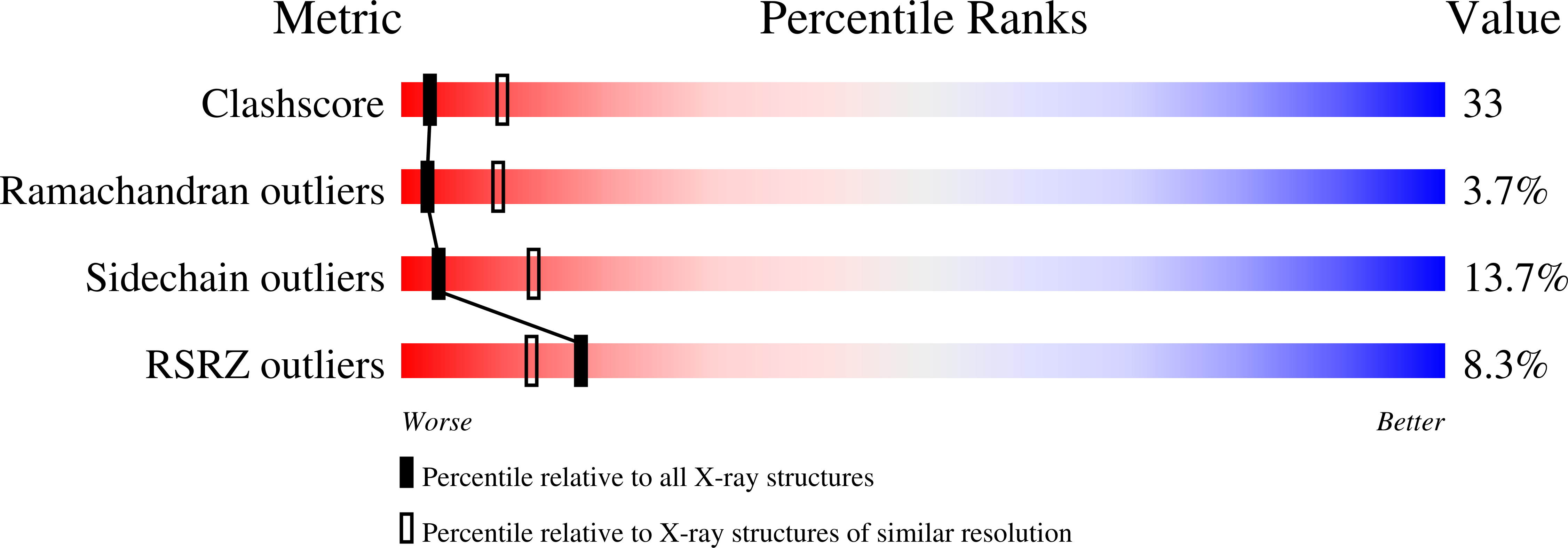
2.80 Å
R-Value Free:
0.27
R-Value Work:
0.21
R-Value Observed:
0.21
Space Group:
P 43 21 2
Macromolecular Entities
Polymer Type:polypeptide(L)
Molecule:Hypothetical protein yihE
Gene (Uniprot):srkA
Chain IDs:A
Chain Length:328
Number of Molecules:1
Biological Source:Escherichia coli
Ligand Molecules
Primary Citation
Crystal structure of a novel prokaryotic Ser/Thr kinase and its implication in the Cpx stress response pathway.
Mol. Microbiol. 63 1360 1371 (2007)
PMID: 17302814 DOI: 10.1111/j.1365-2958.2007.05611.x

Abstact

The Cpx signalling system of Escherichia coli and Salmonella enterica senses extracytoplasmic stress and controls expression of factors that allow the bacterium to adapt to these stressors and thereby enhance survival. Many of the Cpx-responsive genes products are of unknown function. We determined the crystal structure of one of these gene products, called YihE in E. coli, which exhibits a eukaryotic kinase fold. Functional assays established that both YihE and the S. enterica YihE homologue, RdoA, undergo autophosphorylation and phosphorylate protein substrates at Ser/Thr residues in vitro, demonstrating that YihE/RdoA is a novel Ser/Thr protein kinase in prokaryotic cells. Phenotypic analysis of yihE/rdoA null strains indicates that this kinase is most abundant in stationary phase, and is important for long-term cell survival and for expression of surface appendages in both a Cpx-independent and -dependent manner. YihE/RdoA is therefore a previously unknown kinase component of a new type of bacterial phosphorelay mechanism, adding kinase activity as another response to the Cpx sensing system that functions to maintain cellular homeostasis.

Legend

Protein

Chemical

Disease

Primary Citation of related structures
Feedback Form
Name
Email
Institute
Feedback