

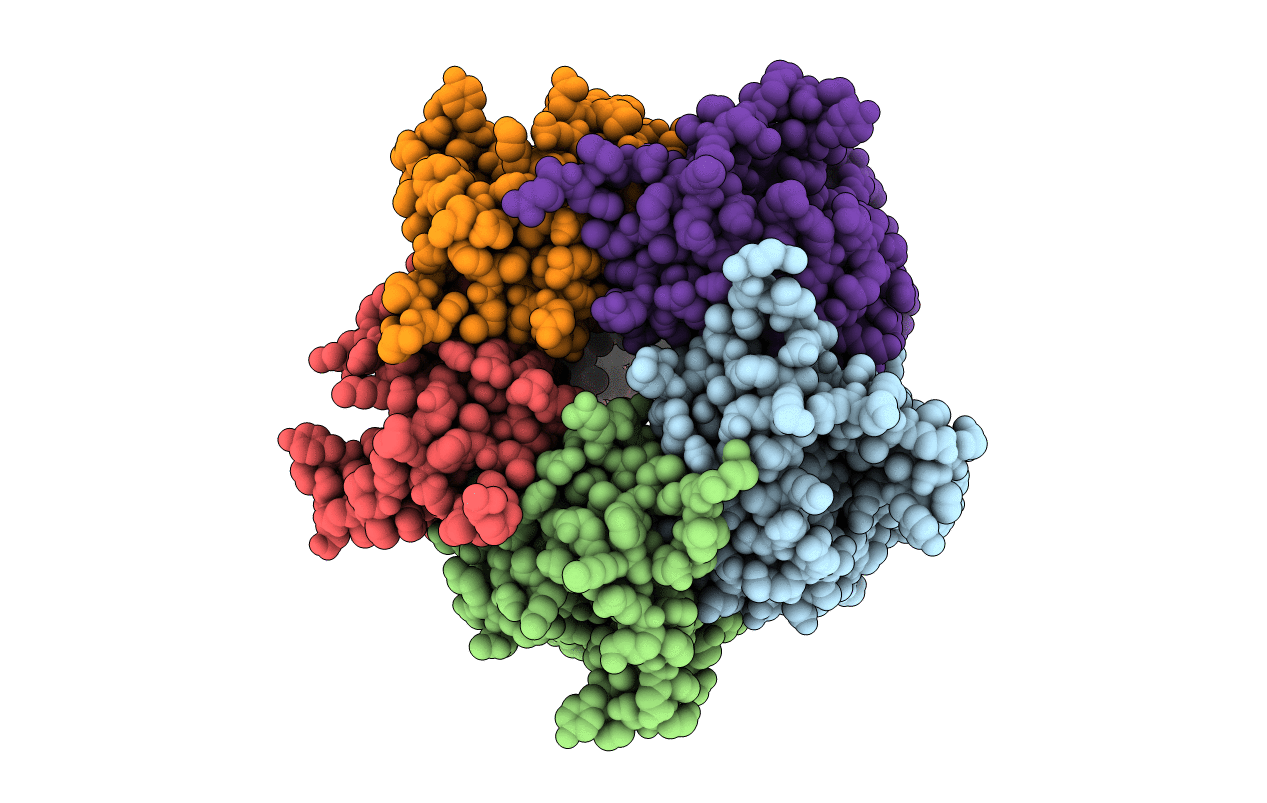
1VDH image
Deposition Date 2004-03-22
Release Date 2004-09-22
Last Version Date 2023-12-27
Entry Detail
PDB ID:
1VDH
Title:
Structure-based functional identification of a novel heme-binding protein from thermus thermophilus HB8
Biological Source:
Source Organism(s):
Expression System(s):
Method Details:
Experimental Method:
Resolution:
2.00 Å
R-Value Free:
0.21
R-Value Work:
0.18
R-Value Observed:
0.18
Space Group:
P 21 21 21

Macromolecular Entities
Polymer Type:polypeptide(L)
Molecule:muconolactone isomerase-like
Gene (Uniprot):chdC
Mutagens:K182E
Chain IDs:A, B, C, D, E
Chain Length:249
Number of Molecules:5
Biological Source:Thermus thermophilus
Primary Citation
Structure-based functional identification of a novel heme-binding protein from Thermus thermophilus HB8.
J. Struct. Funct. Genomics 6 21 32 (2005)
PMID: 15965735 DOI: 10.1007/s10969-005-1103-x

Abstact

The TT1485 gene from Thermus thermophilus HB8 encodes a hypothetical protein of unknown function with about 20 sequence homologs of bacterial or archaeal origin. Together they form a family of uncharacterized proteins, the cluster of orthologous group COG3253. Using a combination of amino acid sequence analysis, three-dimensional structural studies and biochemical assays, we identified TT1485 as a novel heme-binding protein. The crystal structure reveals that this protein is a pentamer and each monomer exhibits a beta-barrel fold. TT1485 is structurally similar to muconolactone isomerase, but this provided no functional clues. Amino acid sequence analysis revealed remote homology to a heme enzyme, chlorite dismutase. Strikingly, amino acid residues that are highly conserved in the homologous hypothetical proteins and chlorite dismutase cluster around a deep cavity on the surface of each monomer. Molecular modeling shows that the cavity can accommodate a heme group with a strictly conserved His as a heme ligand. TT1485 reconstituted with iron protoporphyrin IX chloride gave a low chlorite dismutase activity, indicating that TT1485 catalyzes a reaction other than chlorite degradation. The presence of a possible Fe-His-Asp triad in the heme proximal site suggests that TT1485 functions as a novel heme peroxidase to detoxify hydrogen peroxide within the cell.

Legend

Protein

Chemical

Disease

Primary Citation of related structures
Feedback Form
Name
Email
Institute
Feedback