

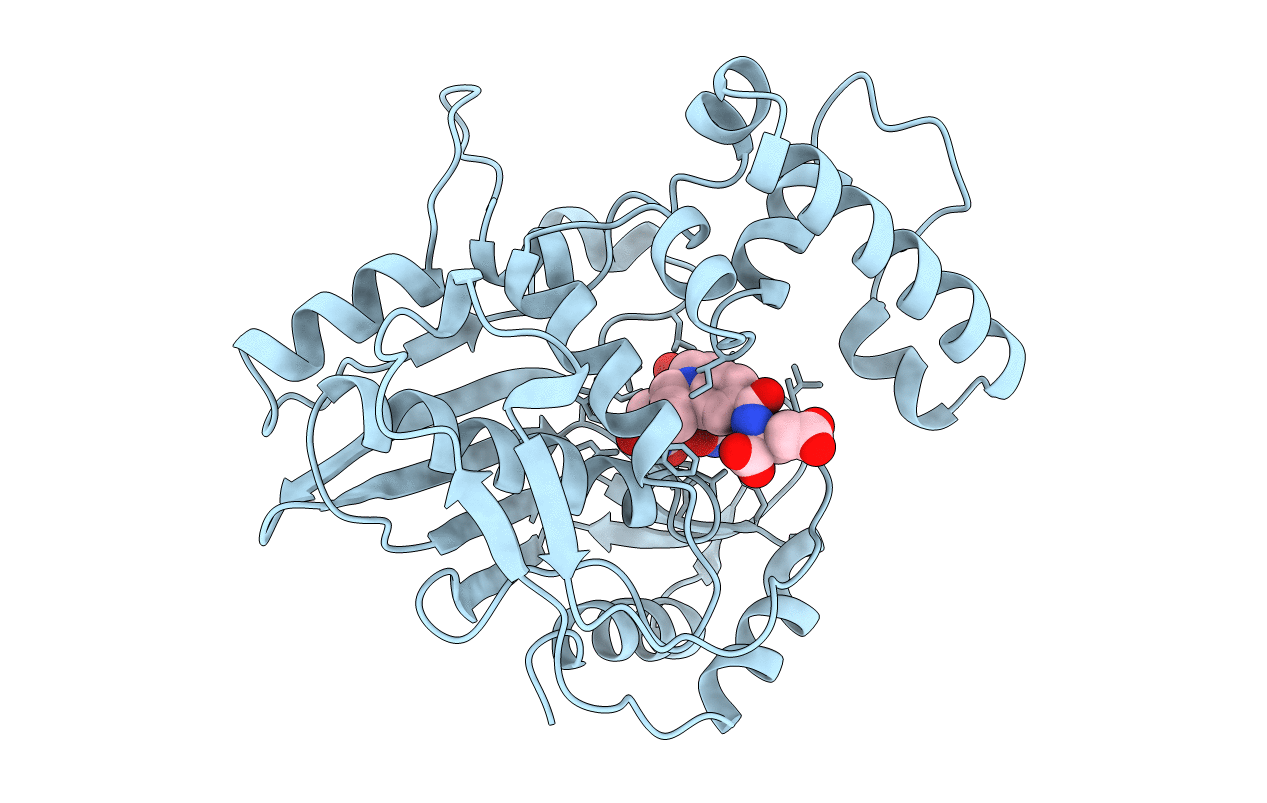
1TVV image
Deposition Date 1997-09-17
Release Date 1998-01-28
Last Version Date 2024-02-14
Entry Detail
PDB ID:
1TVV
Keywords:
Title:
CONTRIBUTIONS OF ORIENTATION AND HYDROGEN BONDING TO CATALYSIS IN ASN-229 MUTANTS OF THYMIDYLATE SYNTHASE
Biological Source:
Source Organism(s):
Expression System(s):
Method Details:
Experimental Method:
Resolution:
2.30 Å
R-Value Free:
0.28
R-Value Work:
0.20
R-Value Observed:
0.20
Space Group:
P 61 2 2
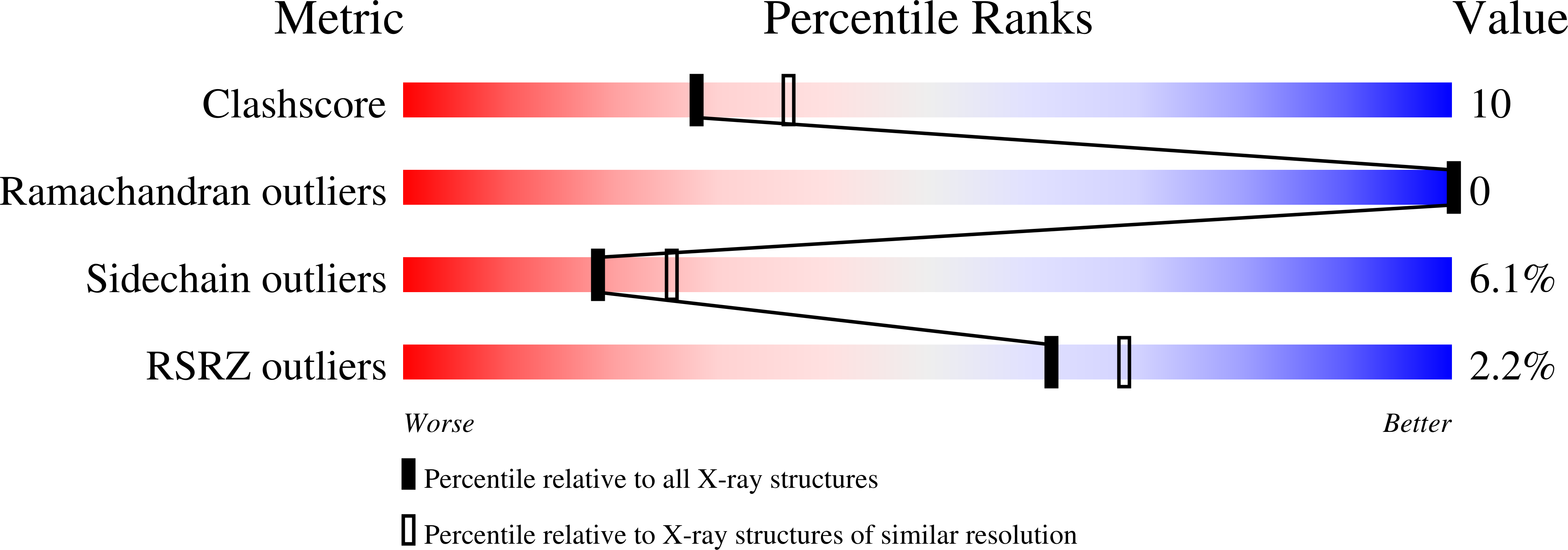
Macromolecular Entities
Structures with similar UniProt ID
Protein Blast
Polymer Type:polypeptide(L)
Molecule:THYMIDYLATE SYNTHASE
Gene (Uniprot):thyA
Mutagens:N229C
Chain IDs:A
Chain Length:316
Number of Molecules:1
Biological Source:Lactobacillus casei
Primary Citation
Contributions of orientation and hydrogen bonding to catalysis in Asn229 mutants of thymidylate synthase.
J. Mol. Biol. 276 113 129 (1998)
PMID: 9514716 DOI: 10.1006/jmbi.1997.1495

Abstact

We have determined structures of binary and ternary complexes of five Asn229 variants of thymidylate synthase (TS) and related their structures to the kinetic constants measured previously. Asn229 forms two hydrogen bonds to the pyrimidine ring of the substrate 2'-deoxyuridine-5'-monophosphate (dUMP). These hydrogen bonds constrain the orientation of dUMP in binary complexes with dUMP, and in ternary complexes with dUMP and the TS cofactor, 5,10-methylene-5,6,7,8-tetrahydrofolate. In N229 mutants, where these hydrogen bonds cannot be made, dUMP binds in a misoriented or more disordered fashion. Most N229 mutants exhibit no activity for the dehalogenation of 5-bromo-dUMP, which requires correct orientation of dUMP against Cys198. Since bound dUMP forms the binding surface against which the pterin ring of cofactor binds, misorientation of dUMP results in higher Km values for cofactor. At the same time, binding of the cofactor aids in ordering and positioning dUMP for catalysis. Hydrophobic mutants, such as N229I, favor an arrangement of solvent molecules and side-chains around the ligands similar to that in a proposed transition state for ternary complex formation in wild-type TS, and kcat values are similar to the wild-type value. Smaller, more hydrophilic mutants favor arrangements of the solvent and side-chains surrounding the ligands that do not resemble the proposed transition state. These changes correspond to decreases in kcat of up to 2000-fold, with only modest increases in Km or Kd. These results are consistent with the proposal that the hydrogen-bonding network between water, dUMP and side-chains in the active-site cavity contributes to catalysis in TS. Asn229 has the unique ability to maintain this critical network, without sterically interfering with dUMP binding.

Legend

Protein

Chemical

Disease

Primary Citation of related structures
Feedback Form
Name
Email
Institute
Feedback