

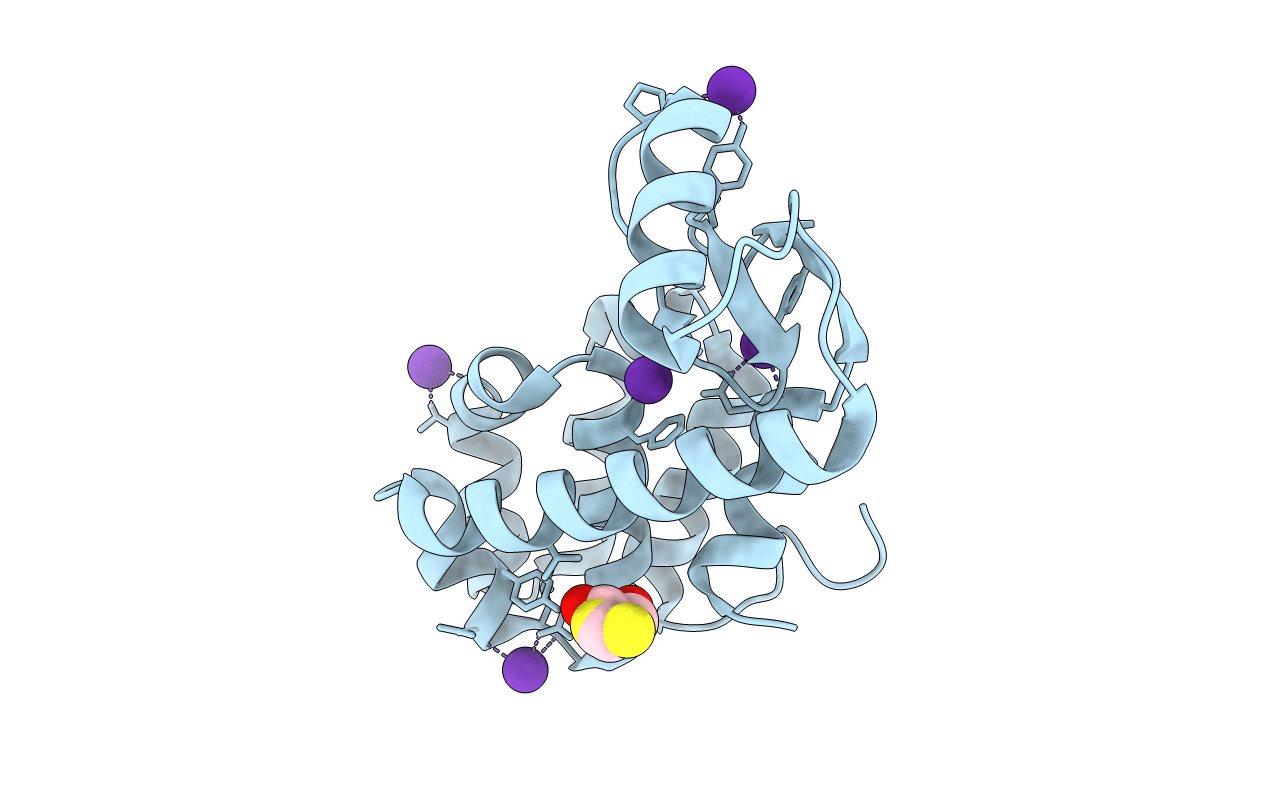
1SX7 image
Deposition Date 2004-03-30
Release Date 2004-11-30
Last Version Date 2023-08-23
Entry Detail
PDB ID:
1SX7
Keywords:
Title:
Use of an ion-binding site to bypass the 1000-atom limit to ab initio structure determination by direct methods
Biological Source:
Source Organism(s):
Expression System(s):
Method Details:
Experimental Method:
Resolution:
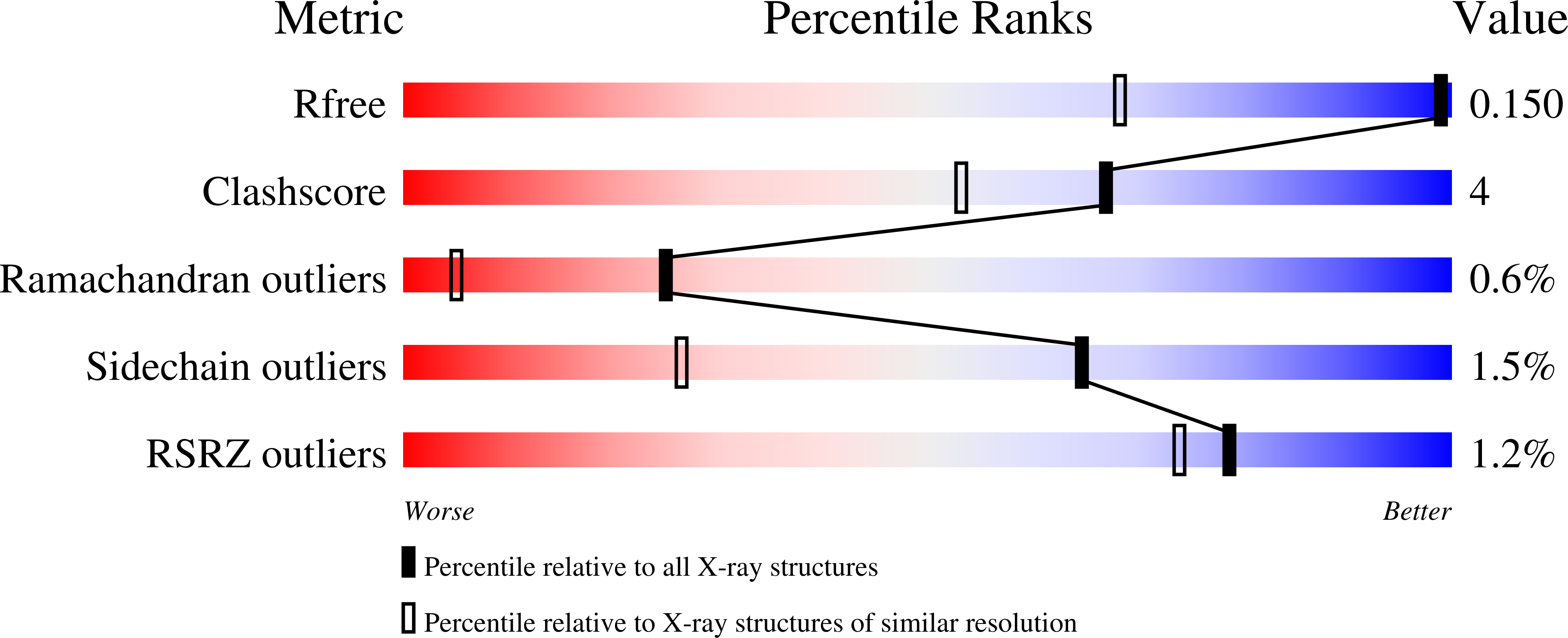
1.06 Å
R-Value Free:
0.14
R-Value Work:
0.12
R-Value Observed:
0.12
Space Group:
P 32 2 1
Macromolecular Entities
Structures with similar UniProt ID
Protein Blast
Polymer Type:polypeptide(L)
Molecule:Lysozyme
Gene (Uniprot):E
Mutagens:D72A, R96E
Chain IDs:A
Chain Length:164
Number of Molecules:1
Biological Source:Enterobacteria phage T4
Primary Citation
Use of an ion-binding site to bypass the 1000-atom limit to structure determination by direct methods.
Acta Crystallogr. D Biol. Crystallogr. 60 1726 1737 (2004)
PMID: 15388918 DOI: 10.1107/S0907444904017020

Abstact

Proteins with more than 1000 non-H atoms and without heavy-atom prosthetic groups are very difficult to solve by ab initio direct methods. T4 lysozyme is being used to explore these limits. The protein has 1309 non-H atoms, seven S atoms, no disulfide bonds and no heavy-atom prosthetic group. It is recalcitrant to structure determination by direct methods using X-ray diffraction data to 0.97 A. It is shown here that it is possible to obtain a truly ab initio structure determination of a variant of the protein that has an Rb+ (Z = 37) binding site. Using diffraction data to 1.06 A resolution, the direct-methods programs SIR2002 and ACORN independently solved the structure in about 20 h. The bound Rb+, which contributes about 1.7% of the total scattering, does not appear to distort the structure or to inhibit refinement (R factor 12.1%). The phases obtained via SIR2002 or ACORN are in good agreement with those from a reference structure obtained from conventional molecular-substitution and refinement procedures (average error in the figure-of-merit-weighted phases of less than 25 degrees). Thus, proteins with more than 1000 atoms that include halide-binding or other such sites may be amenable to structure determination by ab initio direct methods. The direct-methods approaches are also compared with structure determination via use of the anomalous scattering of the Rb+ ion. As shown by examples, high-resolution structures determined by direct methods can be useful in highlighting regions of strain in the protein, including short hydrogen bonds and non-planar peptide groups.

Legend

Protein

Chemical

Disease

Primary Citation of related structures
Feedback Form
Name
Email
Institute
Feedback