

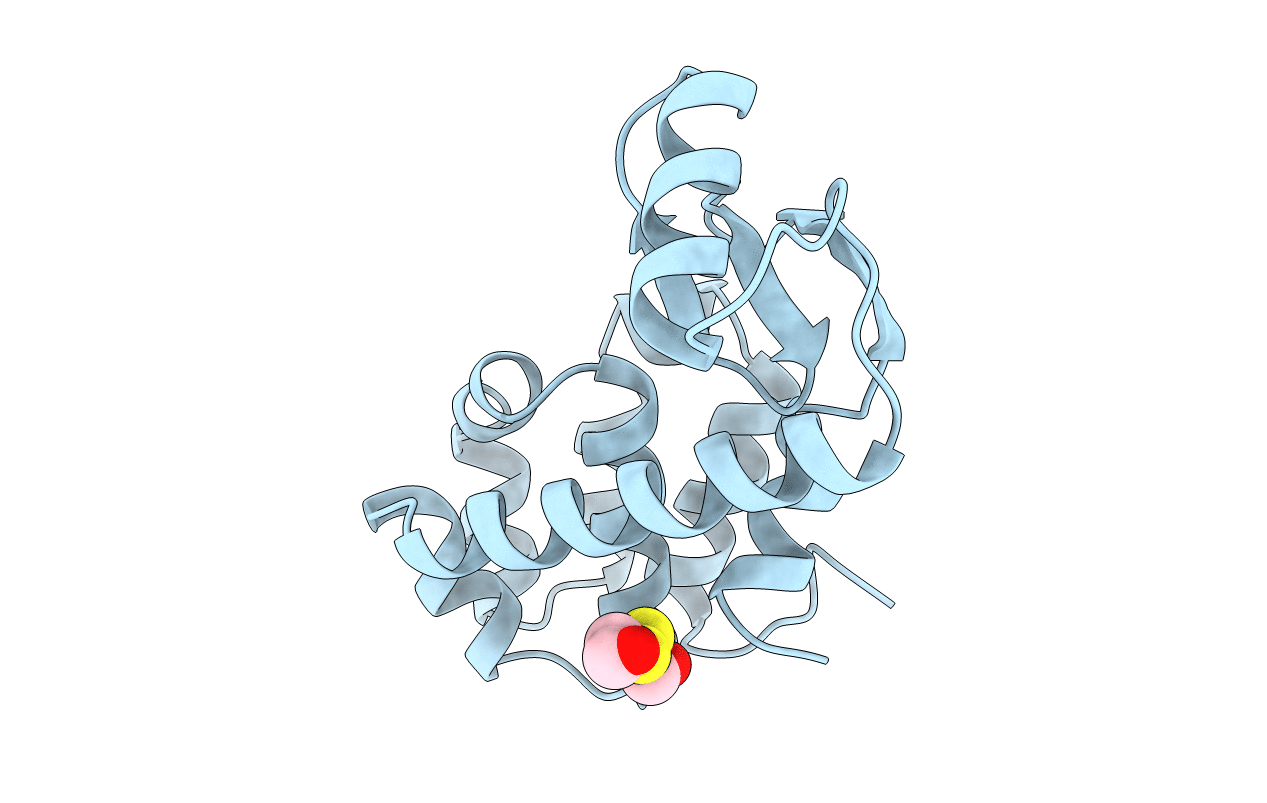
164l image
Deposition Date 1994-06-20
Release Date 1994-08-31
Last Version Date 2024-02-07
Entry Detail
PDB ID:
164L
Title:
CONTROL OF ENZYME ACTIVITY BY AN ENGINEERED DISULFIDE BOND
Biological Source:
Source Organism(s):
Method Details:
Experimental Method:
Resolution:
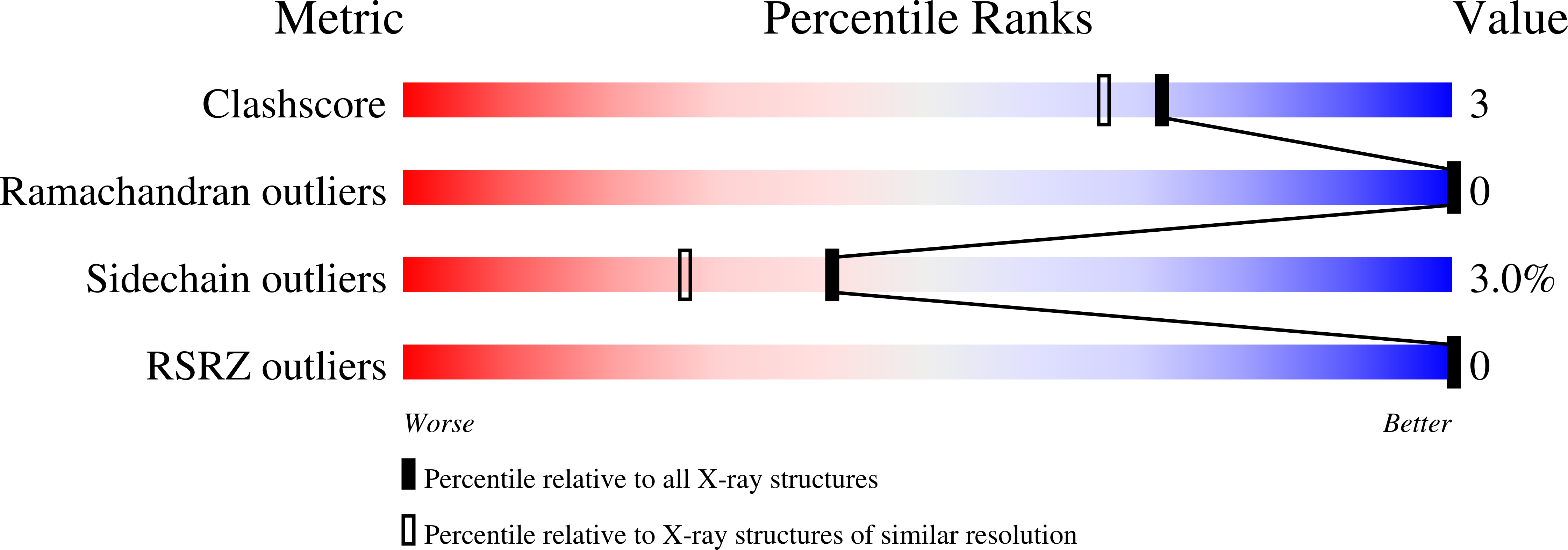
1.80 Å
R-Value Observed:
0.15
Space Group:
P 32 2 1
Macromolecular Entities
Structures with similar UniProt ID
Protein Blast
Polymer Type:polypeptide(L)
Molecule:T4 LYSOZYME
Gene (Uniprot):E
Chain IDs:A
Chain Length:164
Number of Molecules:1
Biological Source:Enterobacteria phage T4
Primary Citation
Alanine scanning mutagenesis of the alpha-helix 115-123 of phage T4 lysozyme: effects on structure, stability and the binding of solvent.
J. Mol. Biol. 246 317 330 (1995)
PMID: 7869383 DOI: 10.1006/jmbi.1994.0087

Abstact

A series of individual alanine mutations has been constructed in the helical region 115 to 123 in phage T4 lysozyme in order to evaluate the contribution to protein stability of the different side-chains within this region. Pairwise alanine mutations and a combination mutant with seven alanine substitutions were constructed to evaluate the additive effects upon structure and stability. Only three residues within this region (Ser117, Leu118 and Leu121) have a substantial influence upon stability (change in free energy of unfolding greater than 1.0 kcal/mol). Replacement of Ser117 with alanine results in an increase in protein stability of 1.27 kcal/mol, apparently due to the release of strain present in the wild-type protein. Replacement of the buried residues Leu118 and Leu121 is destabilizing. Substitution of the remaining six residues with alanine has relatively little effect on stability. This is consistent with prior studies showing that only 20 to 30% of the residues in amphipathic helices in T4 lysozyme are critical for stability. For some of the pairwise alanine mutants the effects on stability are additive. For most of these mutants, however, there is a slight (approximately 0.15 to 0.25 kcal/mol) non-additivity such that the double mutant is more stable than the sum of the constituent single mutants. This effect is consistently observed for residues with positions i, i +4; i.e. adjacent, but in consecutive turns of the helix, suggesting a weak but significant interaction between these amino acid residues. A more pronounced non-additivity (approximately 0.5 kcal/mol) is seen in the seven-alanine combination mutant. This non-additivity is due to a modest "collapse" or "repacking" that occurs for the combination mutants (especially the multiple alanine mutant) but is not possible for the single replacements. The truncation of some side-chains permits an increase in solvent accessibility of main-chain amide and carbonyl groups. This effect is most pronounced for the seven-alanine combination mutant, where two solvent molecules, not present in wild-type, hydrogen bond to main-chain carbonyl groups in the middle region of the helix. It has been suggested that the binding of such water molecules might represent the first step in solvent-mediated unfolding of an alpha-helix. The appearance of ordered solvent, however, appears to have very little effect on stability (approximately less than 0.2 kcal/mol).

Legend

Protein

Chemical

Disease

Primary Citation of related structures
Feedback Form
Name
Email
Institute
Feedback