

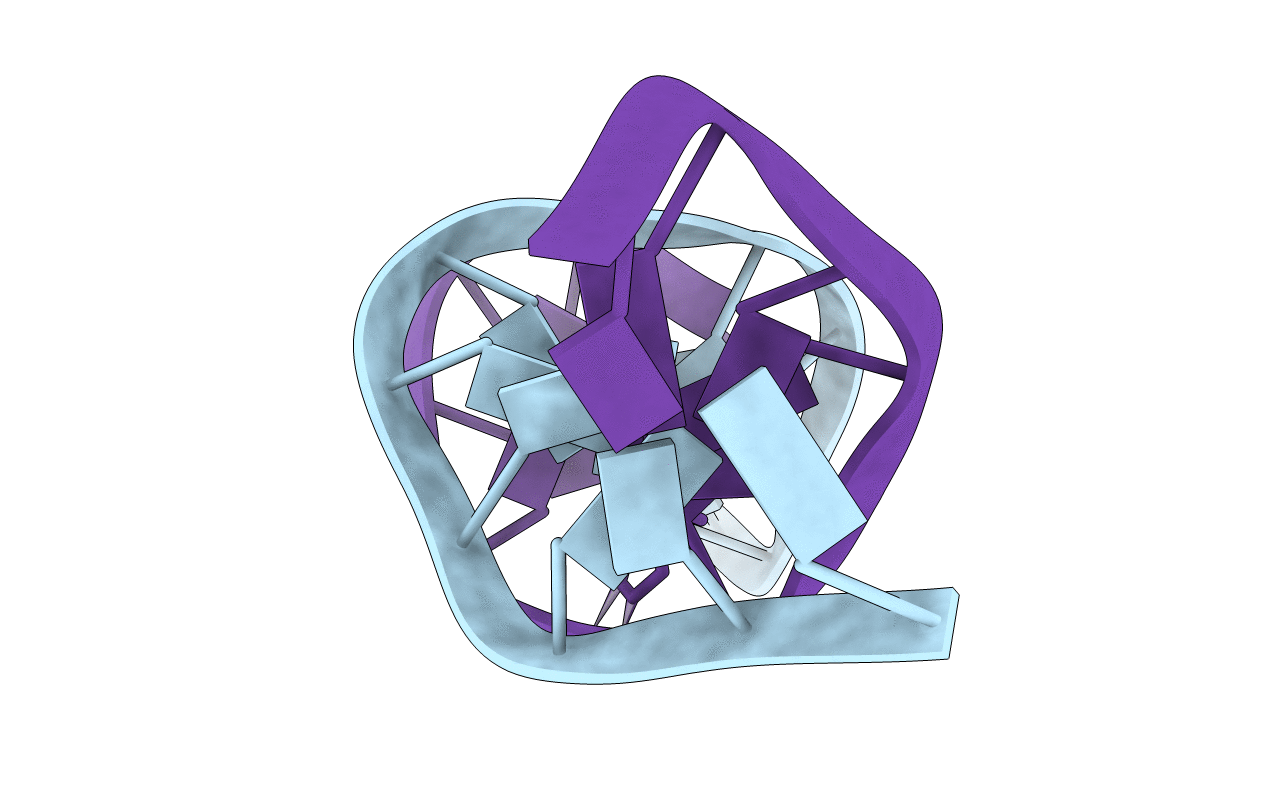
1SJL image
Deposition Date 1997-07-22
Release Date 1997-12-03
Last Version Date 2024-05-01
Entry Detail
PDB ID:
1SJL
Keywords:
Title:
A DUPLEX DNA WITH AN ABASIC SITE IN A DA TRACT, BETA FORM, NMR, MINIMIZED AVERAGE STRUCTURE
Method Details:

Experimental Method:
Conformers Calculated:
6
Conformers Submitted:
1
Macromolecular Entities
Polymer Type:polydeoxyribonucleotide
Molecule:DNA (5'-D(*CP*GP*CP*AP*AP*AP*
Chain IDs:A
Chain Length:12
Number of Molecules:1
Biological Source:
Polymer Type:polydeoxyribonucleotide
Molecule:DNA (5'-D(*CP*GP*CP*AP*TP*TP*
Chain IDs:B
Chain Length:12
Number of Molecules:1
Biological Source:
Ligand Molecules
Primary Citation
Solution structure of a duplex DNA with an abasic site in a dA tract.
Biochemistry 36 11629 11639 (1997)
PMID: 9305952 DOI: 10.1021/bi971464l

Abstact

The presence of dA tracts in DNA can lead to stable curvature of the DNA, and this curvature can be important in gene regulation, DNA packaging, and other processes. Since damage to DNA may eliminate this stable curvature, the solution state structure of the duplex of d(CGCAAAAATGCG) paired with d(CGCATTDTTCCG), with D indicating an abasic site, has been determined. The undamaged DNA bends into the major groove both in solution and in the crystal state. The presence of the abasic site in the dA tract region induces changes in the DNA structure up to four base pairs away from the damaged site. The structure of the DNA is dependent on whether the abasic site is in the alpha or beta hemiacetal form. These consequences are quite different from the more localized effects that have been observed for "normal" DNAs containing abasic sites. Thus, there appears to be a strong sequence dependence of the structural effects of abasic sites just as there is for undamaged DNA. Furthermore, these results indicate that the presence of an abasic site can alter DNA bending and hence is likely to have significant long range effects on gene regulation and other properties that are dependent on the stable curvature of DNA.

Legend

Protein

Chemical

Disease

Primary Citation of related structures
Feedback Form
Name
Email
Institute
Feedback