

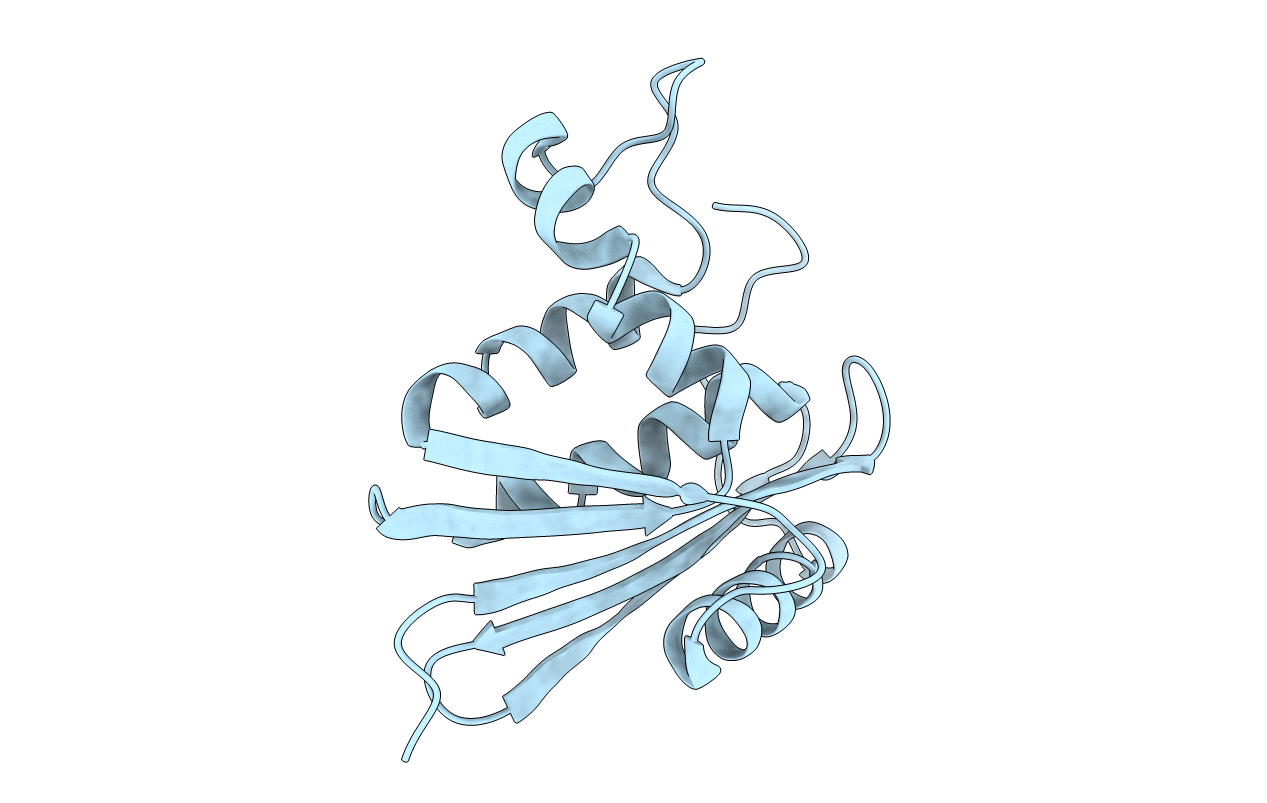
1RDA image
Deposition Date 1993-06-23
Release Date 1993-10-31
Last Version Date 2024-02-14
Entry Detail
PDB ID:
1RDA
Title:
CRYSTAL STRUCTURES OF RIBONUCLEASE HI ACTIVE SITE MUTANTS FROM ESCHERICHIA COLI
Biological Source:
Source Organism(s):
Escherichia coli (Taxon ID: 562)
Method Details:
Experimental Method:
Resolution:
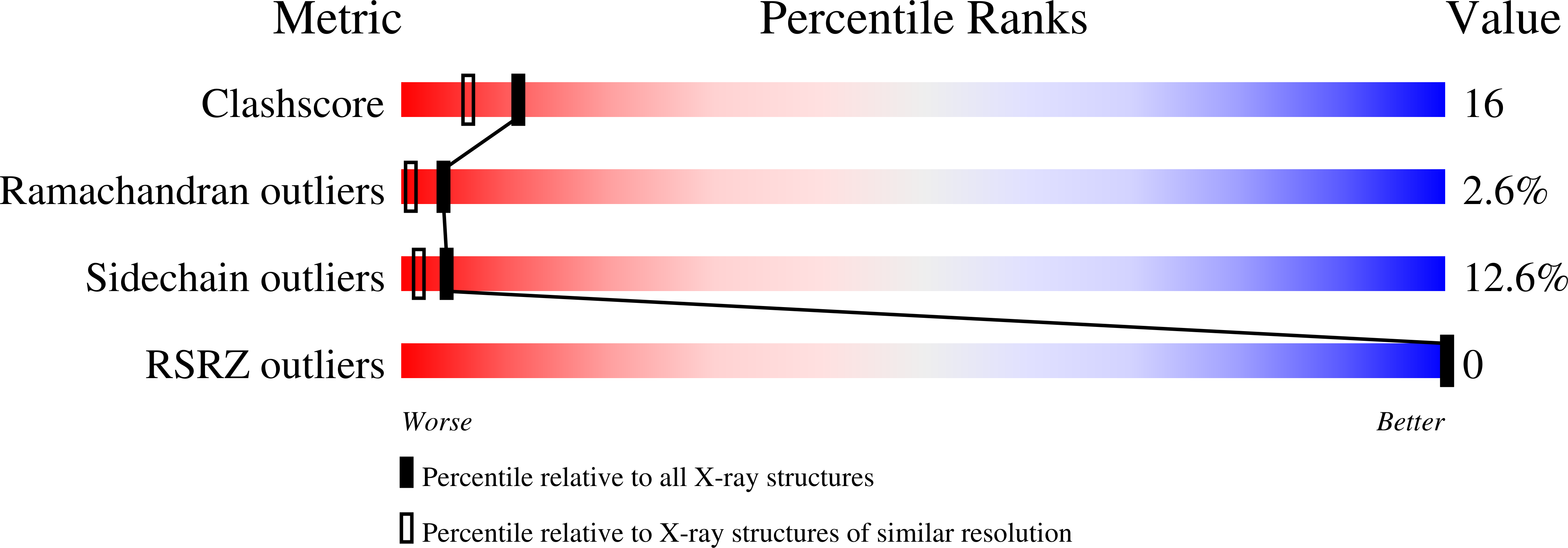
2.15 Å
R-Value Observed:
0.18
Space Group:
P 21 21 21
Macromolecular Entities
Polymer Type:polypeptide(L)
Molecule:RIBONUCLEASE H
Gene (Uniprot):rnhA
Chain IDs:A
Chain Length:155
Number of Molecules:1
Biological Source:Escherichia coli
Primary Citation
Crystal structures of ribonuclease HI active site mutants from Escherichia coli.
J. Biol. Chem. 268 22092 22099 (1993)
PMID: 8408067

Abstact

In order to investigate the relationships between the three-dimensional structure and the enzymic activity of E. coli RNase HI, three mutant proteins, which were completely inactivated by the replacements of three functional residues, Asp10 by Asn (D10N), Glu48 by Gln (E48Q), and Asp70 by Asn (D70N), were crystallized. Their three-dimensional structures were determined by x-ray crystallography. Although the entire backbone structures of these mutants were not affected by the replacements, very localized conformational changes were observed around the Mg(2+)-binding site. The substitution of an amide group for a negatively charged carboxyl group in common induces the formation of new hydrogen bond networks, presumably due to the cancellation of repulsive forces between carboxyl side chains with negative charges. These conformational changes can account for the loss of the enzymic activity in the mutants, and suggest a possible role for Mg2+ in the hydrolysis. Since the 3 replaced acidic residues are completely conserved in sequences of reverse transcriptases from retroviruses, including human immunodeficiency virus, the concepts of the catalytic mechanism deduced from this structural analysis can also be applied to RNase H activity in reverse transcriptases.

Legend

Protein

Chemical

Disease

Primary Citation of related structures
Feedback Form
Name
Email
Institute
Feedback