

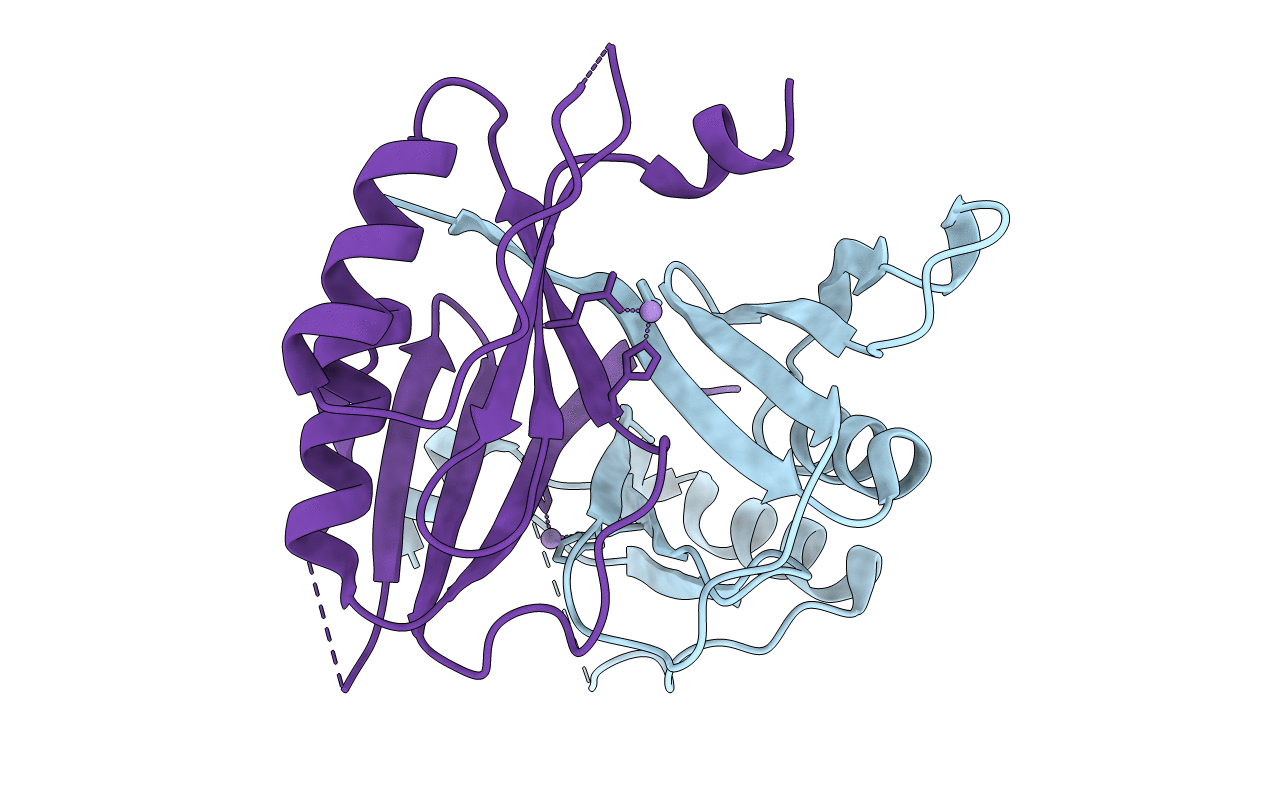
1R9C image
Deposition Date 2003-10-28
Release Date 2004-02-10
Last Version Date 2023-08-23
Entry Detail
PDB ID:
1R9C
Keywords:
Title:
Crystal Structure of Fosfomycin Resistance Protein FosX from Mesorhizobium Loti
Biological Source:
Source Organism(s):
Expression System(s):
Method Details:
Experimental Method:
Resolution:
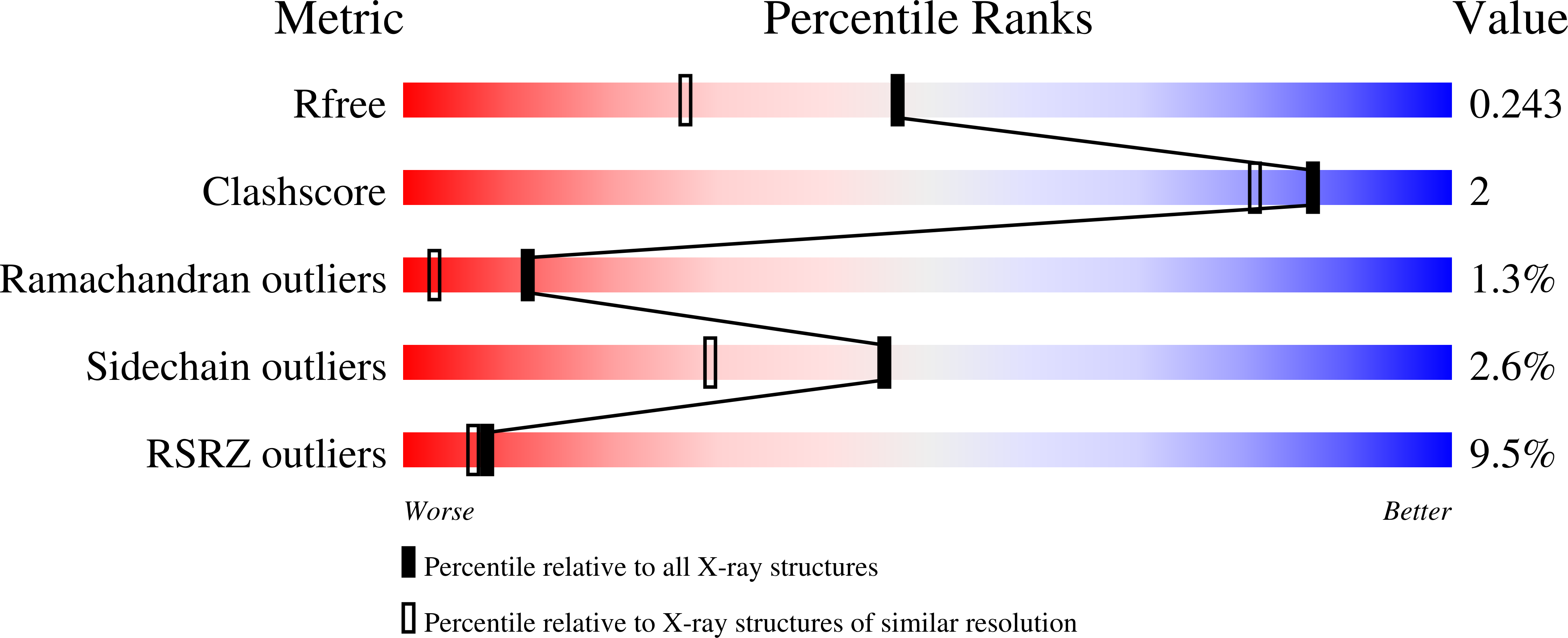
1.83 Å
R-Value Free:
0.24
R-Value Work:
0.20
R-Value Observed:
0.20
Space Group:
P 21 21 2
Macromolecular Entities
Structures with similar UniProt ID
Protein Blast
Polymer Type:polypeptide(L)
Molecule:glutathione transferase
Gene (Uniprot):fosX
Chain IDs:A, B
Chain Length:139
Number of Molecules:2
Biological Source:Mesorhizobium loti
Ligand Molecules
Primary Citation
Mechanistic diversity of fosfomycin resistance in pathogenic microorganisms.
J. Am. Chem. Soc. 125 15730 15731 (2003)
PMID: 14677948 DOI: 10.1021/ja039307z

Abstact

Microbial resistance to the antibiotic fosfomycin [(1R,2S)-epoxypropylphosphonic acid, 1] is known to be mediated by thiol transferase enzymes FosA and FosB, which catalyze the addition of glutathione and l-cysteine to C1 of the oxirane, respectively. A probe of the microbial genome database reveals a related group of enzymes (FosX). The genes mlr3345 from Mesorhizobium loti and lmo1702 from Listeria monocytogenes were cloned and the proteins expressed. This heretofore unrecognized group of enzymes is shown to catalyze the Mn(II)-dependent addition of water to C1 of the oxirane. The ability of each enzyme to confer resistance in Escherichia coli is correlated with their catalytic efficiency, such that the M. loti protein confers low resistance while the Listeria enzyme confers very robust resistance. The crystal structure of the FosX from M. loti was solved at a resolution of 1.83 A. The structure reveals an active-site carboxylate (E44) located about 5 A from the expected position of the substrate that appears to be poised to participate in catalysis. Single turnover experiments in H218O and kinetic analysis of the E44G mutant of the FosX enzymes indicate that the carboxylate of E44 acts as a general base in the direct addition of water to 1. The FosX from M. loti also catalyzes the addition of glutathione to the antibiotic. The catalytic promiscuity and low efficiency of the M. loti protein suggest that it may be an intermediate in the evolution of clinically relevant fosfomycin resistance proteins such as the FosX from Listeria monocytogenese.

Legend

Protein

Chemical

Disease

Primary Citation of related structures
Feedback Form
Name
Email
Institute
Feedback