

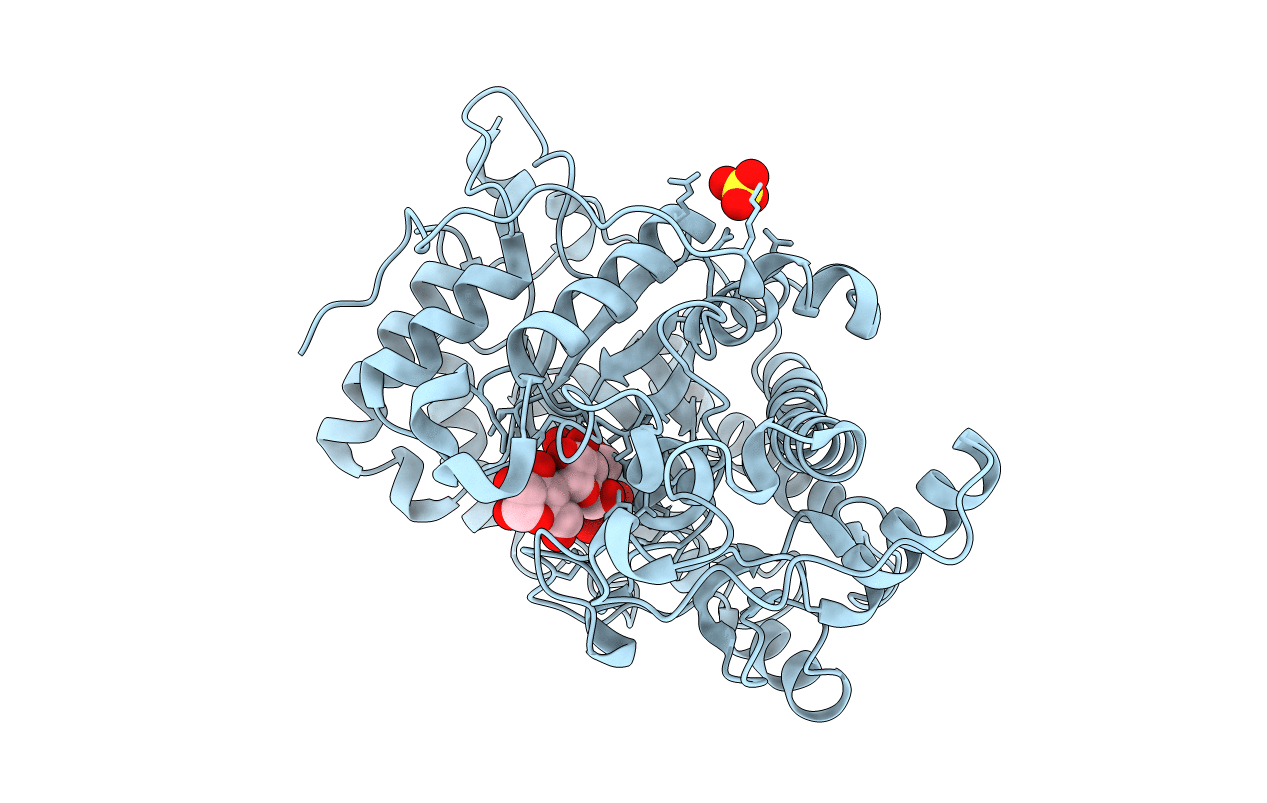
1Q6C image
Deposition Date 2003-08-13
Release Date 2004-02-24
Last Version Date 2024-03-13
Entry Detail
PDB ID:
1Q6C
Keywords:
Title:
Crystal Structure of Soybean Beta-Amylase Complexed with Maltose
Biological Source:
Source Organism(s):
Glycine max (Taxon ID: 3847)
Expression System(s):
Method Details:
Experimental Method:
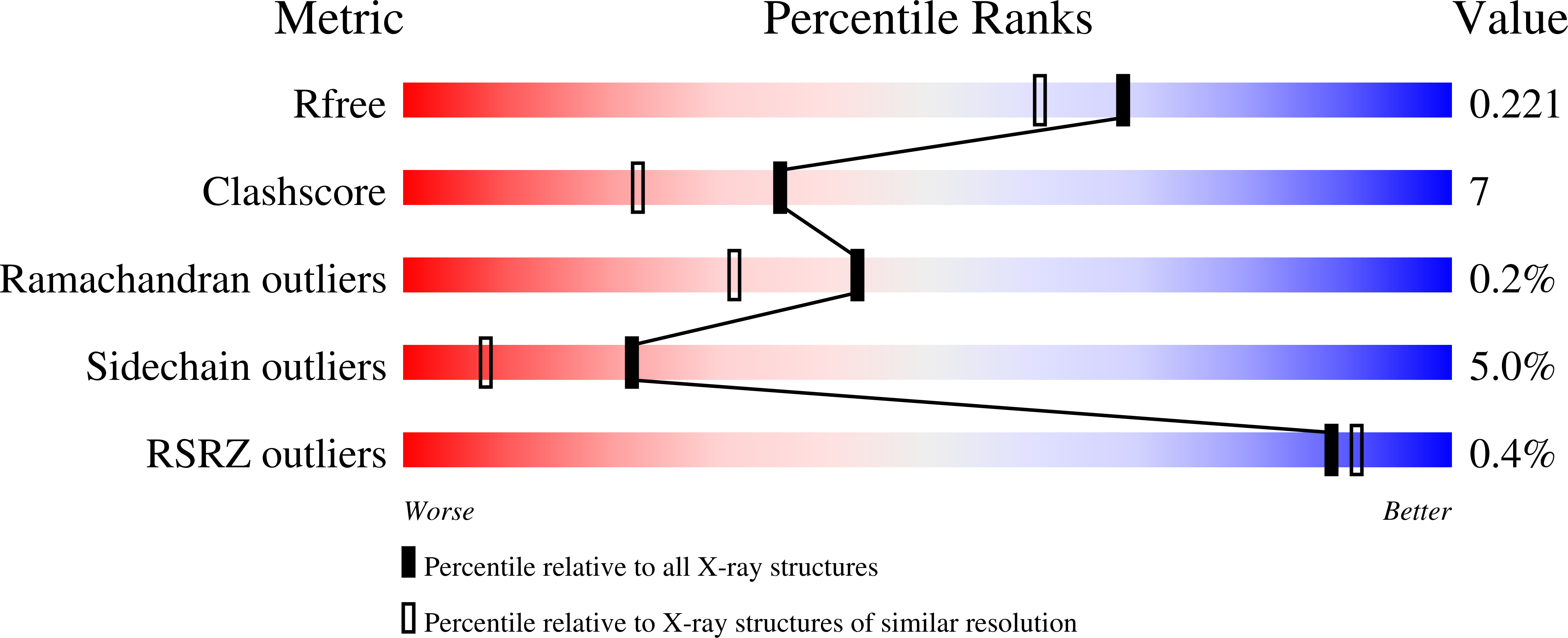
Resolution:
1.86 Å
R-Value Free:
0.21
R-Value Work:
0.17
R-Value Observed:
0.17
Space Group:
P 31 2 1
Macromolecular Entities
Polymer Type:polypeptide(L)
Molecule:beta-amylase
Chain IDs:A
Chain Length:495
Number of Molecules:1
Biological Source:Glycine max
Ligand Molecules
Peptide-like Molecules
PRD_900001
Primary Citation
Structural and Enzymatic Analysis of Soybean {beta}-Amylase Mutants with Increased pH Optimum
J. Biol. Chem. 279 7287 7295 (2004)
PMID: 14638688 DOI: 10.1074/jbc.M309411200

Abstact

Comparison of the architecture around the active site of soybean beta-amylase and Bacillus cereus beta-amylase showed that the hydrogen bond networks (Glu380-(Lys295-Met51) and Glu380-Asn340-Glu178) in soybean beta-amylase around the base catalytic residue, Glu380, seem to contribute to the lower pH optimum of soybean beta-amylase. To convert the pH optimum of soybean beta-amylase (pH 5.4) to that of the bacterial type enzyme (pH 6.7), three mutants of soybean beta-amylase, M51T, E178Y, and N340T, were constructed such that the hydrogen bond networks were removed by site-directed mutagenesis. The kinetic analysis showed that the pH optimum of all mutants shifted dramatically to a neutral pH (range, from 5.4 to 6.0-6.6). The Km values of the mutants were almost the same as that of soybean beta-amylase except in the case of M51T, while the Vmax values of all mutants were low compared with that of soybean beta-amylase. The crystal structure analysis of the wild type-maltose and mutant-maltose complexes showed that the direct hydrogen bond between Glu380 and Asn340 was completely disrupted in the mutants M51T, E178Y, and N340T. In the case of M51T, the hydrogen bond between Glu380 and Lys295 was also disrupted. These results indicated that the reduced pKa value of Glu380 is stabilized by the hydrogen bond network and is responsible for the lower pH optimum of soybean beta-amylase compared with that of the bacterial beta-amylase.

Legend

Protein

Chemical

Disease

Primary Citation of related structures
Feedback Form
Name
Email
Institute
Feedback