

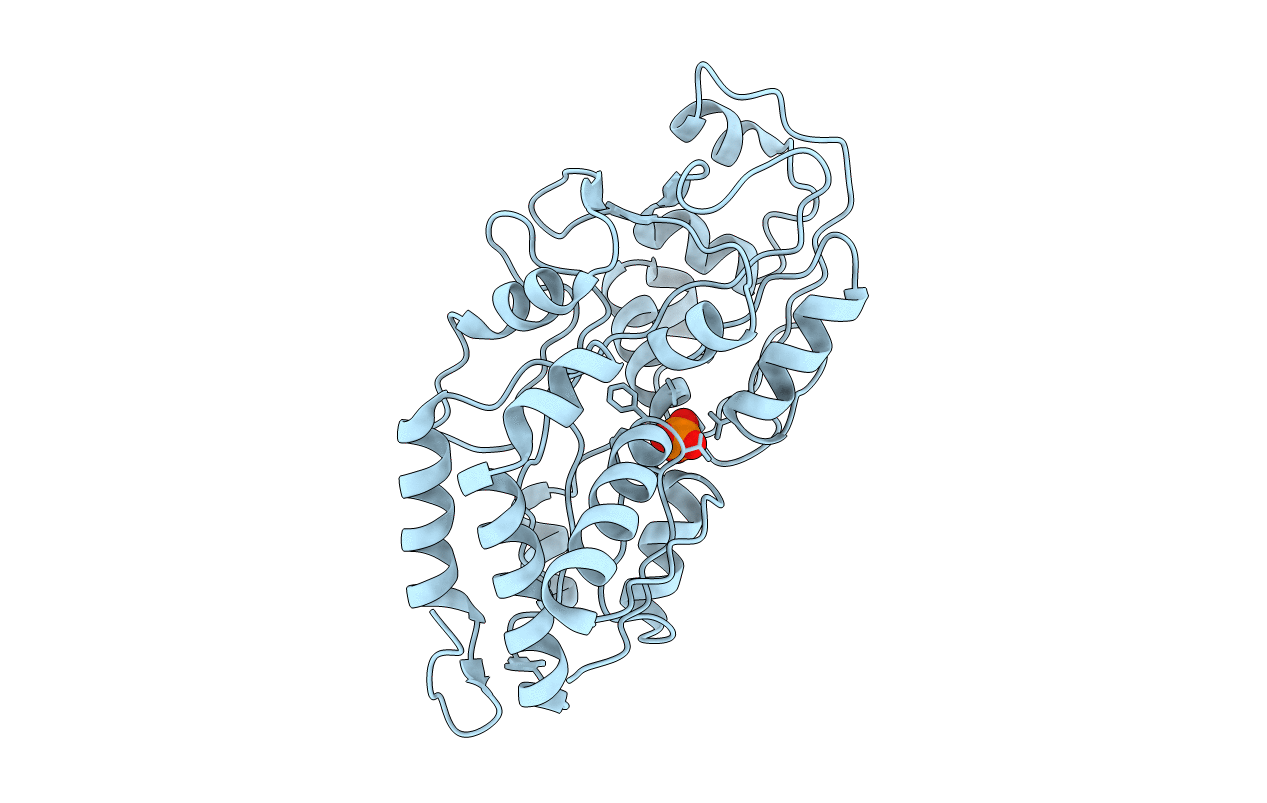
1PBP image
Deposition Date 1994-07-20
Release Date 1994-10-15
Last Version Date 2024-02-14
Entry Detail
PDB ID:
1PBP
Title:
FINE TUNING OF THE SPECIFICITY OF THE PERIPLASMIC PHOSPHATE TRANSPORT RECEPTOR: SITE-DIRECTED MUTAGENESIS, LIGAND BINDING, AND CRYSTALLOGRAPHIC STUDIES
Biological Source:
Source Organism(s):
Escherichia coli (Taxon ID: 562)
Method Details:
Experimental Method:
Resolution:
1.90 Å
R-Value Work:
0.14
R-Value Observed:
0.14
Space Group:
P 21 21 21

Macromolecular Entities
Polymer Type:polypeptide(L)
Molecule:PHOSPHATE-BINDING PROTEIN
Chain IDs:A
Chain Length:321
Number of Molecules:1
Biological Source:Escherichia coli
Ligand Molecules
Primary Citation
Fine tuning the specificity of the periplasmic phosphate transport receptor. Site-directed mutagenesis, ligand binding, and crystallographic studies.
J. Biol. Chem. 269 25091 25094 (1994)
PMID: 7929197

Abstact

Phosphorous, primarily in the form of phosphate, is a critical nutrient for the life of a cell. We have previously determined the 1.7-A resolution structure of the phosphate-binding protein, an initial receptor for the high-affinity phosphate active transport system or permease in Escherichia coli (Luecke, H., and Quiocho, F.A. (1990) Nature 347, 402-406). This structure is the first to reveal the key role of hydrogen bonding interactions in conferring the high specificity of the permease, a specificity also shared by other phosphate transport systems. Both monobasic and dibasic phosphates are recognized by the phosphate-binding protein with Asp56 playing a key role. Here we report site-directed mutagenesis, ligand binding, and crystallographic studies of the binding protein which show that introduction of one additional Asp by mutagenesis of the Thr141 in the ligand-binding site restricts binding to only the monobasic phosphate.

Legend

Protein

Chemical

Disease

Primary Citation of related structures
Feedback Form
Name
Email
Institute
Feedback