

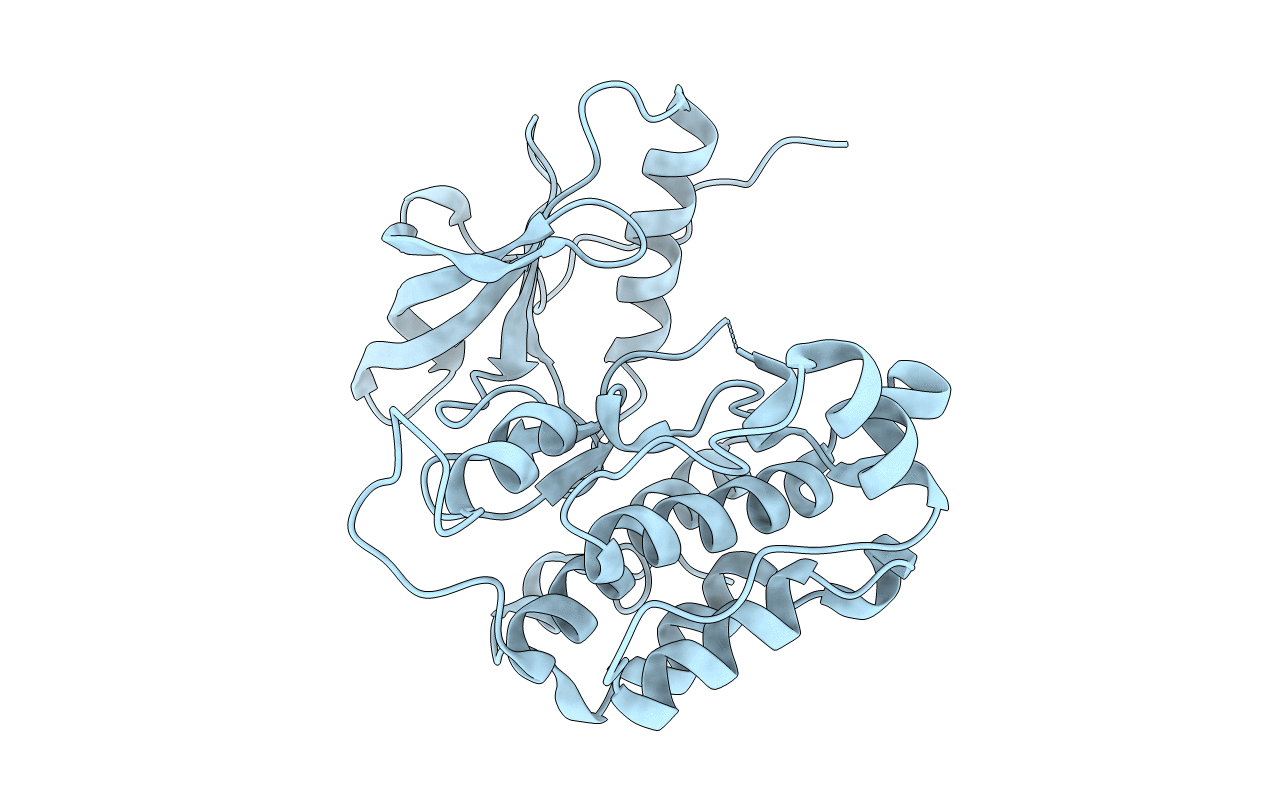
1P14 image
Deposition Date 2003-04-11
Release Date 2003-07-22
Last Version Date 2023-08-16
Entry Detail
PDB ID:
1P14
Keywords:
Title:
Crystal structure of a catalytic-loop mutant of the insulin receptor tyrosine kinase
Biological Source:
Source Organism(s):
Homo sapiens (Taxon ID: 9606)
Expression System(s):
Method Details:
Experimental Method:
Resolution:
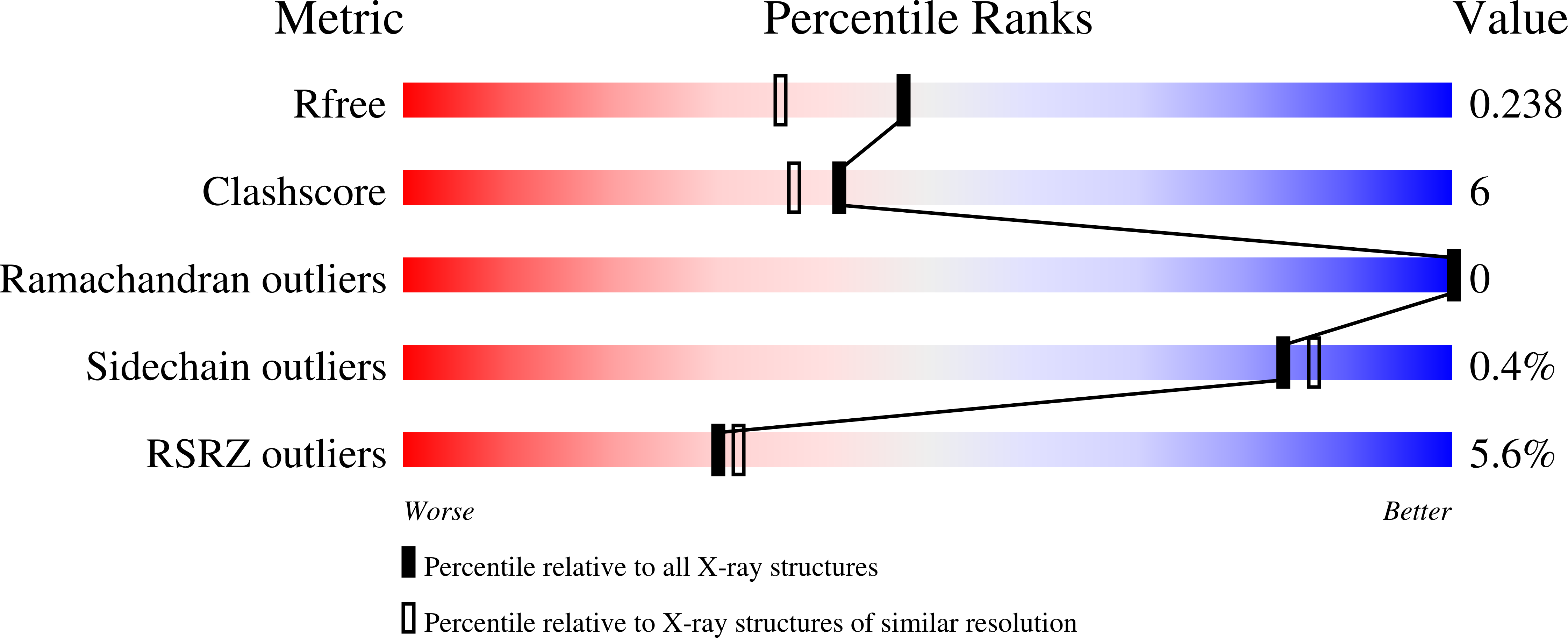
1.90 Å
R-Value Free:
0.24
R-Value Work:
0.22
R-Value Observed:
0.22
Space Group:
P 21 21 21
Macromolecular Entities
Polymer Type:polypeptide(L)
Molecule:insulin receptor
Gene (Uniprot):INSR
Mutagens:C981S, D1132N
Chain IDs:A
Chain Length:306
Number of Molecules:1
Biological Source:Homo sapiens
Primary Citation
Structural and biochemical evidence for an autoinhibitory role for tyrosine 984 in the juxtamembrane region of the insulin receptor
J. Biol. Chem. 278 26007 26014 (2003)
PMID: 12707268 DOI: 10.1074/jbc.M302425200

Abstact

Tyrosine 984 in the juxtamembrane region of the insulin receptor, between the transmembrane helix and the cytoplasmic tyrosine kinase domain, is conserved among all insulin receptor-like proteins from hydra to humans. Crystallographic studies of the tyrosine kinase domain and proximal juxtamembrane region reveal that Tyr-984 interacts with several other conserved residues in the N-terminal lobe of the kinase domain, stabilizing a catalytically nonproductive position of alpha-helix C. Steady-state kinetics measurements on the soluble kinase domain demonstrate that replacement of Tyr-984 with phenylalanine results in a 4-fold increase in kcat in the unphosphorylated (basal state) enzyme. Moreover, mutation of Tyr-984 in the full-length insulin receptor results in significantly elevated receptor phosphorylation levels in cells, both in the absence of insulin and following insulin stimulation. These data demonstrate that Tyr-984 plays an important structural role in maintaining the quiescent, basal state of the insulin receptor. In addition, the structural studies suggest a possible target site for small molecule activators of the insulin receptor, with potential use in the treatment of noninsulin-dependent diabetes mellitus.

Legend

Protein

Chemical

Disease

Primary Citation of related structures
Feedback Form
Name
Email
Institute
Feedback