

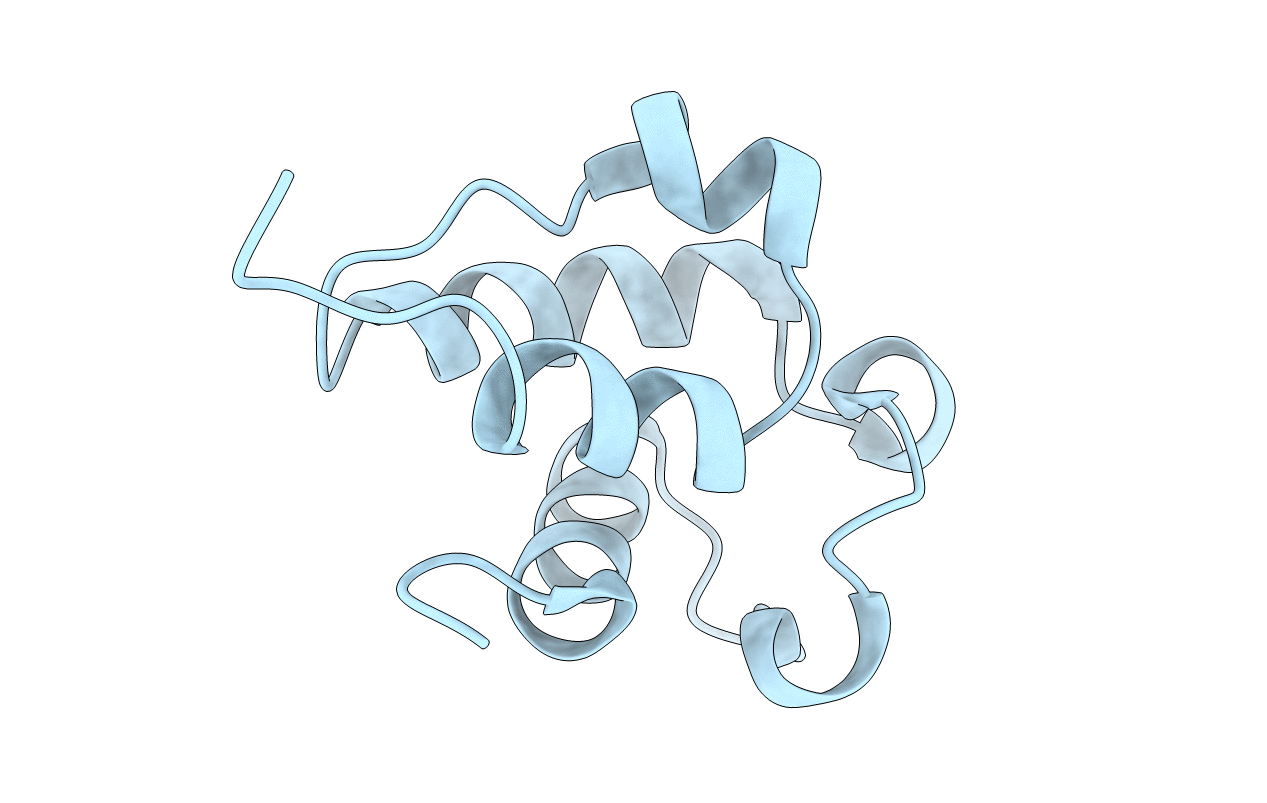
1OR5 image
Deposition Date 2003-03-11
Release Date 2003-07-01
Last Version Date 2024-05-22
Entry Detail
PDB ID:
1OR5
Title:
SOLUTION STRUCTURE OF THE HOLO-FORM OF THE FRENOLICIN ACYL CARRIER PROTEIN, MINIMIZED MEAN STRUCTURE
Biological Source:
Source Organism(s):
Expression System(s):
Method Details:
Experimental Method:
Conformers Submitted:
1
Macromolecular Entities
Structures with similar UniProt ID
Protein Blast
Polymer Type:polypeptide(L)
Molecule:acyl carrier protein
Gene (Uniprot):frnN
Chain IDs:A
Chain Length:83
Number of Molecules:1
Biological Source:Streptomyces roseofulvus
Ligand Molecules
Primary Citation
Solution Structure and Backbone Dynamics of the Holo Form of the Frenolicin Acyl Carrier Protein
Biochemistry 42 4648 4657 (2003)
PMID: 12705828 DOI: 10.1021/bi0274120

Abstact

During polyketide biosynthesis, acyl carrier proteins (ACPs) perform the central role of transferring polyketide intermediates between active sites of polyketide synthase. The 4'-phosphopantetheine prosthetic group of a holo-ACP is a long and flexible arm that can reach into different active sites and provide a terminal sulfhydryl group for the attachment of acyl groups through a thioester linkage. We have determined the solution structure and characterized backbone dynamics of the holo form of the frenolicin acyl carrier protein (fren holo-ACP) by nuclear magnetic resonance (NMR). Unambiguous assignments were made for 433 hydrogen atoms, 333 carbon atoms, and 84 nitrogen atoms, representing a total of 94.6% of the assignable atoms in this protein. From 879 meaningful NOEs and 45 angle constraints, a family of 24 structures has been calculated. The solution structure is composed of three major alpha-helices packed in a bundle with three additional short helices in intervening loops; one of the short helices slowly exchanges between two conformations. Superposition of the major helical regions on the mean structure yields average atomic rmsd values of 0.49 +/- 0.09 and 0.91 +/- 0.08 A for backbone and non-hydrogen atoms, respectively. Although the three-helix bundle fold is conserved among acyl carrier proteins involved in fatty acid synthases and polyketide synthases, a detailed comparison revealed that ACPs from polyketide biosynthetic pathways are more related to each other in tertiary fold than to their homologues from fatty acid biosynthetic pathways. Comparison of the free form of ACPs (NMR structures of fren ACP and the Bacillus subtilis ACP) with the substrate-bound form of ACP (crystal structure of butyryl-ACP from Escherichia coli) suggests that conformational exchange plays a role in substrate binding.

Legend

Protein

Chemical

Disease

Primary Citation of related structures
Feedback Form
Name
Email
Institute
Feedback