

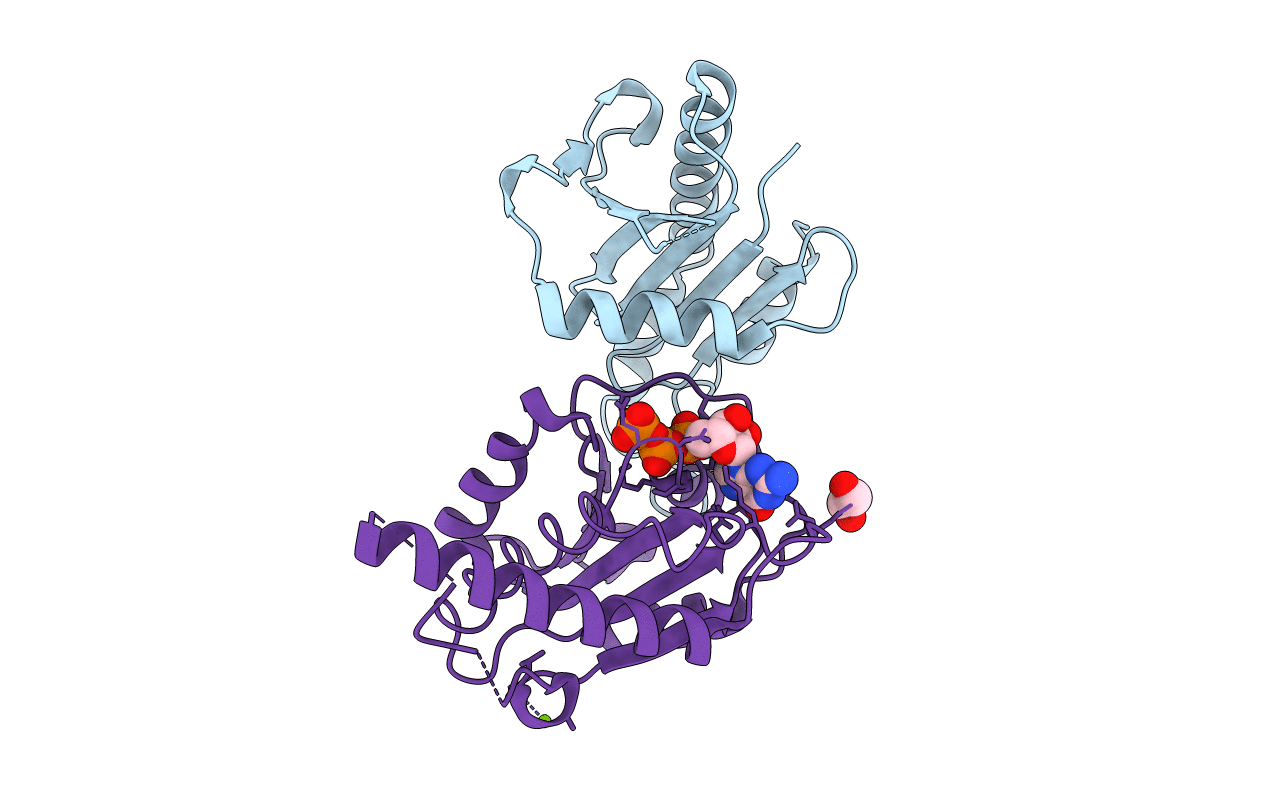
1NRJ image
Deposition Date 2003-01-24
Release Date 2003-03-25
Last Version Date 2024-02-14
Entry Detail
PDB ID:
1NRJ
Title:
Signal Recognition Particle Receptor Beta-Subunit in Complex with the SRX Domain from the Alpha-Subunit
Biological Source:
Source Organism(s):
Expression System(s):
Method Details:
Experimental Method:
Resolution:
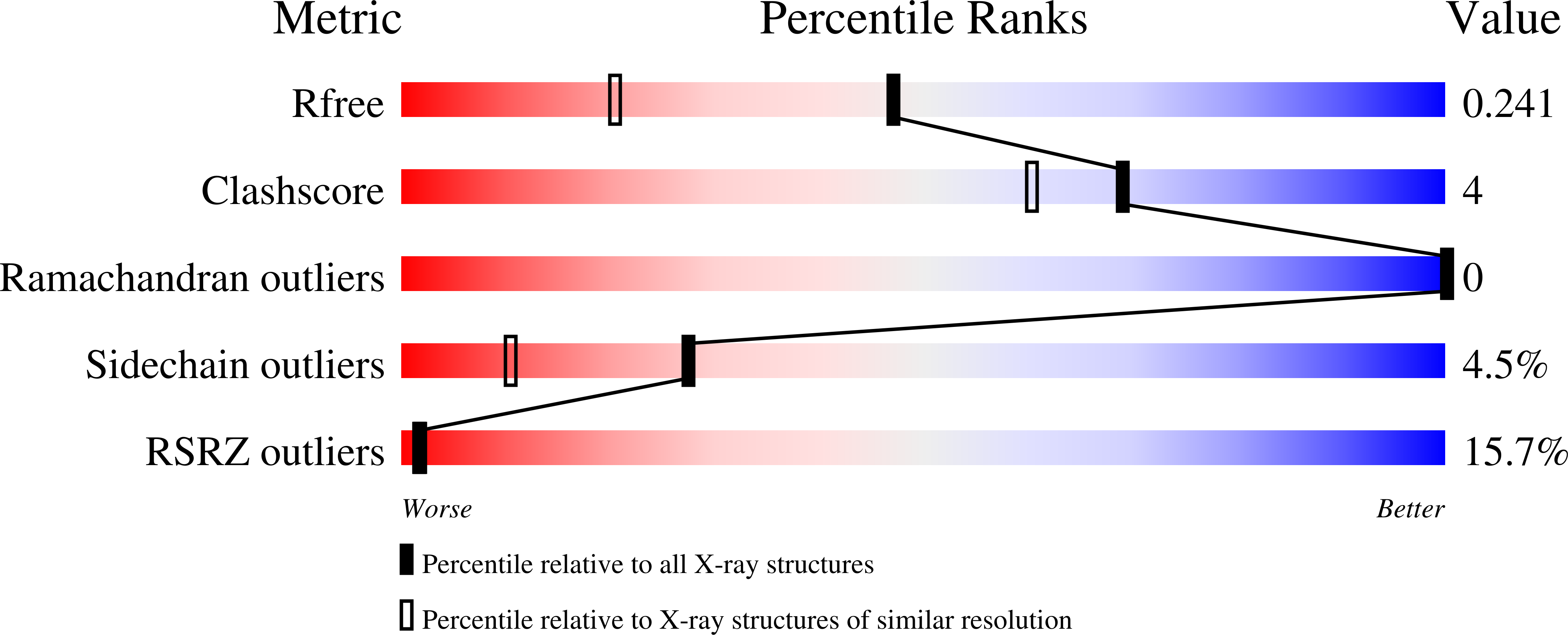
1.70 Å
R-Value Free:
0.22
R-Value Work:
0.19
R-Value Observed:
0.19
Space Group:
P 21 21 2
Macromolecular Entities
Structures with similar UniProt ID
Protein Blast
Polymer Type:polypeptide(L)
Molecule:Signal recognition particle r
Gene (Uniprot):SRP101
Chain IDs:A
Chain Length:158
Number of Molecules:1
Biological Source:Saccharomyces cerevisiae
Structures with similar UniProt ID
Protein Blast
Polymer Type:polypeptide(L)
Molecule:Signal recognition particle r
Gene (Uniprot):SRP102
Chain IDs:B
Chain Length:218
Number of Molecules:1
Biological Source:Saccharomyces cerevisiae
Primary Citation
Structural Basis for the Function of the beta Subunit of the Eukaryotic Signal Recognition Particle Receptor
Cell 112 793 803 (2003)
PMID: 12654246 DOI: 10.1016/S0092-8674(03)00161-2

Abstact

Protein translocation across and insertion into membranes is a process essential to all life forms. In higher eukaryotes, this process is initiated by targeting the translating ribosome to the endoplasmic reticulum via the signal recognition particle (SRP) and its membrane-associated heterodimeric receptor (SR). This targeting step is regulated by three G proteins, SRP54, SR alpha, and SR beta, which act in concert. Little is known about the regulatory role of SR beta. Here, we present the 1.7 A crystal structure of the SR beta-GTP subunit in complex with the interaction domain of SR alpha. Strikingly, the binding interface overlaps largely with the switch 1 region of SR beta. This finding, together with additional biochemical data, shows that the eukaryotic SR is a conditional and not an obligate heterodimer. The results suggest that the GTP/GDP switch cycle of SR beta functions as a regulatory switch for the receptor dimerization. We discuss the implications for the translocation pathway.

Legend

Protein

Chemical

Disease

Primary Citation of related structures
Feedback Form
Name
Email
Institute
Feedback