

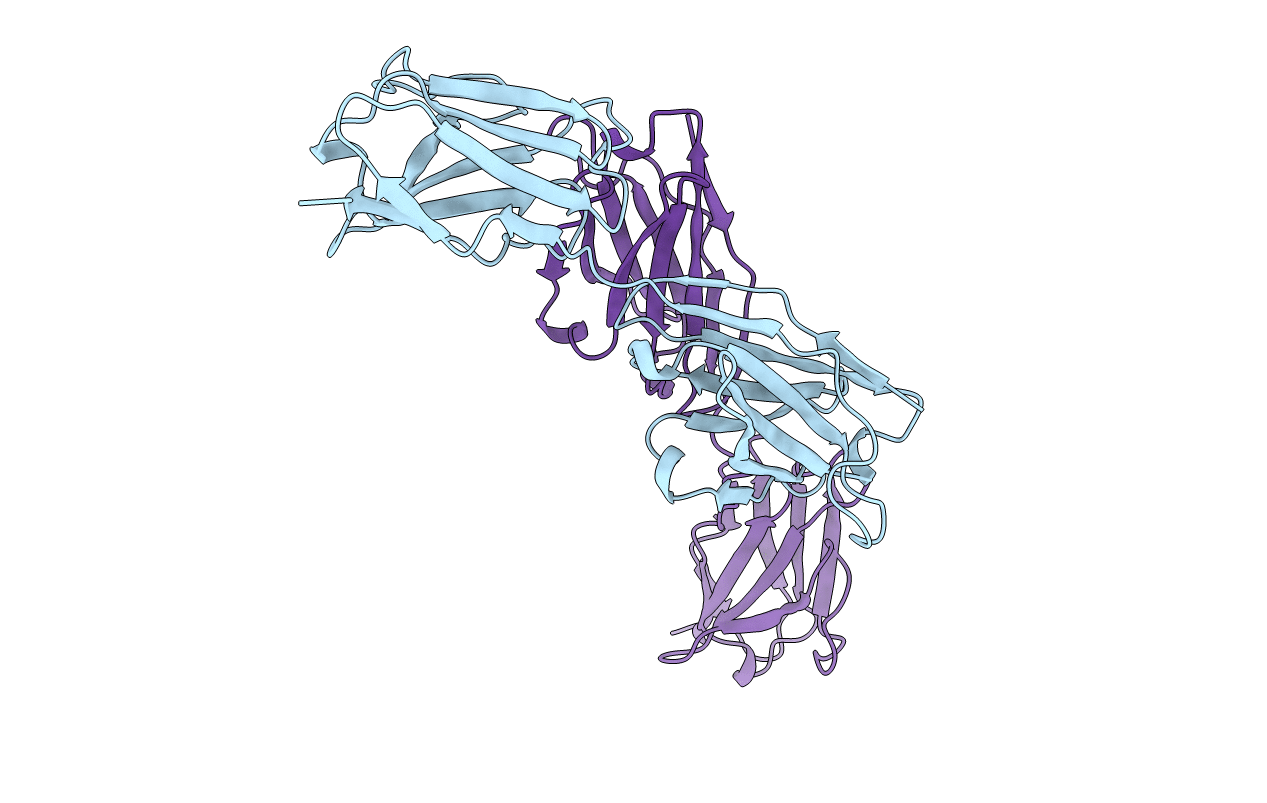
1NQB image
Deposition Date 1997-04-04
Release Date 1997-08-20
Last Version Date 2024-10-16
Entry Detail
PDB ID:
1NQB
Keywords:
Title:
TRIVALENT ANTIBODY FRAGMENT
Biological Source:
Source Organism(s):
Mus musculus (Taxon ID: 10090)
Expression System(s):
Method Details:
Experimental Method:
Resolution:
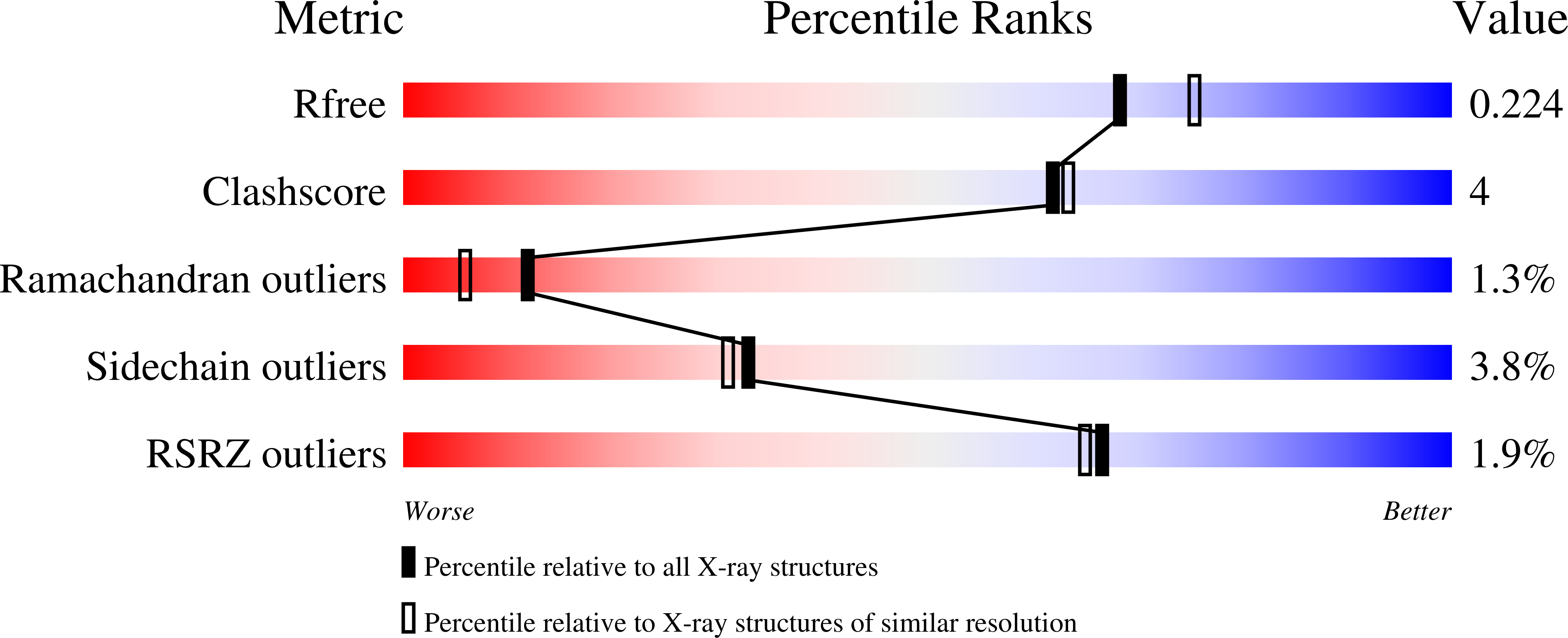
2.00 Å
R-Value Free:
0.23
R-Value Work:
0.18
R-Value Observed:
0.18
Space Group:
H 3
Macromolecular Entities
Structures with similar UniProt ID
Protein Blast
Polymer Type:polypeptide(L)
Molecule:SINGLE-CHAIN ANTIBODY FRAGMEN
Chain IDs:A, B (auth: C)
Chain Length:256
Number of Molecules:2
Biological Source:Mus musculus
Primary Citation
The 2.0-A resolution crystal structure of a trimeric antibody fragment with noncognate VH-VL domain pairs shows a rearrangement of VH CDR3.
Proc. Natl. Acad. Sci. U.S.A. 94 9637 9642 (1997)
PMID: 9275175 DOI: 10.1073/pnas.94.18.9637

Abstact

The 2.0-A resolution x-ray crystal structure of a novel trimeric antibody fragment, a "triabody," has been determined. The trimer is made up of polypeptides constructed in a manner identical to that previously described for some "diabodies": a VL domain directly fused to the C terminus of a VH domain-i.e., without any linker sequence. The trimer has three Fv heads with the polypeptides arranged in a cyclic, head-to-tail fashion. For the particular structure reported here, the polypeptide was constructed with a VH domain from one antibody fused to the VL domain from an unrelated antibody giving rise to "combinatorial" Fvs upon formation of the trimer. The structure shows that the exchange of the VL domain from antibody B1-8, a Vlambda domain, with the VL domain from antibody NQ11, a Vkappa domain, leads to a dramatic conformational change in the VH CDR3 loop of antibody B1-8. The magnitude of this change is similar to the largest of the conformational changes observed in antibody fragments in response to antigen binding. Combinatorial pairing of VH and VL domains constitutes a major component of antibody diversity. Conformationally flexible antigen-binding sites capable of adapting to the specific CDR3 loop context created upon VH-VL pairing may be employed by the immune system to maximize the structural diversity of the immune response.

Legend

Protein

Chemical

Disease

Primary Citation of related structures
Feedback Form
Name
Email
Institute
Feedback