

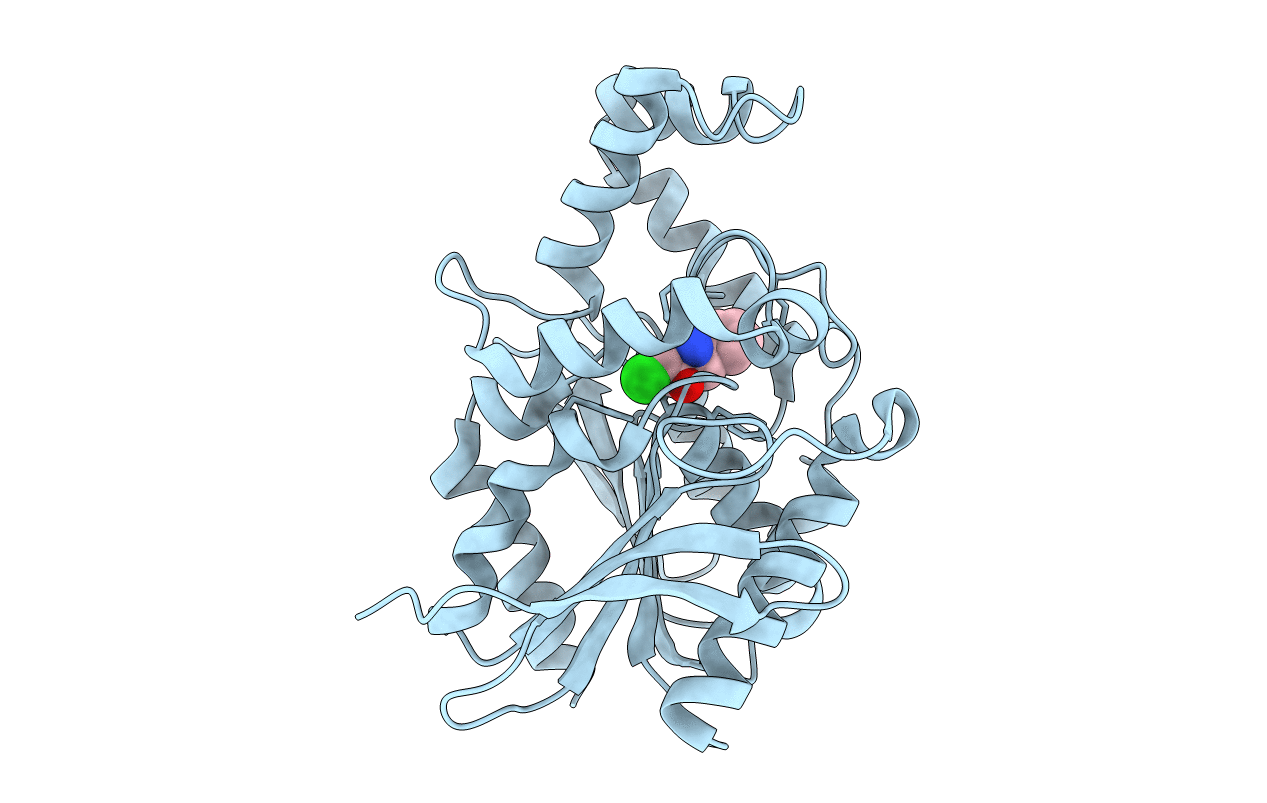
1MU0 image
Deposition Date 2002-09-23
Release Date 2002-11-06
Last Version Date 2024-11-06
Entry Detail
PDB ID:
1MU0
Keywords:
Title:
Crystal Structure of the Tricorn Interacting Factor F1 Complex with PCK
Biological Source:
Source Organism(s):
Expression System(s):
Method Details:
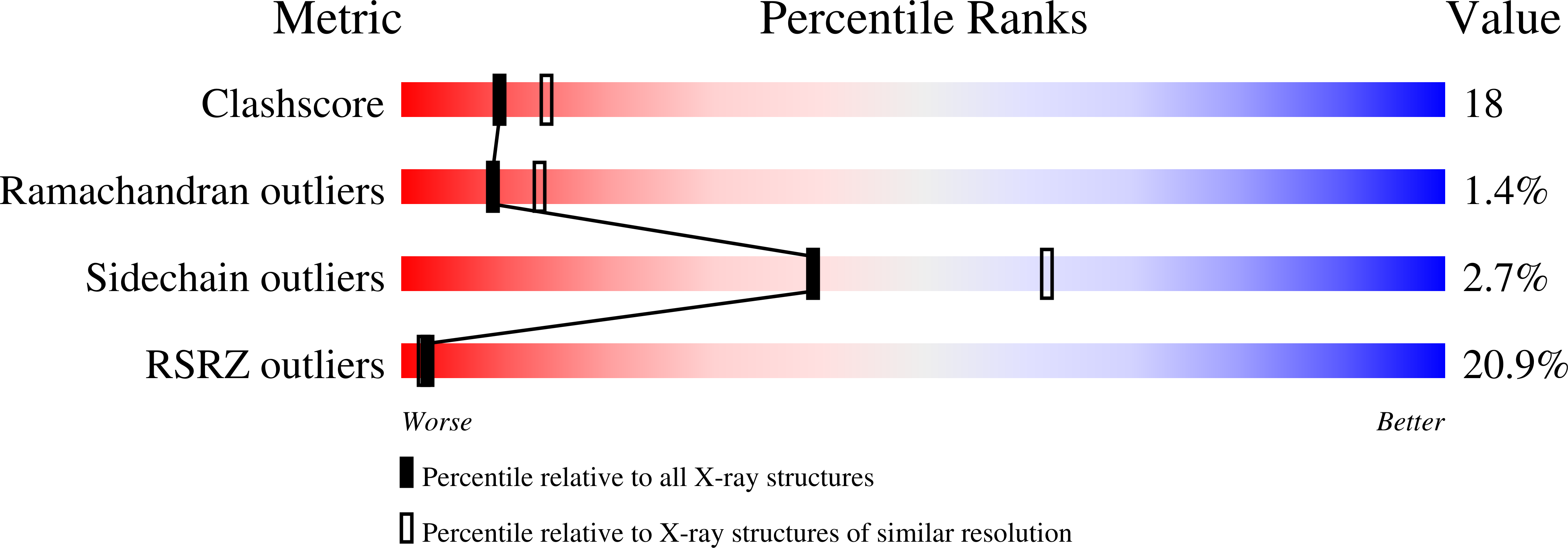
Experimental Method:
Resolution:
2.40 Å
R-Value Free:
0.36
R-Value Work:
0.31
R-Value Observed:
0.36
Space Group:
P 21 21 21
Macromolecular Entities
Polymer Type:polypeptide(L)
Molecule:Proline iminopeptidase
Gene (Uniprot):pip
Chain IDs:A
Chain Length:293
Number of Molecules:1
Biological Source:Thermoplasma acidophilum
Ligand Molecules
Primary Citation
Structures of the tricorn-interacting aminopeptidase F1 with different ligands explain its catalytic mechanism
EMBO J. 21 5343 5352 (2002)
PMID: 12374735 DOI: 10.1093/emboj/cdf552

Abstact

F1 is a 33.5 kDa serine peptidase of the alpha/beta-hydrolase family from the archaeon Thermoplasma acidophilum. Subsequent to proteasomal protein degradation, tricorn generates small peptides, which are cleaved by F1 to yield single amino acids. We have solved the crystal structure of F1 with multiwavelength anomalous dispersion (MAD) phasing at 1.8 A resolution. In addition to the conserved catalytic domain, the structure reveals a chiefly alpha-helical domain capping the catalytic triad. Thus, the active site is accessible only through a narrow opening from the protein surface. Two structures with molecules bound to the active serine, including the inhibitor phenylalanyl chloromethylketone, elucidate the N-terminal recognition of substrates and the catalytic activation switch mechanism of F1. The cap domain mainly confers the specificity for hydrophobic side chains by a novel cavity system, which, analogously to the tricorn protease, guides substrates to the buried active site and products away from it. Finally, the structure of F1 suggests a possible functional complex with tricorn that allows efficient processive degradation to free amino acids for cellular recycling.

Legend

Protein

Chemical

Disease

Primary Citation of related structures
Feedback Form
Name
Email
Institute
Feedback