

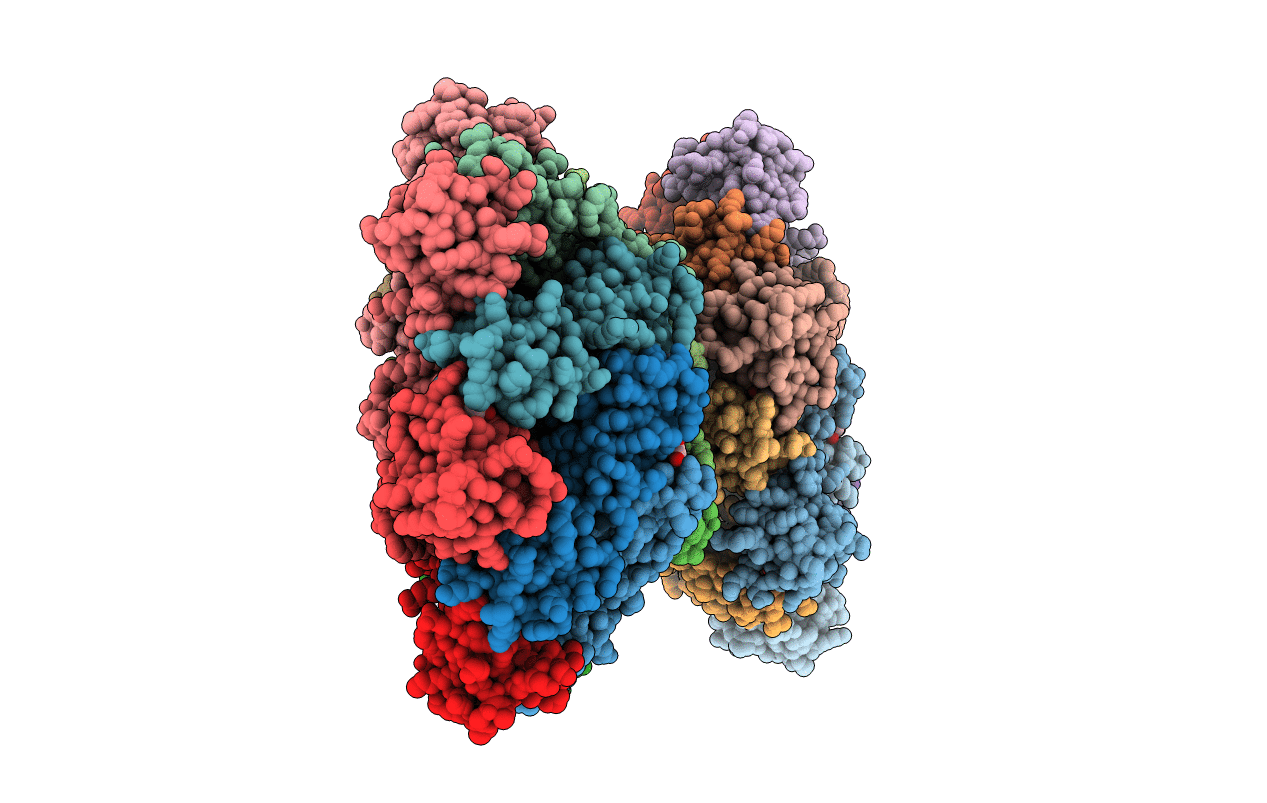
1M5Q image
Deposition Date 2002-07-09
Release Date 2003-03-18
Last Version Date 2024-10-30
Entry Detail
PDB ID:
1M5Q
Keywords:
Title:
Crystal structure of a novel Sm-like archaeal protein from Pyrobaculum aerophilum
Biological Source:
Source Organism(s):
Expression System(s):
Method Details:
Experimental Method:
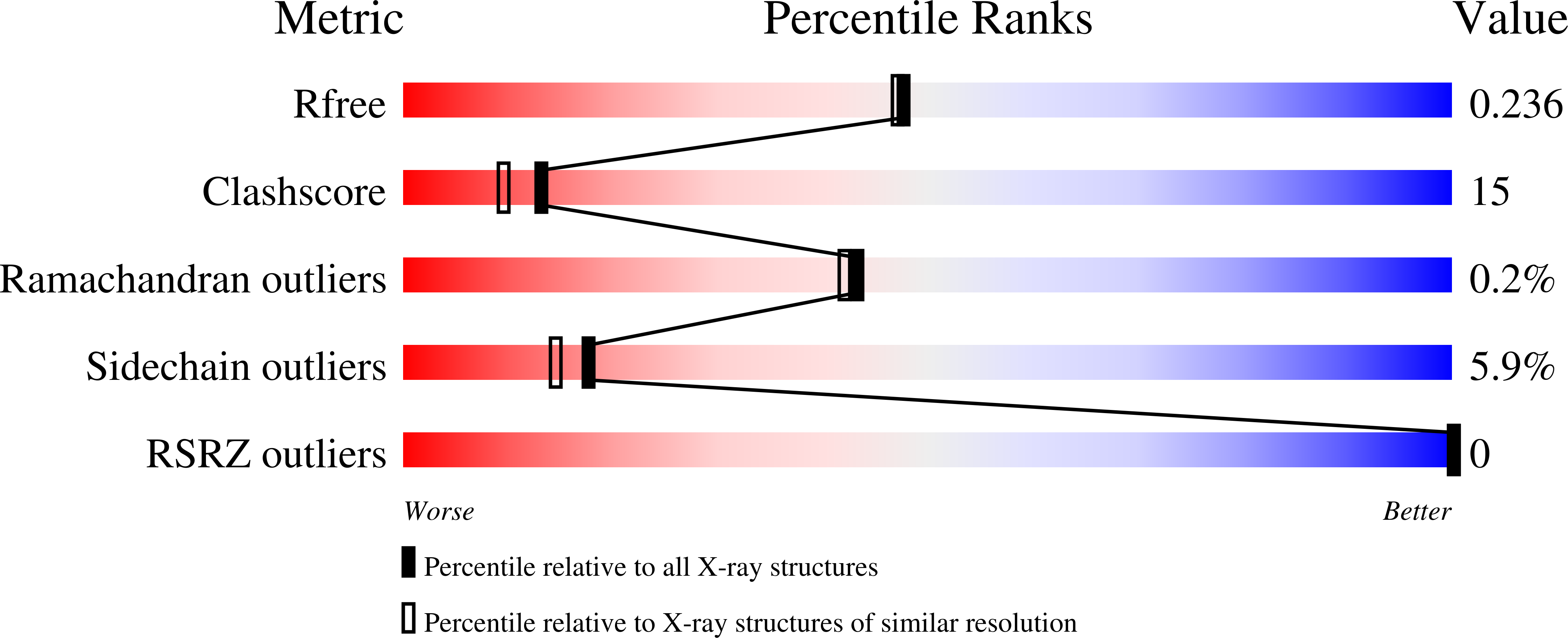
Resolution:
2.00 Å
R-Value Free:
0.23
R-Value Work:
0.19
R-Value Observed:
0.19
Space Group:
P 1 21 1
Macromolecular Entities
Polymer Type:polypeptide(L)
Molecule:small nuclear ribonucleoprote
Gene (Uniprot):PAE2122
Chain IDs:A, B, C, D, E, F, G, H, I, J, K, L, M, N, O, P, Q, R, S, T, U, V, W, X, Y, Z, AA (auth: 1), BA (auth: 2)
Chain Length:130
Number of Molecules:28
Biological Source:Pyrobaculum aerophilum
Modified Residue
Compound ID Chain ID Parent Comp ID Details 2D Image
MSE A MET SELENOMETHIONINE
Primary Citation
Structure and assembly of an augmented Sm-like archaeal protein 14-mer
Proc. Natl. Acad. Sci. U.S.A. 100 4539 4544 (2003)
PMID: 12668760 DOI: 10.1073/pnas.0538042100

Abstact

To better understand the roles of Sm proteins in forming the cores of many RNA-processing ribonucleoproteins, we determined the crystal structure of an atypical Sm-like archaeal protein (SmAP3) in which the conserved Sm domain is augmented by a previously uncharacterized, mixed alpha/beta C-terminal domain. The structure reveals an unexpected SmAP3 14-mer that is perforated by a cylindrical pore and is bound to 14 cadmium (Cd(2+)) ions. Individual heptamers adopt either "apical" or "equatorial" conformations that chelate Cd(2+) differently. SmAP3 forms supraheptameric oligomers (SmAP3)(n = 7,14,28) in solution, and assembly of the asymmetric 14-mer is modulated by differential divalent cation-binding in apical and equatorial subunits. Phylogenetic and sequence analyses substantiate SmAP3s as a unique subset of SmAPs. These results distinguish SmAP3s from other Sm proteins and provide a model for the structure and properties of Sm proteins >100 residues in length, e.g., several human Sm proteins.

Legend

Protein

Chemical

Disease

Primary Citation of related structures
Feedback Form
Name
Email
Institute
Feedback