

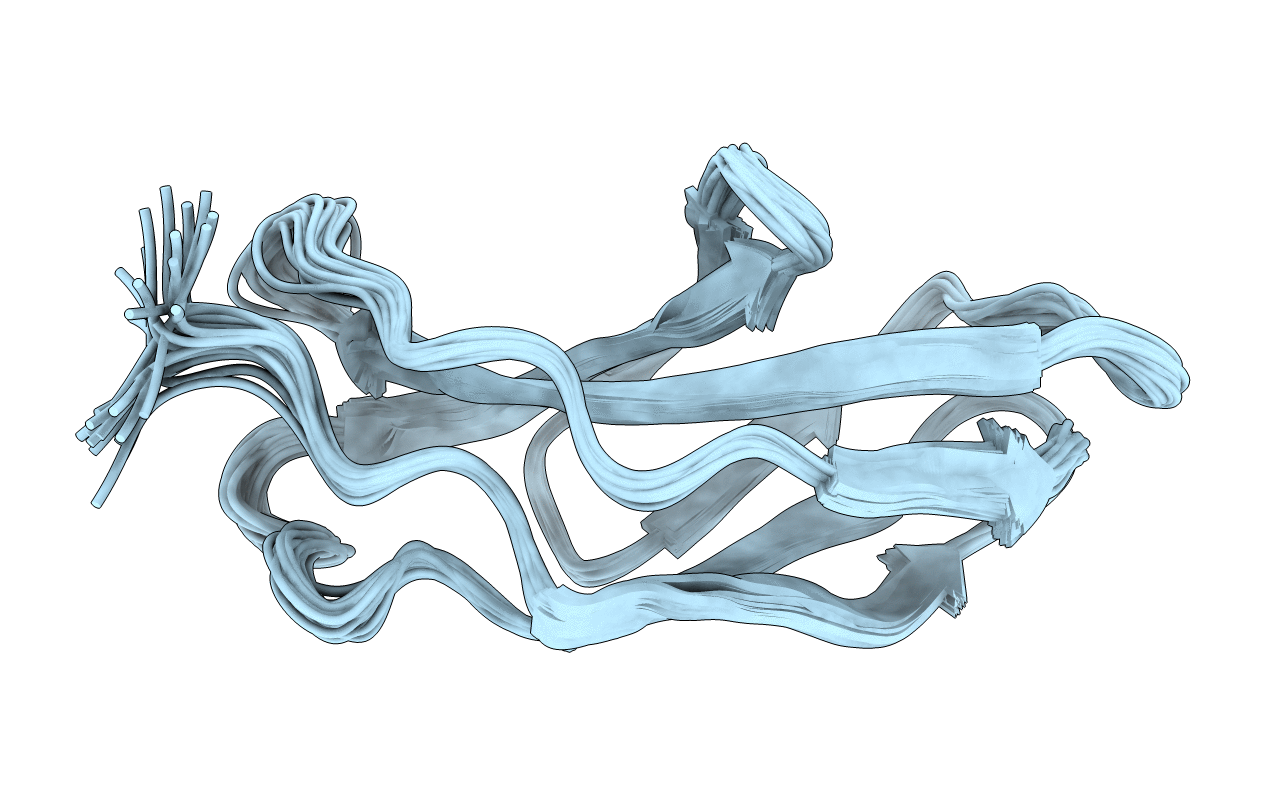
1K85 image
Deposition Date 2001-10-23
Release Date 2002-12-18
Last Version Date 2024-05-29
Entry Detail
PDB ID:
1K85
Keywords:
Title:
Solution structure of the fibronectin type III domain from Bacillus circulans WL-12 Chitinase A1.
Biological Source:
Source Organism(s):
Expression System(s):
Method Details:
Experimental Method:
Conformers Calculated:
150
Conformers Submitted:
30
Selection Criteria:
structures with the lowest energy

Macromolecular Entities
Polymer Type:polypeptide(L)
Molecule:CHITINASE A1
Gene (Uniprot):chiA1
Chain IDs:A
Chain Length:88
Number of Molecules:1
Biological Source:Bacillus circulans
Ligand Molecules
Primary Citation
Solution Structure of the Fibronectin Type III Domain from Bacillus circulans WL-12 Chitinase A1
J. Biol. Chem. 277 1388 1397 (2002)
PMID: 11600504 DOI: 10.1074/jbc.M109726200

Abstact

Growing evidence suggests that horizontal gene transfer plays an integral role in the evolution of bacterial genomes. One of the debated examples of horizontal gene transfer from animal to prokaryote is the fibronectin type III domain (FnIIID). Certain extracellular proteins of soil bacteria contain an unusual cluster of FnIIIDs, which show sequence similarity to those of animals and are likely to have been acquired horizontally from animals. Here we report the solution structure of the FnIIID of chitinase A1 from Bacillus circulans WL-12. To the best of our knowledge, this is the first tertiary structure to be reported for an FnIIID from a bacterial protein. The structure of the domain shows significant similarity to FnIIIDs from animal proteins. Sequence comparisons with FnIIIDs from other soil bacteria proteins show that the core-forming residues are highly conserved and, thus, are under strong evolutionary pressure. Striking similarities in the tertiary structures of bacterial FnIIIDs and their mammalian counterparts may support the hypothesis that the evolution of the FnIIID in bacterial carbohydrases occurred horizontally. The total lack of surface-exposed aromatic residues also suggests that the role of this FnIIID is different from those of other bacterial beta-sandwich domains, which function as carbohydrate-binding modules.

Legend

Protein

Chemical

Disease

Primary Citation of related structures
Feedback Form
Name
Email
Institute
Feedback