

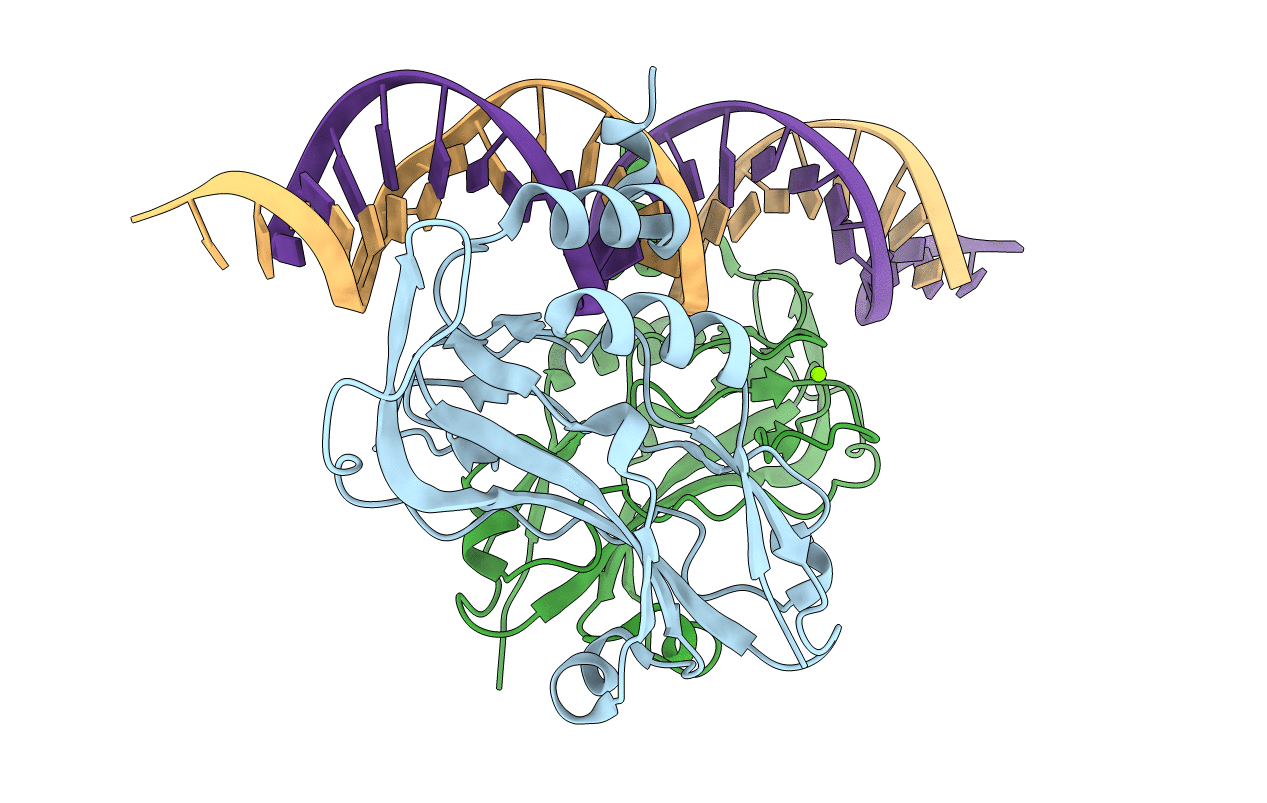
1H6F image
Deposition Date 2001-06-13
Release Date 2002-04-19
Last Version Date 2023-12-13
Entry Detail
PDB ID:
1H6F
Title:
Human TBX3, a transcription factor responsible for ulnar-mammary syndrome, bound to a palindromic DNA site
Biological Source:
Source Organism(s):
HOMO SAPIENS (Taxon ID: 9606)
SYNTHETIC (Taxon ID: 32630)
Expression System(s):
Method Details:
Experimental Method:
Resolution:
1.70 Å
R-Value Free:
0.23
R-Value Work:
0.20
R-Value Observed:
0.20
Space Group:
P 21 21 21
Macromolecular Entities
Polymer Type:polypeptide(L)
Molecule:T-BOX TRANSCRIPTION FACTOR TB
Gene (Uniprot):TBX3
Chain IDs:A, B
Chain Length:193
Number of Molecules:2
Biological Source:HOMO SAPIENS
Polymer Type:polydeoxyribonucleotide
Molecule:5'-D(*TP*AP*AP*TP*TP*TP*CP*AP
Chain IDs:C, D
Chain Length:24
Number of Molecules:2
Biological Source:SYNTHETIC
Ligand Molecules
Primary Citation
Structure of the DNA-Bound T-Box Domain of Human Tbx3, a Transcription Factor Responsible for Ulnar- Mammary Syndrome
Structure 10 343 ? (2002)
PMID: 12005433 DOI: 10.1016/S0969-2126(02)00722-0

Abstact

T-box genes encode transcription factors involved in morphogenesis and organogenesis of vertebrates and invertebrates. Mutations in human T-box genes TBX3, TBX5, and TBX1 cause severe genetic disorders known as Ulnar-Mammary syndrome (UMS), Holt-Oram syndrome (HOS), and DiGeorge syndrome, respectively. The crystal structure of the T-box domain of the first human T-box transcription factor, TBX3, in complex with DNA at 1.7 A resolution explains structural consequences of T-box domain point mutations observed in UMS and HOS patients. Comparison with the structure of the T-box domain from Xenopus laevis (Xbra) bound to DNA shows differences in several secondary structure elements and in the quaternary structure of the two complexes. TBX3 independently recognizes the two binding sites present in the palindromic DNA duplex, whereas in Xbra, binding to the palindrome is stabilized through interactions between the two monomers. The different quaternary structures suggest different DNA binding modes for T-box transcription factors.

Legend

Protein

Chemical

Disease

Primary Citation of related structures
Feedback Form
Name
Email
Institute
Feedback