

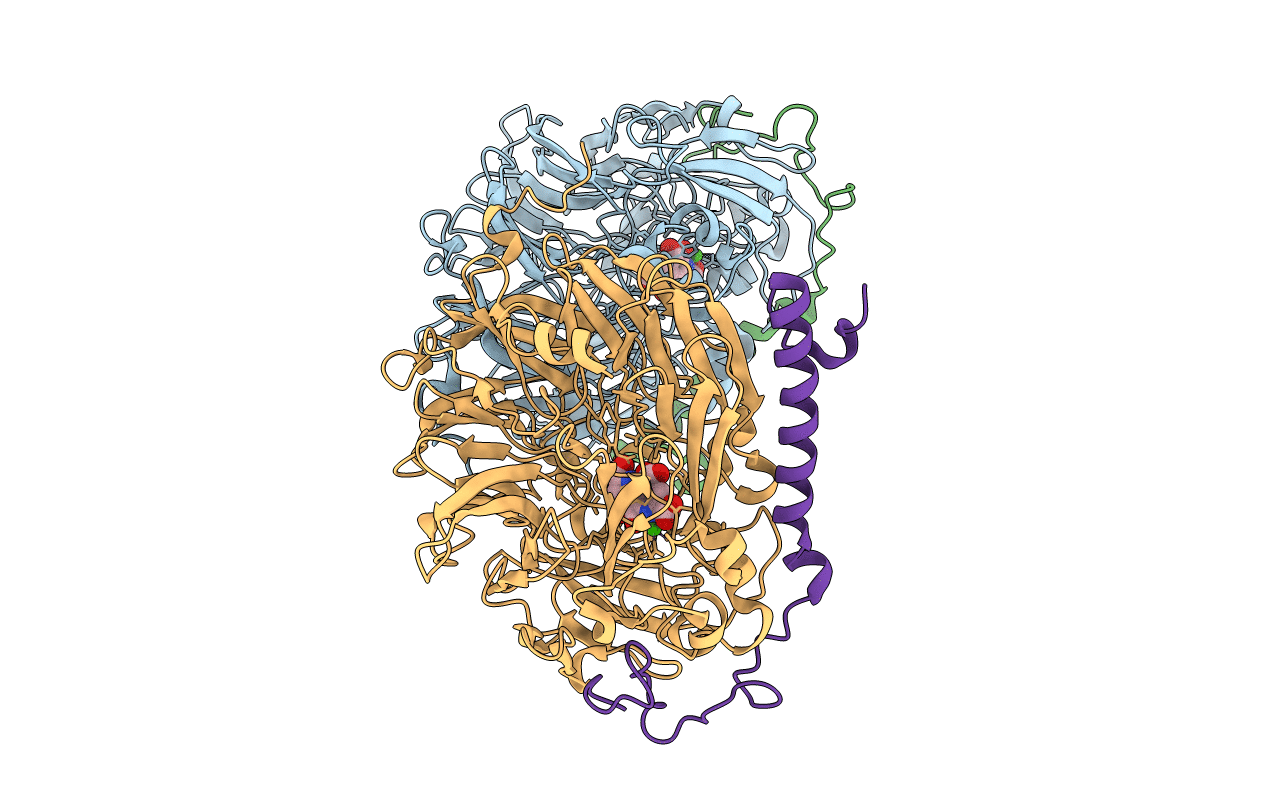
1H4I image
Deposition Date 2001-05-11
Release Date 2001-06-14
Last Version Date 2024-11-06
Entry Detail
PDB ID:
1H4I
Keywords:
Title:
Methylobacterium extorquens methanol dehydrogenase
Biological Source:
Source Organism(s):
Method Details:
Experimental Method:
Resolution:
1.94 Å
R-Value Free:
0.22
R-Value Work:
0.19
R-Value Observed:
0.19
Space Group:
P 1

Macromolecular Entities
Structures with similar UniProt ID
Protein Blast
Polymer Type:polypeptide(L)
Molecule:METHANOL DEHYDROGENASE SUBUNI
Gene (Uniprot):moxF
Chain IDs:A, C
Chain Length:599
Number of Molecules:2
Biological Source:METHYLOBACTERIUM EXTORQUENS
Structures with similar UniProt ID
Protein Blast
Polymer Type:polypeptide(L)
Molecule:METHANOL DEHYDROGENASE SUBUNI
Gene (Uniprot):moxI
Chain IDs:B, D
Chain Length:74
Number of Molecules:2
Biological Source:METHYLOBACTERIUM EXTORQUENS
Primary Citation
The Refined Structure of the Quinoprotein Methanol Dehydrogenase from Methylobacterium Extorquens at 1.94 A.
Structure 3 177 ? (1995)
PMID: 7735834 DOI: 10.1016/S0969-2126(01)00148-4

Abstact

BACKGROUND Methanol dehydrogenase (MDH) is a bacterial periplasmic quinoprotein; it has pyrrolo-quinoline quinone (PQQ) as its prosthetic group, requires Ca2+ for activity and uses cytochrome cL as its electron acceptor. Low-resolution structures of MDH have already been determined. RESULTS The structure of the alpha 2 beta 2 tetramer of MDH from Methylobacterium extorquens has now been determined at 1.94 A with an R-factor of 19.85%. CONCLUSIONS The alpha-subunit of MDH has an eight-fold radial symmetry, with its eight beta-sheets stabilized by a novel tryptophan docking motif. The PQQ in the active site is held in place by a coplanar tryptophan and by a novel disulphide ring formed between adjacent cysteines which are bonded by an unusual non-planar trans peptide bond. One of the carbonyl oxygens of PQQ is bonded to the Ca2+, probably facilitating attack on the substrate, and the other carbonyl oxygen is out of the plane of the ring, confirming the presence of the predicted free-radical semiquinone form of the prosthetic group.

Legend

Protein

Chemical

Disease

Primary Citation of related structures
Feedback Form
Name
Email
Institute
Feedback