

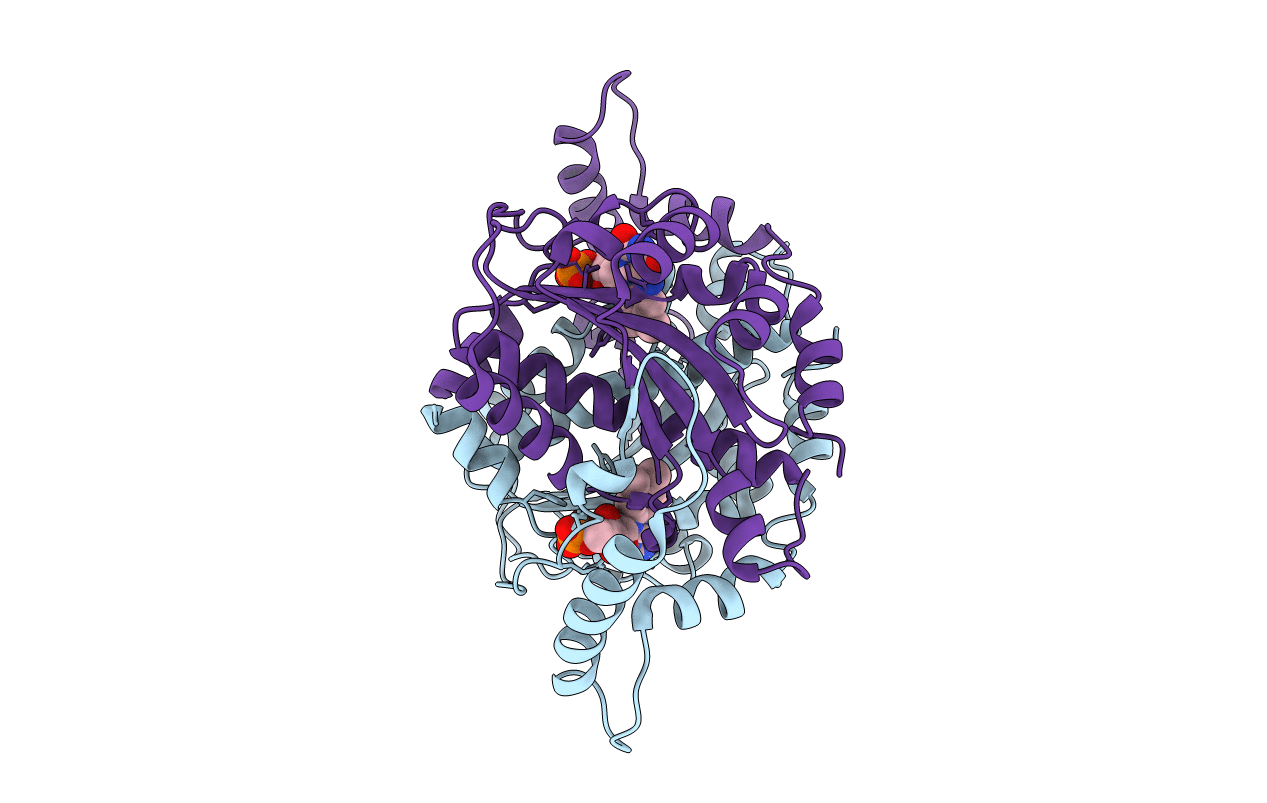
1F5V image
Deposition Date 2000-06-17
Release Date 2001-02-14
Last Version Date 2024-02-07
Entry Detail
PDB ID:
1F5V
Keywords:
Title:
STRUCTURE AND SITE-DIRECTED MUTAGENESIS OF A FLAVOPROTEIN FROM ESCHERICHIA COLI THAT REDUCES NITROCOMPOUNDS. ALTERATION OF PYRIDINE NUCLEOTIDE BINDING BY A SINGLE AMINO ACID SUBSTITUTION
Biological Source:
Source Organism(s):
Escherichia coli (Taxon ID: 562)
Expression System(s):
Method Details:
Experimental Method:
Resolution:
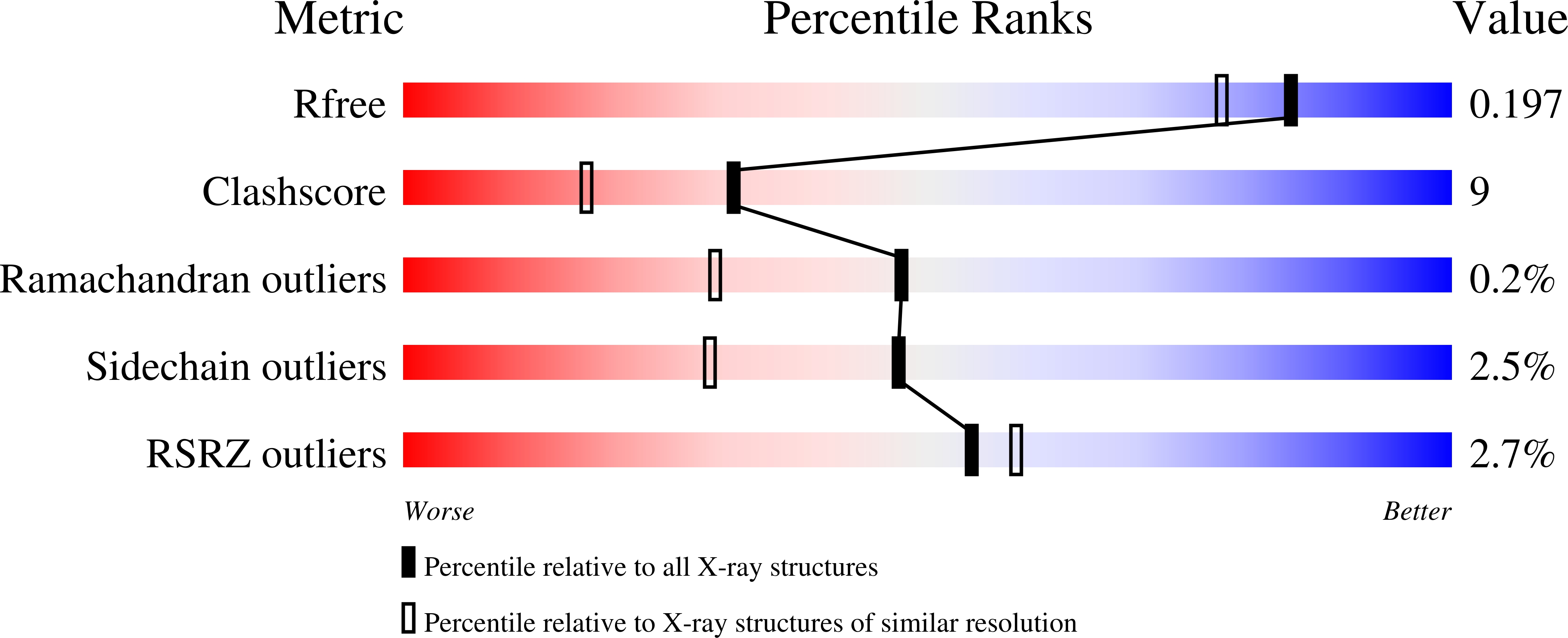
1.70 Å
R-Value Free:
0.20
R-Value Work:
0.18
Space Group:
P 1
Macromolecular Entities
Structures with similar UniProt ID
Protein Blast
Polymer Type:polypeptide(L)
Molecule:OXYGEN-INSENSITIVE NADPH NITR
Gene (Uniprot):nfsA
Chain IDs:A, B
Chain Length:240
Number of Molecules:2
Biological Source:Escherichia coli
Ligand Molecules
Primary Citation
Structure and site-directed mutagenesis of a flavoprotein from Escherichia coli that reduces nitrocompounds: alteration of pyridine nucleotide binding by a single amino acid substitution.
J. Biol. Chem. 276 2816 2823 (2001)
PMID: 11034992 DOI: 10.1074/jbc.M002617200

Abstact

The crystal structure of a major oxygen-insensitive nitroreductase (NfsA) from Escherichia coli has been solved by the molecular replacement method at 1.7-A resolution. This enzyme is a homodimeric flavoprotein with one FMN cofactor per monomer and catalyzes reduction of nitrocompounds using NADPH. The structure exhibits an alpha + beta-fold, and is comprised of a central domain and an excursion domain. The overall structure of NfsA is similar to the NADPH-dependent flavin reductase of Vibrio harveyi, despite definite difference in the spatial arrangement of residues around the putative substrate-binding site. On the basis of the crystal structure of NfsA and its alignment with the V. harveyi flavin reductase and the NADPH-dependent nitro/flavin reductase of Bacillus subtilis, residues Arg(203) and Arg(208) of the loop region between helices I and J in the vicinity of the catalytic center FMN is predicted as a determinant for NADPH binding. The R203A mutant results in a 33-fold increase in the K(m) value for NADPH indicating that the side chain of Arg(203) plays a key role in binding NADPH possibly to interact with the 2'-phosphate group.

Legend

Protein

Chemical

Disease

Primary Citation of related structures
Feedback Form
Name
Email
Institute
Feedback