

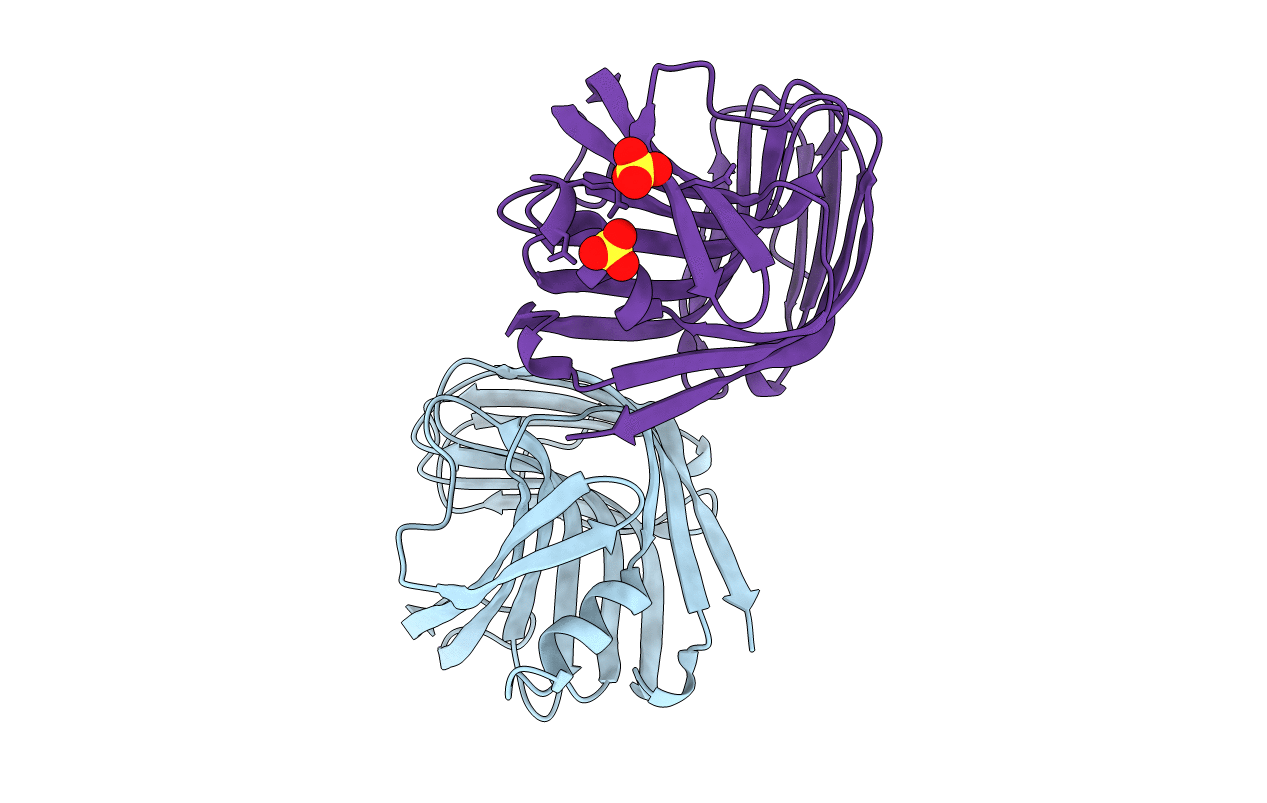
1F5J image
Deposition Date 2000-07-26
Release Date 2000-11-15
Last Version Date 2024-02-07
Entry Detail
PDB ID:
1F5J
Keywords:
Title:
CRYSTAL STRUCTURE OF XYNB, A HIGHLY THERMOSTABLE BETA-1,4-XYLANASE FROM DICTYOGLOMUS THERMOPHILUM RT46B.1, AT 1.8 A RESOLUTION
Biological Source:
Source Organism(s):
Expression System(s):
Method Details:
Experimental Method:
Resolution:
1.80 Å
R-Value Free:
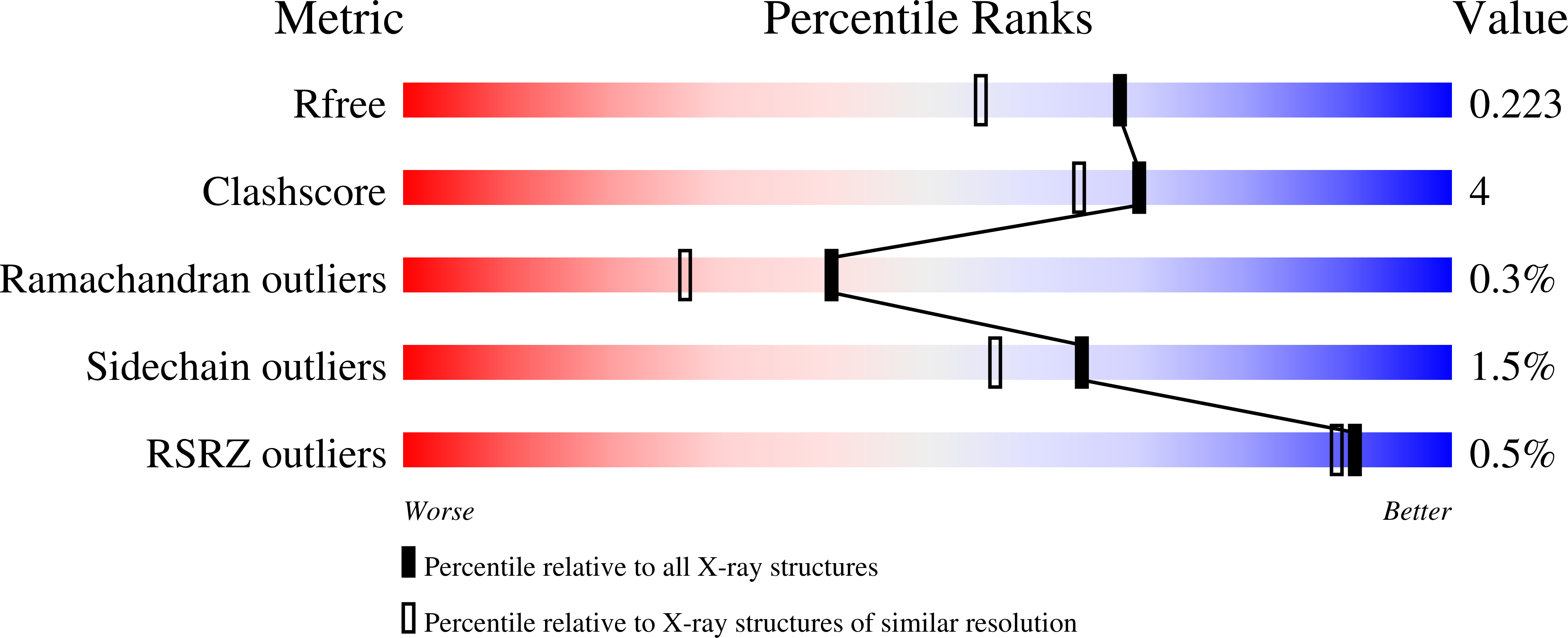
0.22
R-Value Work:
0.18
R-Value Observed:
0.18
Space Group:
P 43
Macromolecular Entities
Polymer Type:polypeptide(L)
Molecule:BETA-1,4-XYLANASE
Gene (Uniprot):xynB
Chain IDs:A, B
Chain Length:199
Number of Molecules:2
Biological Source:Dictyoglomus thermophilum
Ligand Molecules
Primary Citation
Structure of XynB, a highly thermostable beta-1,4-xylanase from Dictyoglomus thermophilum Rt46B.1, at 1.8 A resolution.
Acta Crystallogr. D Biol. Crystallogr. 56 1367 1375 (2000)
PMID: 11053833 DOI: 10.1107/S0907444900009896

Abstact

Microorganisms employ a large array of enzymes to break down the cellulose and hemicelluloses of plant biomass. These enzymes, especially those with high thermal stability, have many uses in biotechnology. We have solved the crystal structure of a beta-1, 4-xylanase, XynB, from the extremely thermophilic bacterium Dictyoglomus thermophilum, isolate Rt46B.1. The protein crystallized from 1.6 M ammonium sulfate, 0.2 M HEPES pH 7.2 and 10% glycerol, with unit-cell parameters a = b = 91.3, c = 44.9 A and space group P4(3). The structure was solved at high resolution (1.8 A) by X-ray crystallography, using the method of isomorphous replacement with a single mercury derivative, and refined to a final R factor of 18.3% (R(free) = 22.1%). XynB has the single-domain fold typical of family 11 xylanases, comprising a jelly roll of two highly twisted beta-sheets that create a deep substrate-binding cleft. The two catalytic residues, Glu90 and Glu180, occupy this cleft. Compared with other family 11 xylanases, XynB has a greater proportion of polar surface and has a slightly extended C-terminus that, combined with the extension of beta-strand A5, gives additional hydrogen bonding and hydrophobic packing. These factors may account for the enhanced thermal stability of the enzyme.

Legend

Protein

Chemical

Disease

Primary Citation of related structures
Feedback Form
Name
Email
Institute
Feedback