

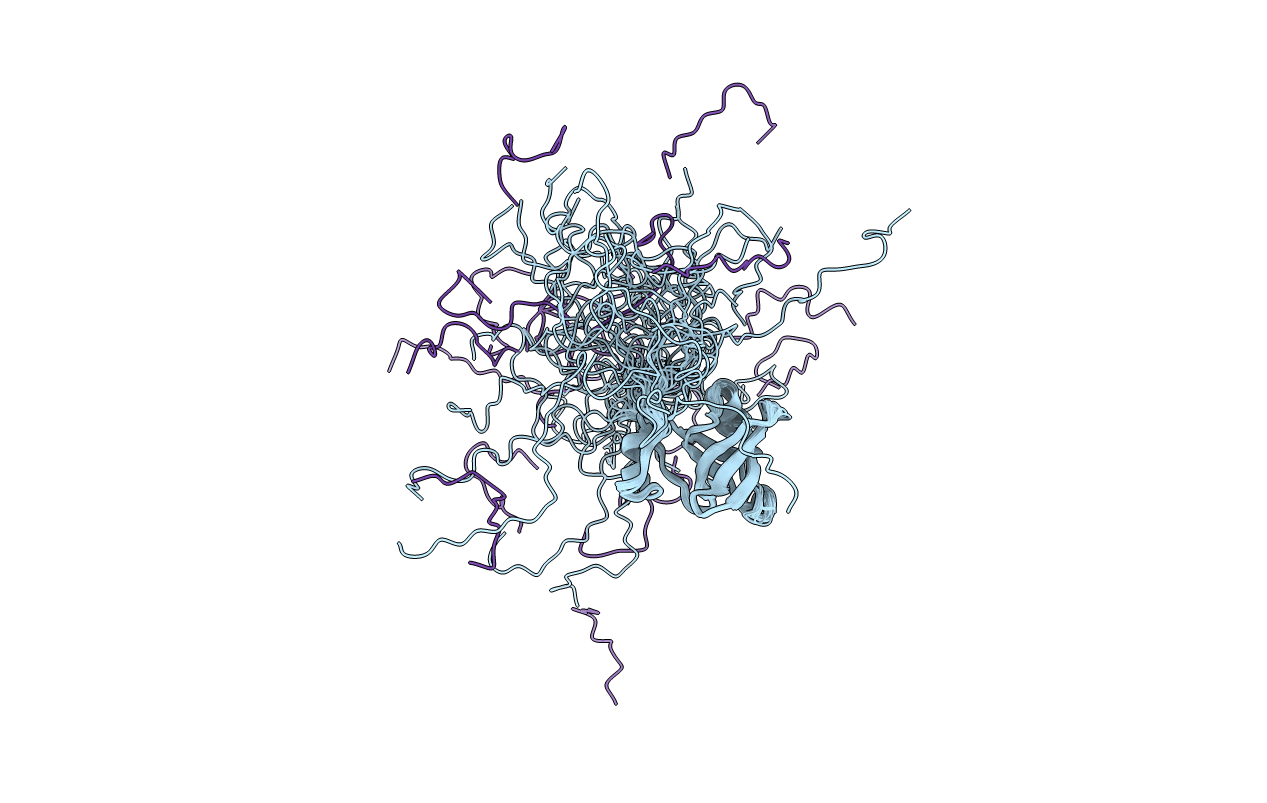
1D7Q image
Deposition Date 1999-10-19
Release Date 2000-03-17
Last Version Date 2024-05-22
Entry Detail
PDB ID:
1D7Q
Keywords:
Title:
HUMAN TRANSLATION INITIATION FACTOR EIF1A
Biological Source:
Source Organism(s):
Homo sapiens (Taxon ID: 9606)
Expression System(s):
Method Details:
Experimental Method:
Conformers Calculated:
50
Conformers Submitted:
20
Selection Criteria:
structures with the least restraint violations

Macromolecular Entities
Polymer Type:polypeptide(L)
Molecule:TRANSLATION INITIATION FACTOR
Gene (Uniprot):EIF1AX
Chain IDs:B (auth: A)
Chain Length:143
Number of Molecules:1
Biological Source:Homo sapiens
Polymer Type:polypeptide(L)
Molecule:PROTEIN (N-TERMINAL HISTIDINE
Chain IDs:A (auth: B)
Chain Length:14
Number of Molecules:1
Biological Source:
Ligand Molecules
Primary Citation
The eIF1A solution structure reveals a large RNA-binding surface important for scanning function.
Mol. Cell 5 109 119 (2000)
PMID: 10678173 DOI: 10.1016/S1097-2765(00)80407-4

Abstact

The translation initiation factor eIF1A is necessary for directing the 43S preinitiation complex from the 5' end of the mRNA to the initiation codon in a process termed scanning. We have determined the solution structure of human eIF1A, which reveals an oligonucleotide-binding (OB) fold and an additional domain. NMR titration experiments showed that eIF1A binds single-stranded RNA oligonucleotides in a site-specific, but non-sequence-specific manner, hinting at an mRNA interaction rather than specific rRNA or tRNA binding. The RNA binding surface extends over a large area covering the canonical OB fold binding site as well as a groove leading to the second domain. Site-directed mutations at multiple positions along the RNA-binding surface were defective in the ability to properly assemble preinitiation complexes at the AUG codon in vitro.

Legend

Protein

Chemical

Disease

Primary Citation of related structures
Feedback Form
Name
Email
Institute
Feedback