

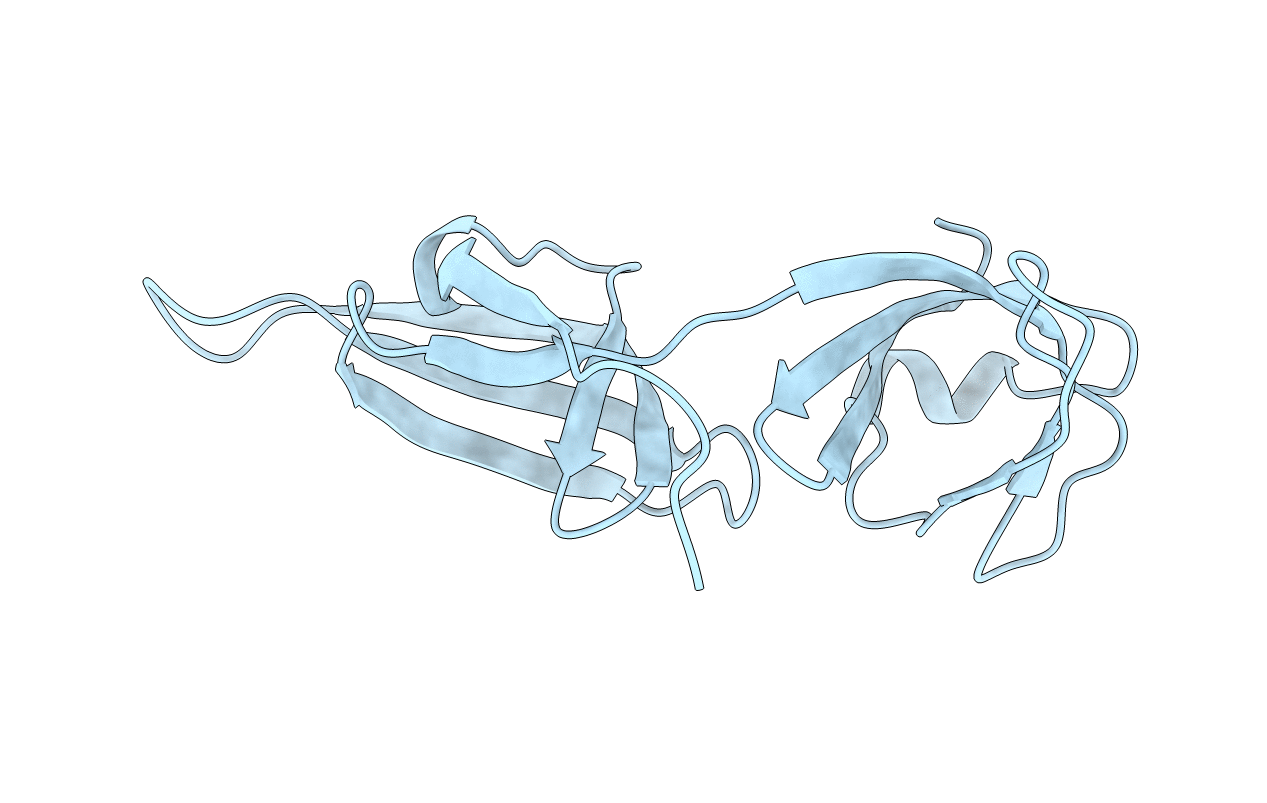
1BKB image
Deposition Date 1998-07-05
Release Date 1998-11-04
Last Version Date 2024-10-30
Entry Detail
PDB ID:
1BKB
Keywords:
Title:
INITIATION FACTOR 5A FROM ARCHEBACTERIUM PYROBACULUM AEROPHILUM
Biological Source:
Source Organism(s):
Expression System(s):
Method Details:
Experimental Method:
Resolution:
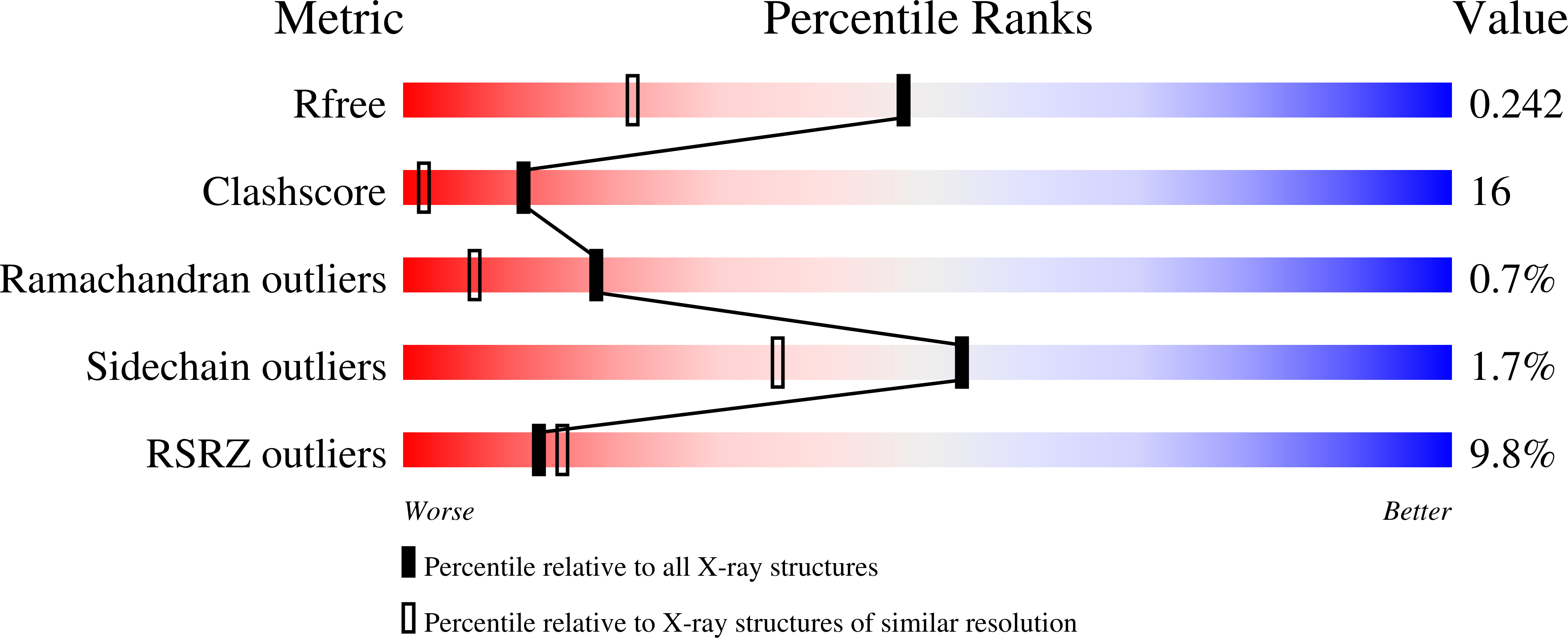
1.75 Å
R-Value Free:
0.23
R-Value Work:
0.21
R-Value Observed:
0.21
Space Group:
I 4
Macromolecular Entities
Polymer Type:polypeptide(L)
Molecule:TRANSLATION INITIATION FACTOR
Gene (Uniprot):eif5a
Mutagens:YES
Chain IDs:A
Chain Length:136
Number of Molecules:1
Biological Source:Pyrobaculum aerophilum
Modified Residue
Compound ID Chain ID Parent Comp ID Details 2D Image
MSE A MET SELENOMETHIONINE
Primary Citation
Structure of translation initiation factor 5A from Pyrobaculum aerophilum at 1.75 A resolution.
Structure 6 1207 1214 (1998)
PMID: 9753699 DOI: 10.1016/S0969-2126(98)00120-8

Abstact

BACKGROUND Translation initiation factor 5A (IF-5A) is reported to be involved in the first step of peptide bond formation in translation, to be involved in cell-cycle regulation and to be a cofactor for the Rev and Rex transactivator proteins of human immunodeficiency virus-1 and T-cell leukemia virus I, respectively. IF-5A contains an unusual amino acid, hypusine (N-epsilon-(4-aminobutyl-2-hydroxy)lysine), that is required for its function. The first step in the post-translational modification of lysine to hypusine is catalyzed by the enzyme deoxyhypusine synthase, the structure of which has been published recently. RESULTS IF-5A from the archebacterium Pyrobaculum aerophilum has been heterologously expressed in Escherichia coli with selenomethionine substitution. The crystal structure of IF-5A has been determined by multiwavelength anomalous diffraction and refined to 1.75 A. Unmodified P. aerophilum IF-5A is found to be a beta structure with two domains and three separate hydrophobic cores. CONCLUSIONS The lysine (Lys42) that is post-translationally modified by deoxyhypusine synthase is found at one end of the IF-5A molecule in an turn between beta strands beta4 and beta5; this lysine residue is freely solvent accessible. The C-terminal domain is found to be homologous to the cold-shock protein CspA of E. coli, which has a well characterized RNA-binding fold, suggesting that IF-5A is involved in RNA binding.

Legend

Protein

Chemical

Disease

Primary Citation of related structures
Feedback Form
Name
Email
Institute
Feedback