

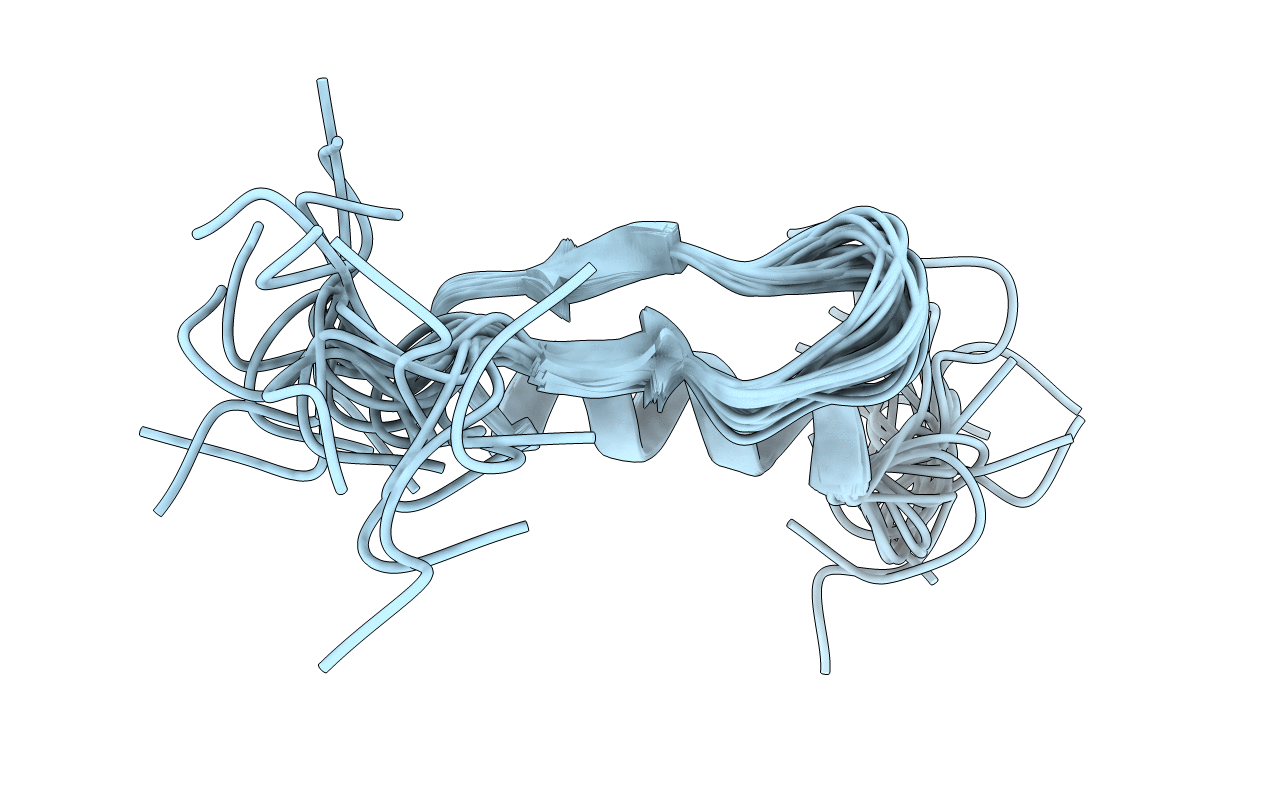
1BHI image
Deposition Date 1998-06-09
Release Date 1999-06-15
Last Version Date 2024-05-22
Entry Detail
PDB ID:
1BHI
Title:
STRUCTURE OF TRANSACTIVATION DOMAIN OF CRE-BP1/ATF-2, NMR, 20 STRUCTURES
Biological Source:
Source Organism(s):
Homo sapiens (Taxon ID: 9606)
Expression System(s):
Method Details:
Experimental Method:
Conformers Calculated:
100
Conformers Submitted:
20
Selection Criteria:
THE 20 FINAL STRUCTURES EXHIBITED NO DISTANCE RESTRAINT VIOLATIONS GREATER THAN 0.1 ANGSTROMS AND DIHEDRAL ANGLE VIOLATIONS GREATER THAN 6.0 DEGREES.

Macromolecular Entities
Polymer Type:polypeptide(L)
Molecule:CRE-BP1
Gene (Uniprot):ATF2
Chain IDs:A
Chain Length:38
Number of Molecules:1
Biological Source:Homo sapiens
Ligand Molecules
Primary Citation
Solution structure of the transactivation domain of ATF-2 comprising a zinc finger-like subdomain and a flexible subdomain.
J. Mol. Biol. 287 593 607 (1999)
PMID: 10092462 DOI: 10.1006/jmbi.1999.2620

Abstact

Activating transcription factor-2 (ATF-2) is a transcription factor that binds to cAMP response element (CRE). ATF-2 contains two functional domains, an N-terminal transactivation domain and a C-terminal DNA-binding domain. The DNA-binding domain contains the basic leucine zipper (bZip) motif. Here, the three-dimensional structure of the transactivation domain of ATF-2 has been determined by NMR. The transactivation domain consists of two subdomains: the structure of an N-terminal half (N-subdomain) is well determined, while a C-terminal half (C-subdomain) takes a highly flexible and disordered structure. The architecture of the N-subdomain is very similar to that of the well-known zinc finger motif found in DNA-binding domains, consisting of an antiparallel beta-sheet and an alpha-helix. The zinc atom is tetrahedrally coordinated to two cysteine residues and two histidine residues. Amino acids that form the hydrophobic core in all of the DNA-binding zinc fingers are well conserved in the N-subdomain of the transactivation domain, whereas some amino acids that are responsible for binding to the phosphate backbone of DNA in the DNA-binding zinc fingers are substituted with other amino acids. The flexible C-subdomain, which contains two threonine residues that the stress-activated protein kinases phosphorylate, is likely to undergo a conformational change by specific binding to a target protein.

Legend

Protein

Chemical

Disease

Primary Citation of related structures
Feedback Form
Name
Email
Institute
Feedback