

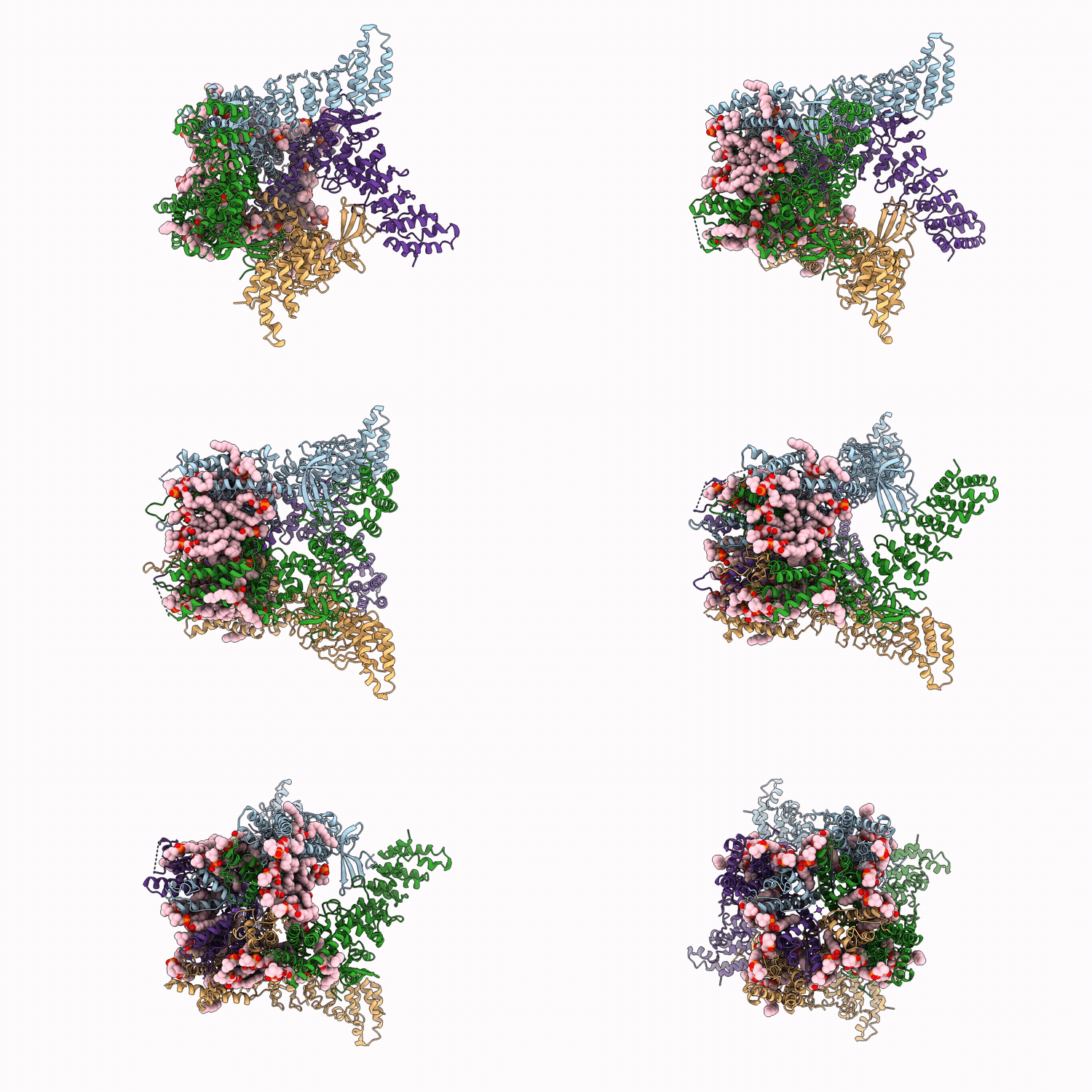
13LU image
Deposition Date 2026-05-13
Release Date 2026-07-01
Last Version Date 2026-07-01
Entry Detail
PDB ID:
13LU
Title:
Structure of human TRPV3-W521S Olmsted syndrome mutant in the closed state
Biological Source:
Source Organism(s):
Homo sapiens (Taxon ID: 9606)
Aequorea victoria (Taxon ID: 6100)
Expression System(s):
Method Details:
Experimental Method:
Resolution:
2.49 Å
Aggregation State:
PARTICLE
Reconstruction Method:
SINGLE PARTICLE
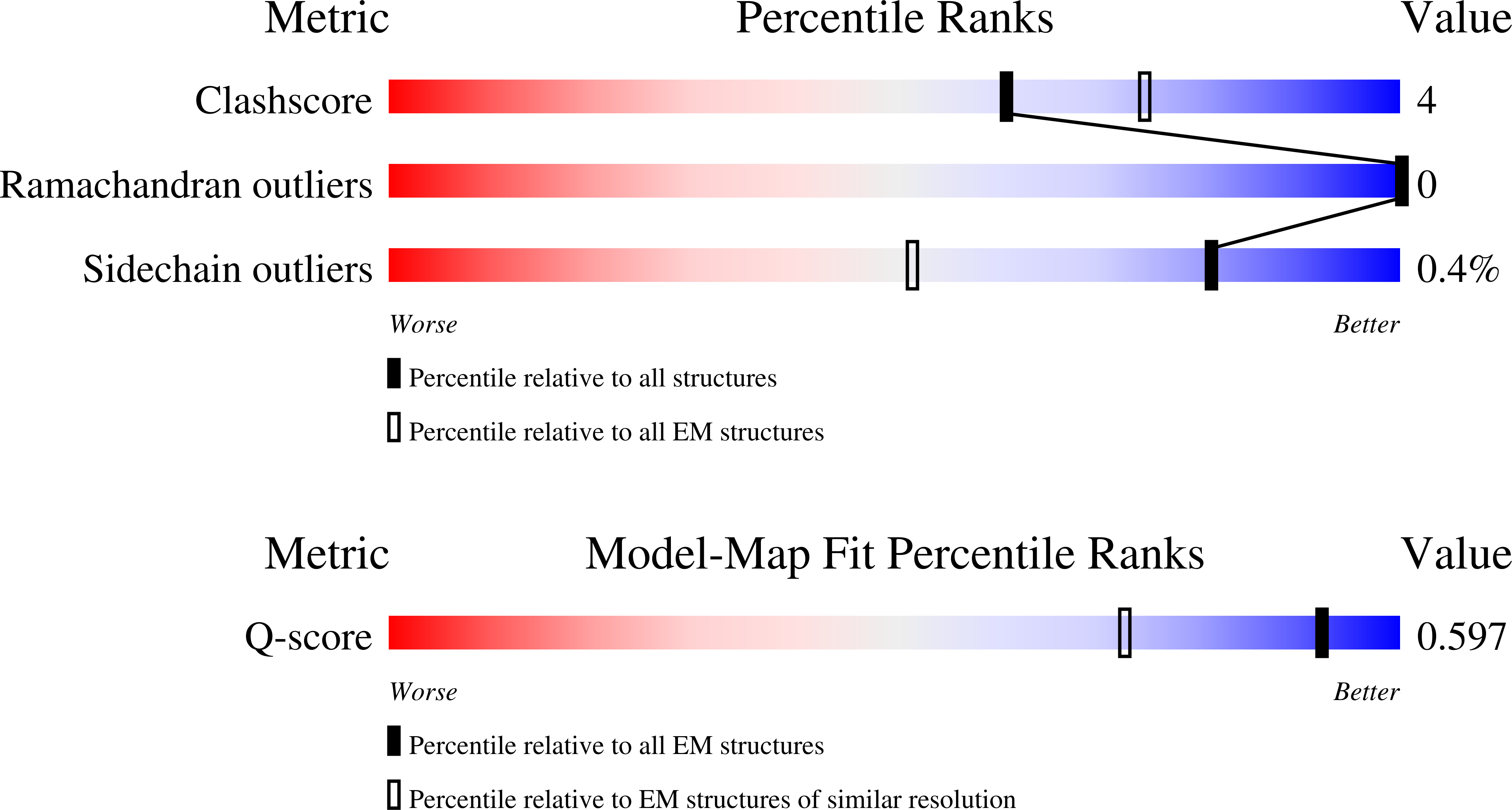
Macromolecular Entities
Protein Blast
Polymer Type:polypeptide(L)
Molecule:Isoform 2 of Transient recept
Gene (Uniprot):GFP, TRPV3
Mutagens:W521S
Chain IDs:A, B, C, D
Chain Length:1052
Number of Molecules:4
Biological Source:Homo sapiens, Aequorea victoria
Primary Citation
Structural diversity of heat-sensing channel TRPV3 with Olmsted syndrome mutations.
Nat Commun ? ? ? (2026)
PMID: 42323291 DOI: 10.1038/s41467-026-74687-5

Abstact

Mutations in TRPV3, a temperature-sensitive ion channel critical for skin physiology, cause severe genodermatosis called Olmsted syndrome (OS). Here we integrate single-channel recordings and cryo-EM to characterize five OS mutants. All exhibit reduced temperature sensitivity in the temperature range relevant to normal skin physiology and disrupt structural elements stabilizing non-conducting states, including vanilloid lipid coordination and S4-S5 linker-TRP helix contacts. Despite shared gain-of-function phenotype, the mutations cause different distributions of the TRPV3 closed, open, and inactivated states. One mutation expands the conformational ensemble with noncanonical two-fold-symmetrical states featuring dramatic domain swapping. Our findings highlight conserved TRP channel gating mechanisms and suggest that OS mutations alter TRPV3 function by triggering the conformational wave that mediates gating in wild-type channels. These insights establish a framework to decode genotype-structure-function relationships in TRP channelopathies and guide future therapeutic strategies.

Legend

Protein

Chemical

Disease

Primary Citation of related structures
Feedback Form
Name
Email
Institute
Feedback