

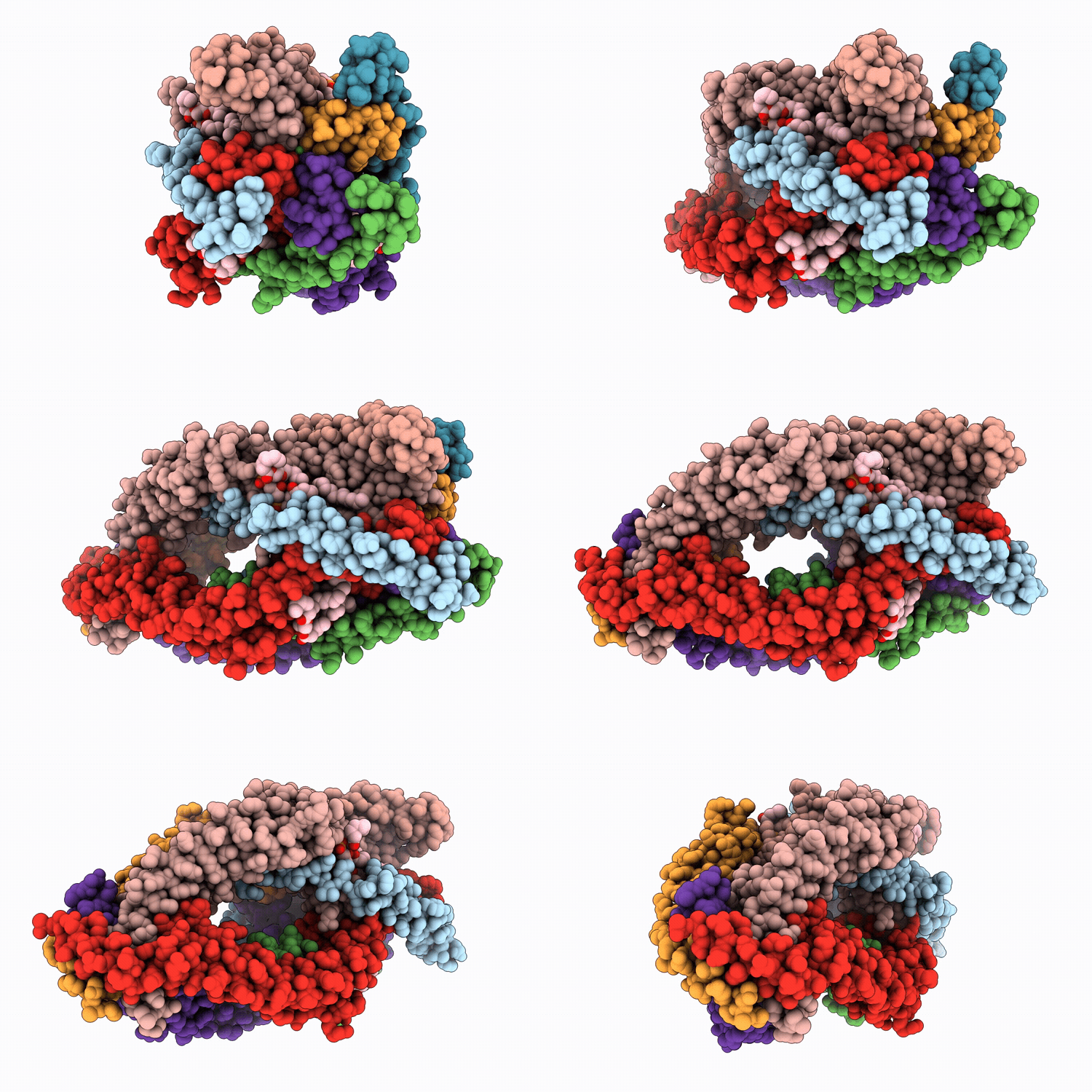
13IO image
Deposition Date 2026-05-07
Release Date 2026-07-08
Last Version Date 2026-08-12
Entry Detail
PDB ID:
13IO
Title:
MCU-EMRE complex with spermine
Biological Source:
Source Organism(s):
Homo sapiens (Taxon ID: 9606)
Expression System(s):
Method Details:
Experimental Method:
Resolution:
2.98 Å
Aggregation State:
PARTICLE
Reconstruction Method:
SINGLE PARTICLE

Macromolecular Entities
Polymer Type:polypeptide(L)
Molecule:Essential MCU regulator, mito
Chain IDs:A, B, C, D
Chain Length:53
Number of Molecules:4
Biological Source:Homo sapiens
Polymer Type:polypeptide(L)
Molecule:Calcium uniporter protein, mi
Chain IDs:E, F, G, H
Chain Length:172
Number of Molecules:4
Biological Source:Homo sapiens
Primary Citation
Matrix polyamines regulate bidirectional calcium flux through MCU.
Structure ? ? ? (2026)
PMID: 42508402 DOI: 10.1016/j.str.2026.07.002

Abstact

Polyamines, well-known regulators of the mitochondrial calcium (Ca(2+)) uniporter channel, show unexpected effects when binding the channel from within the matrix. Using cryo-EM, molecular dynamics simulations, and mutagenesis experiments, we determine that polyamines achieve such regulation by binding within the pore to a ring of negative residues forming a matrix gate, inhibiting Ca(2+) conduction. In whole-mitoplast electrophysiology assays, matrix polyamines cause a gradual increase in Ca(2+) currents during prolonged conduction, due to relief of this inhibition. Notably, this electrostatic binding increases 3-fold as the inner membrane depolarizes, preventing Ca(2+) efflux. Additionally, we also identify that phospholipids form part of the Ca(2+) conduction pathway through MCU. Because we find significant variability in matrix polyamine content across mouse organs, this unexpected mechanism for sculpting the mitochondrial Ca(2+) waveform suggests a tissue-specific regulation of metabolism.

Legend

Protein

Chemical

Disease

Primary Citation of related structures
Feedback Form
Name
Email
Institute
Feedback