

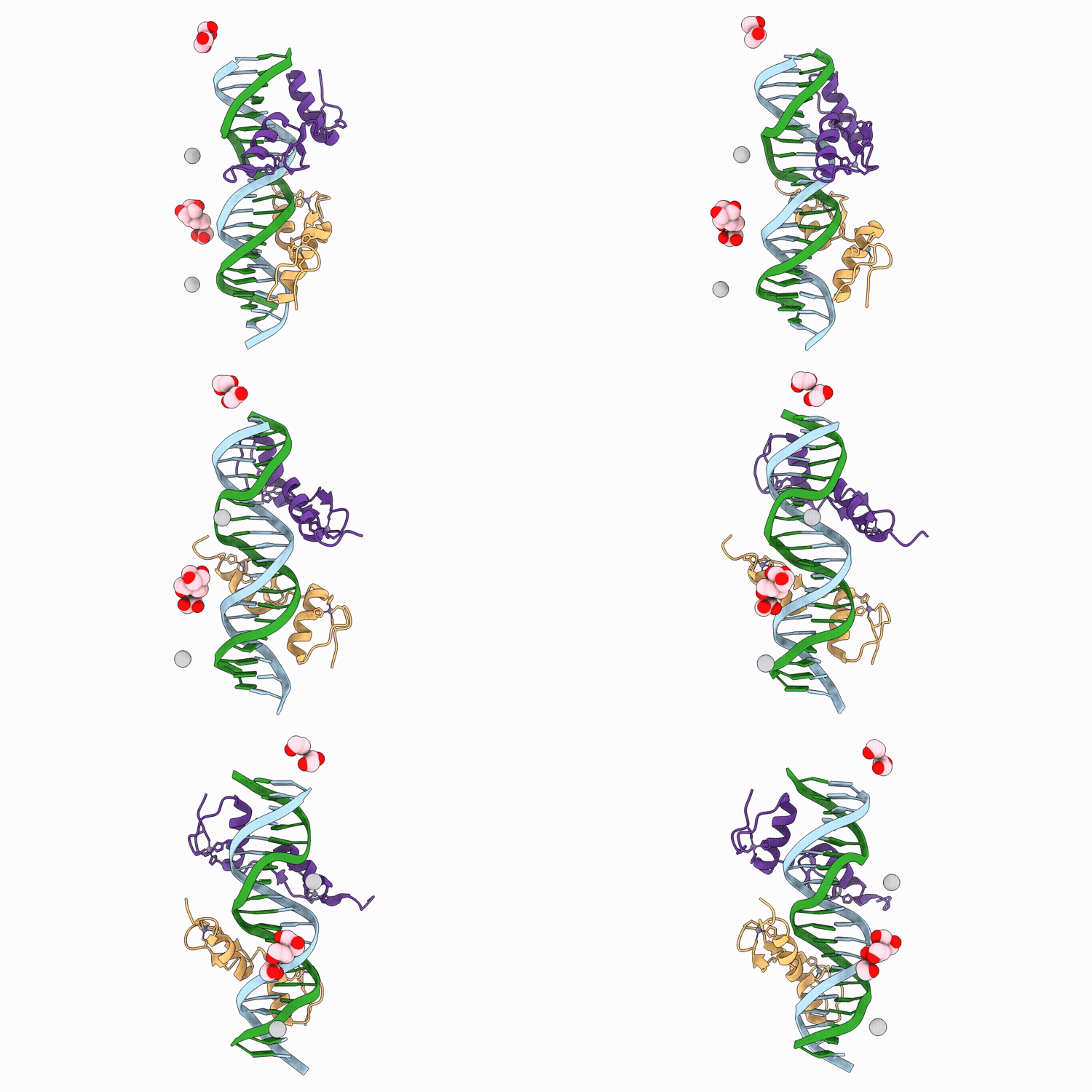
12UQ image
Deposition Date 2026-04-19
Release Date 2026-07-01
Last Version Date 2026-07-01
Entry Detail
PDB ID:
12UQ
Title:
BCL11B ZF2-3 in Complex with a DNA Sequence Containing Two Binding Sites (Motifs TGTCCC and TGGCCT)
Biological Source:
Source Organism(s):
Homo sapiens (Taxon ID: 9606)
Expression System(s):
Method Details:
Experimental Method:
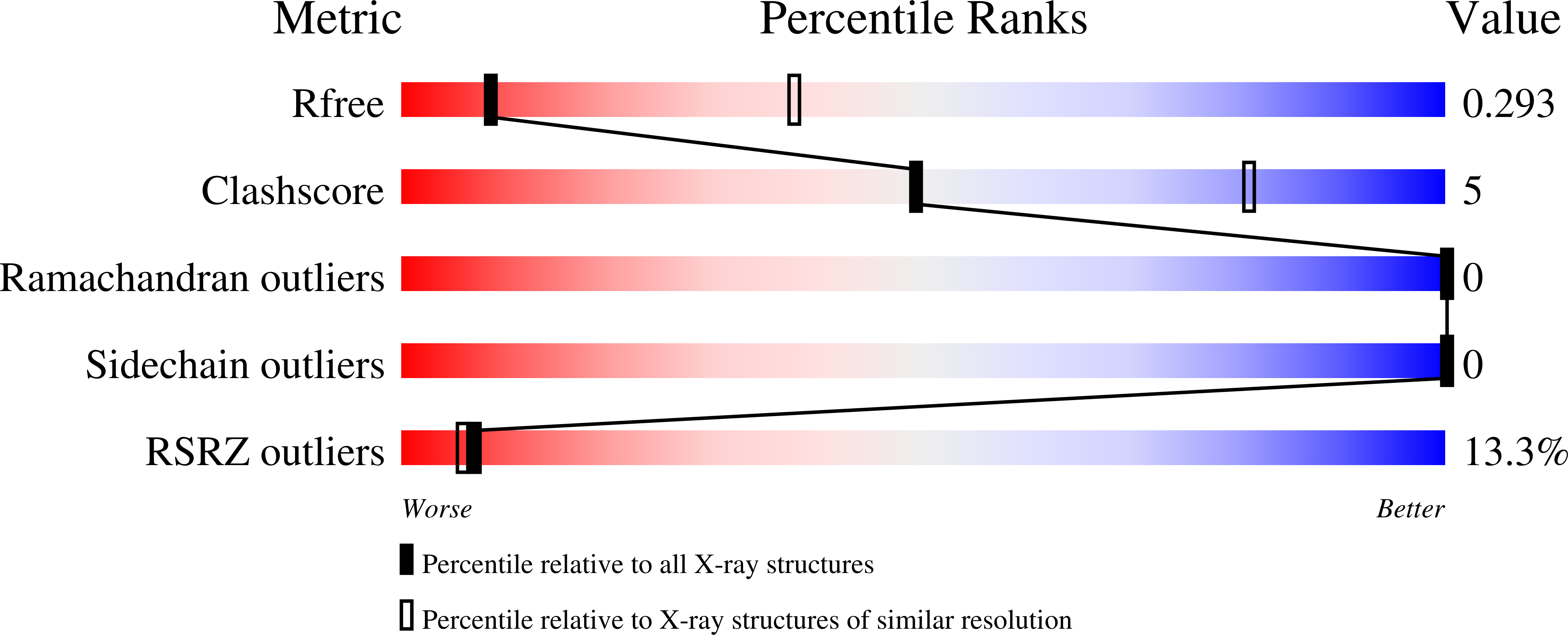
Resolution:
3.29 Å
R-Value Free:
0.29
R-Value Work:
0.26
R-Value Observed:
0.26
Space Group:
C 1 2 1
Macromolecular Entities
Polymer Type:polydeoxyribonucleotide
Molecule:Strand Top
Chain IDs:A
Chain Length:20
Number of Molecules:1
Biological Source:Homo sapiens
Polymer Type:polydeoxyribonucleotide
Molecule:Strand Bottom
Chain IDs:B
Chain Length:20
Number of Molecules:1
Biological Source:Homo sapiens
Structures with similar UniProt ID
Protein Blast
Polymer Type:polypeptide(L)
Molecule:B-cell lymphoma/leukemia 11B
Gene (Uniprot):BCL11B
Chain IDs:C (auth: F), D (auth: C)
Chain Length:66
Number of Molecules:2
Biological Source:Homo sapiens
Primary Citation
Bipartite DNA binding domain of transcription factor BCL11B binds clustered short DNA sequence motifs.
Biorxiv ? ? ? (2026)
PMID: 42232506 DOI: 10.64898/2026.05.01.721897

Abstact

B-cell leukemia/lymphoma 11B (BCL11B), despite its name, is a key regulator of T-cell development, specification, and T-cell malignancies. BCL11B contains a bipartite DNA binding domain composed of two C2H2 zinc finger arrays: low-affinity ZF2-3 and high affinity ZF4-6. These arrays function as homotypic modules that recognize similar six-nucleotide motifs, TG(N)CC(C/T/A), as seven of the eight DNA base-contacting residues are conserved between them. The most conserved interactions involve GG dinucleotides, contacted by arginine and lysine residues at key base-interacting positions in ZF3 and ZF5. The two ZF arrays are connected by a long ~300-residue linker that provides flexibility in how the arrays engage DNA, allowing ZF2-3 and ZF4-6 binding to the same or opposite strands with variable orientation, spacing and positioning along the DNA. This extended linker is enriched in serine/threonine, acidic residues (aspartate/glutamate), and structural residues (glycine/proline), providing additional layers of transcriptional regulation possibly through post-translational modification, electrostatic modulation, and/or condensate formation. We also examined six missense mutations in base-interacting residues, that are associated with neurodevelopmental disorders. Substitutions replacing bulky, positively charged arginine or lysine with smaller or hydrophobic residues likely reduce DNA-binding affinity and/or specificity, whereas substitutions between asparagine and lysine may alter base recognition preferences.

Legend

Protein

Chemical

Disease

Primary Citation of related structures
Feedback Form
Name
Email
Institute
Feedback