

12RP image
Deposition Date 2026-04-15
Release Date 2026-06-17
Last Version Date 2026-09-30
Entry Detail
PDB ID:
12RP
Keywords:
Title:
Local refinement of RBDA, RBDC, and NTDB of SARS-CoV-2 BA.3.2.1 spike with K852A mutation, closed conformation
Biological Source:
Expression System(s):
Method Details:
Experimental Method:
Resolution:
2.78 Å
Aggregation State:
PARTICLE
Reconstruction Method:
SINGLE PARTICLE
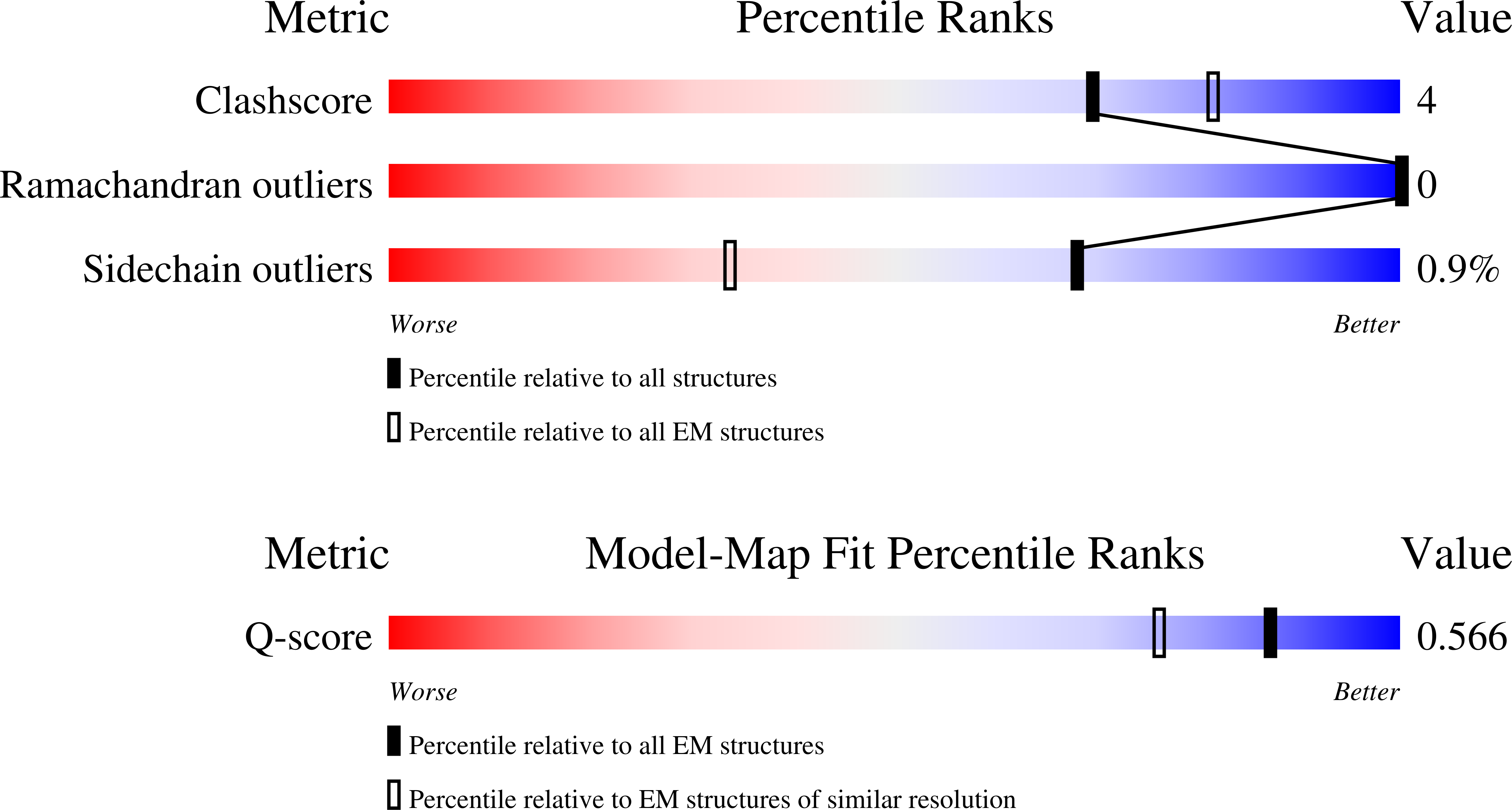
Macromolecular Entities
Structural Superimposition Protein Blast
Polymer Type:polypeptide(L)
Molecule:SARS-CoV-2 BA.3.2.1 spike wit
Chain IDs:A, B (auth: C), C (auth: B)
Chain Length:1271
Number of Molecules:3
Biological Source:Severe acute respiratory syndrome coronavirus 2
Ligand Molecules
Primary Citation
Functional and structural basis of Omicron BA.3.2.1 spike.
Cell Rep 45 117812 117812 (2026)
PMID: 42571698 DOI: 10.1016/j.celrep.2026.117812

Abstact

SARS-CoV-2 BA.3.2 sublineages, derived from BA.3 and carrying substantial spike divergence, raised concerns about altered fitness and antigenicity. Using BA.3.2.1 as a representative strain, we engineered live-attenuated SARS-CoV-2 encoding BA.3.2.1, LP.8.1, or XEC spikes and benchmarked them against BA.3 and KP.3. BA.3.2.1 outcompetes BA.3 in primary human airway epithelium but replicates less efficiently than JN.1 descendants and shows the greatest resistance to neutralization by KP.2/KP.3 convalescent sera. Although BA.3.2.1 RBD binds hACE2 with high affinity, its trimeric spike engages hACE2 less efficiently than LP.8.1. Cryoelectron microscopy structures reveal that BA.3.2.1 spike predominantly adopts a compact, asymmetric closed conformation stabilized by protomer rearrangements, N-linked glycosylation, and a distinct fusion-peptide-proximal region. This architecture increases spike stability, limits receptor engagement, reduces fusogenicity, and masks antibody-sensitive epitopes. Thus, BA.3.2.1 enhances immune evasion at the cost of replication fitness, providing a structural-functional explanation for BA.3.2's limited prevalence and underscoring the need for continued variant surveillance.

Legend

Protein

Chemical

Disease

Primary Citation of related structures
Feedback Form
Name
Email
Institute
Feedback