

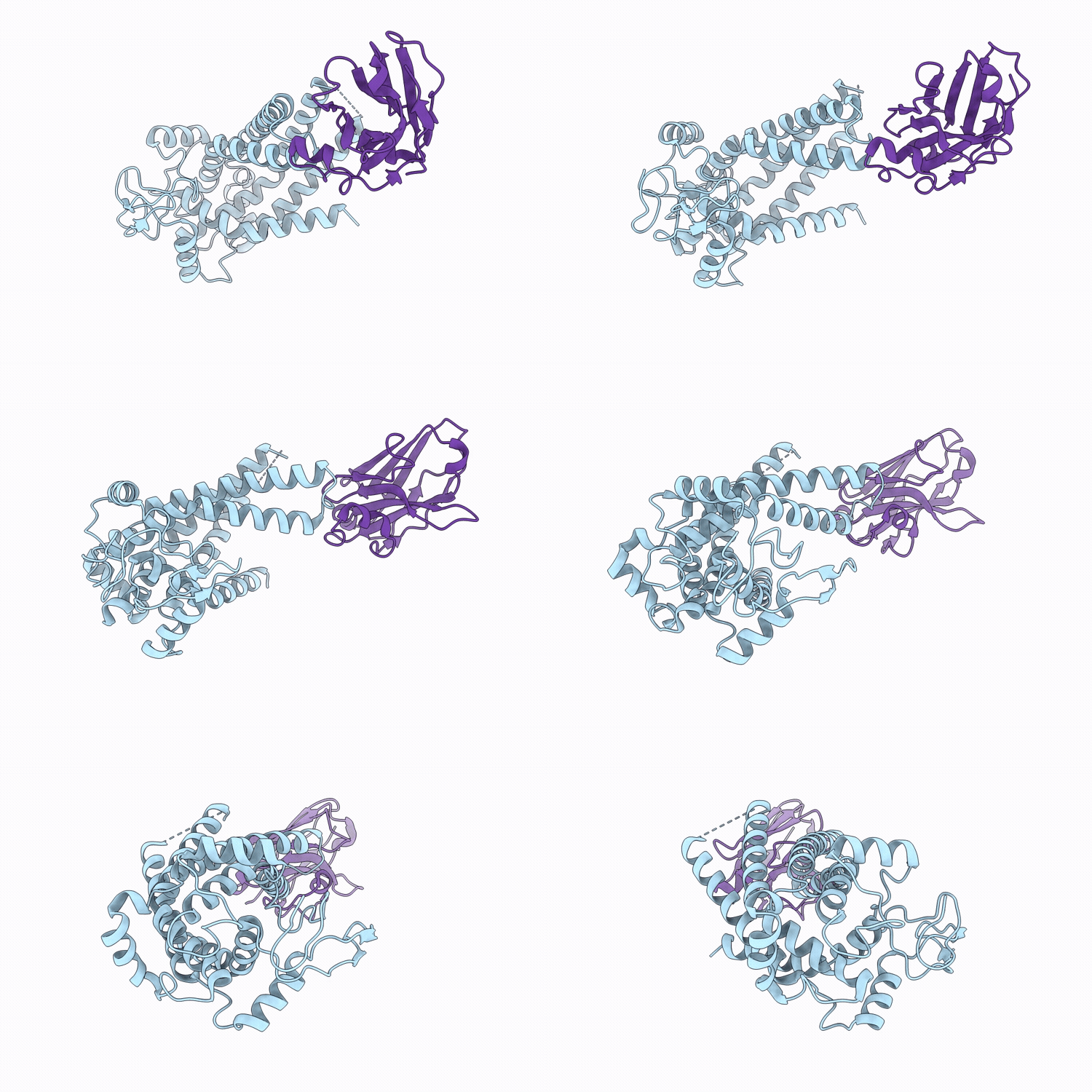
12PB image
Deposition Date 2026-04-14
Release Date 2026-05-13
Last Version Date 2026-07-08
Entry Detail
PDB ID:
12PB
Title:
Single particle cryo-EM structure of human MTCH2 (hyperactive mutant K25E Y235A V238D)
Biological Source:
Source Organism(s):
Method Details:
Experimental Method:
Resolution:
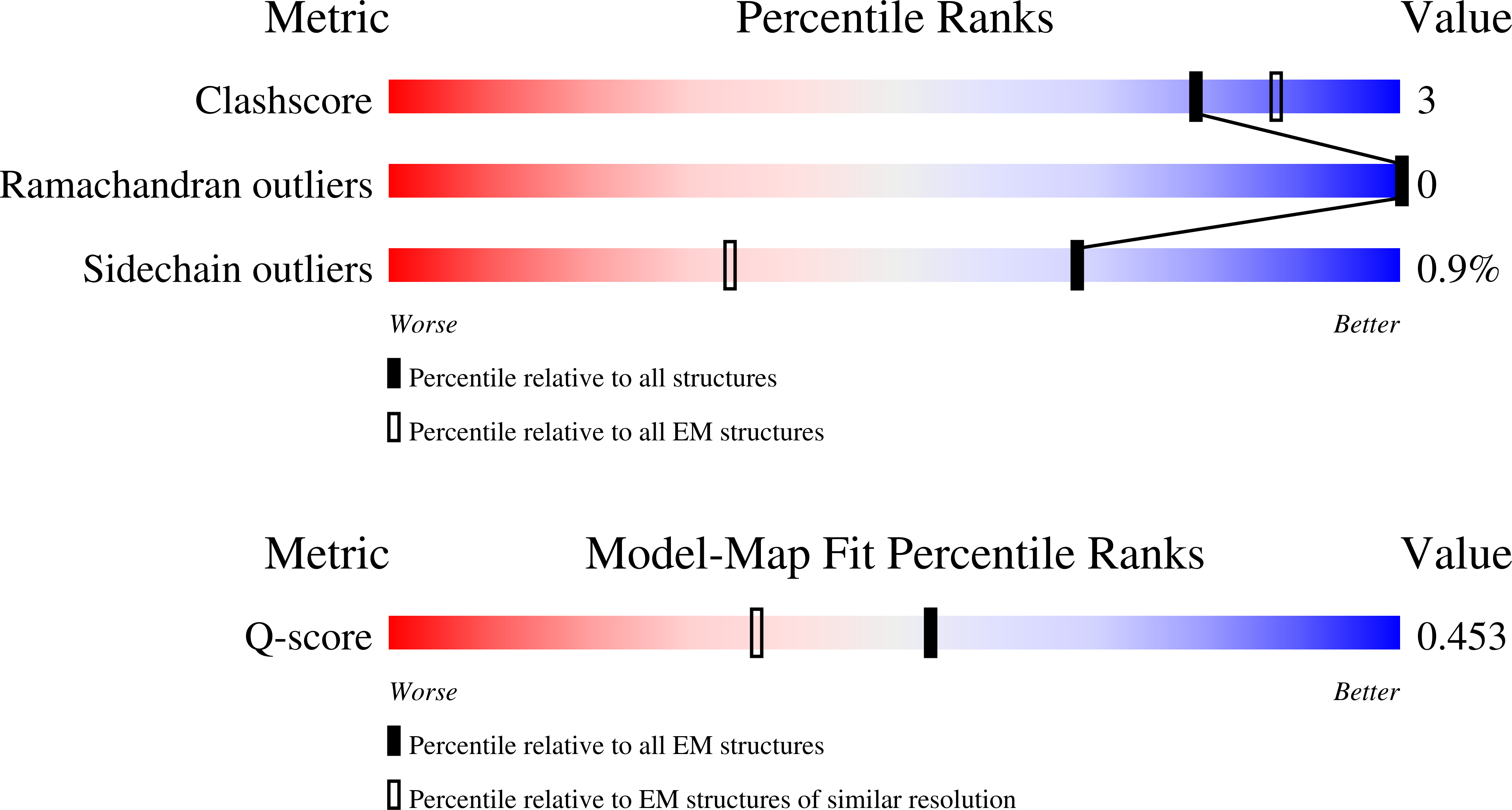
3.10 Å
Aggregation State:
PARTICLE
Reconstruction Method:
SINGLE PARTICLE
Macromolecular Entities
Structural Superimposition Protein Blast
Polymer Type:polypeptide(L)
Molecule:Mitochondrial carrier homolog
Gene (Uniprot):UCP1, MTCH2
Mutagens:K25E,Y235A,V238D,L199V,A200Y,T226A
Chain IDs:B (auth: A)
Chain Length:304
Number of Molecules:1
Biological Source:Homo sapiens
Polymer Type:polypeptide(L)
Molecule:UCP1 Nanobody
Chain IDs:A (auth: B)
Chain Length:127
Number of Molecules:1
Biological Source:synthetic construct
Ligand Molecules
Primary Citation
Structural evolution of the MTCH family of mitochondrial insertases.
Sci Adv 12 eaeh2957 eaeh2957 (2026)
PMID: 42308315 DOI: 10.1126/sciadv.aeh2957

Abstact

We demonstrate that MTCH2 is the defining member of a large family of mitochondrial outer membrane (OM) insertases. MTCH insertases are conserved across holozoa and have diverged from the solute carrier 25 transporters. The cryoelectron microscopy structure of the 33-kilodalton human MTCH2 revealed that evolution of its insertase activity required loss of a transmembrane helix, which created a lipid-accessible hydrophilic groove stabilized by its unique, structured C terminus. Mutational analyses showed that MTCH insertase activity is attenuated, while experimental structures and reconstitution of hyperactive mutants demonstrated that the hydrophobicity, charge, and size of the residues that line its groove regulated MTCH function. Leveraging the MTCH2 structure, we identified the plant OM insertase and proposed a universal mechanism for OM insertion across all kingdoms of life.

Legend

Protein

Chemical

Disease

Primary Citation of related structures
Feedback Form
Name
Email
Institute
Feedback