

12JP image
Deposition Date 2026-04-08
Release Date 2026-06-10
Last Version Date 2026-06-10
Entry Detail
PDB ID:
12JP
Keywords:
Title:
Structural determination of lipid-bound Factor VIII
Biological Source:
Source Organism(s):
Homo sapiens (Taxon ID: 9606)
Expression System(s):
Method Details:
Experimental Method:
Resolution:
3.46 Å
Aggregation State:
PARTICLE
Reconstruction Method:
SINGLE PARTICLE
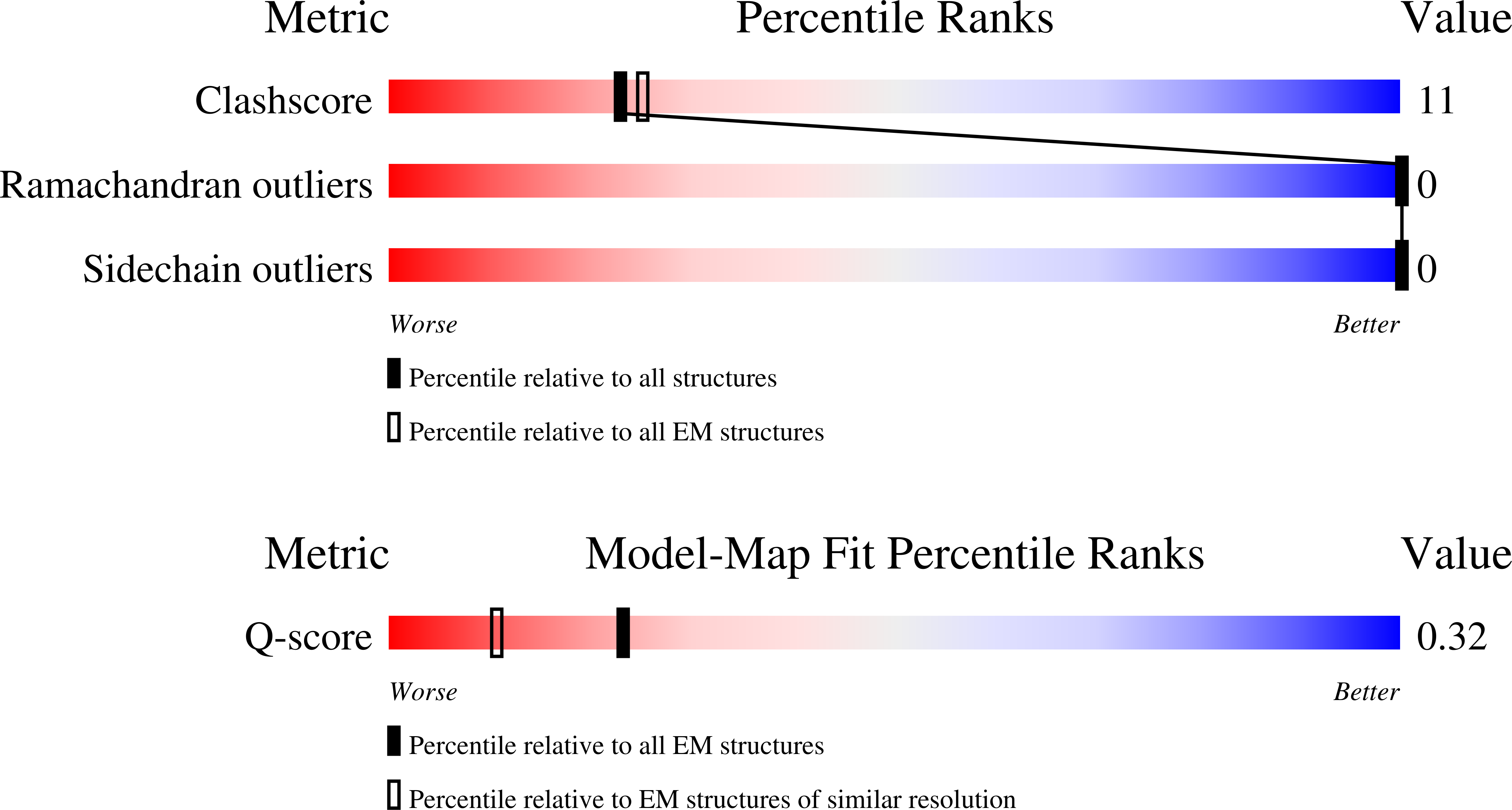
Macromolecular Entities
Structures with similar UniProt ID
Protein Blast
Polymer Type:polypeptide(L)
Molecule:Coagulation factor VIII
Gene (Uniprot):F8
Chain IDs:A
Chain Length:2332
Number of Molecules:1
Biological Source:Homo sapiens
Primary Citation
Structural determination of lipid-bound Factor VIII.
J.Thromb.Haemost. ? ? ? (2026)
PMID: 42202884 DOI: 10.1016/j.jtha.2026.05.021

Abstact

BACKGROUND: Coagulation factor (F)VIII is the inactive precursor of FVIIIa, an essential component of the intrinsic tenase complex. Despite numerous structures of recombinant FVIII in solution, the structural basis of the procofactor-membrane interface remains poorly defined. Traditional liposome platforms require special grids and often suffer from heterogeneous particle distribution and overcrowding, precluding high-resolution single-particle analysis (SPA), while membrane mimetics, nanodiscs, are too planar posing significant biophysical challenges. OBJECTIVES: To establish a reproducible methodology for structural determination of membrane-bound coagulation factors and resolve the procofactor FVIII-lipid interface. METHODS: We used methylated branched lipids to compensate for membrane planarity and employed cryo-EM to solve the structure of FVIII bound to lipids. RESULTS: We resolved the cryo-EM structure of procofactor FVIII on nanodiscs and liposomes lipid membranes at 3.46 - 3.56 A, respectively. Structural analysis reveals a definitive tilted docking orientation where both C domains mediate shallow interfacial insertion with the C2 domain acts as the primary anchor and the C1 domain serves as a secondary tether. This spatial arrangement structurally explains the high clinical severity of C2-interface mutations compared to more moderate C1 surface mutations. CONCLUSION: Methylated branched lipids enable rapid, high-resolution characterization of membrane-associated clotting factors. This structure provides the first definitive template for the FVIII-lipid interface, serving as a benchmark for future studies on tenase complex assembly.

Legend

Protein

Chemical

Disease

Primary Citation of related structures
Feedback Form
Name
Email
Institute
Feedback