

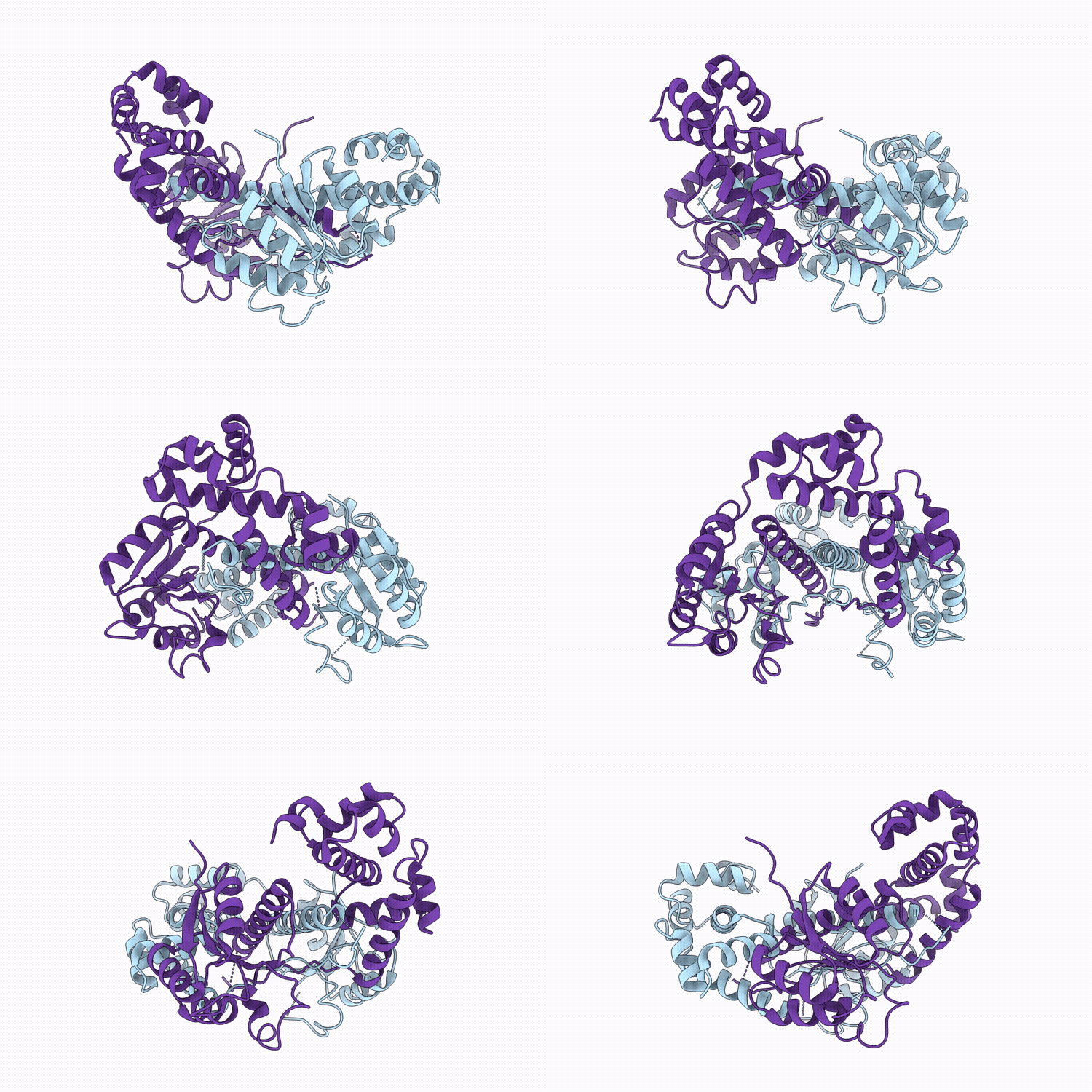
12AW image
Deposition Date 2026-03-24
Release Date 2026-06-17
Last Version Date 2026-06-17
Entry Detail
PDB ID:
12AW
Title:
Response regulator domains of BT4124 Hybrid Two-Component System from Bacteroides thetaiotaomicron
Biological Source:
Source Organism(s):
Method Details:
Experimental Method:
Resolution:
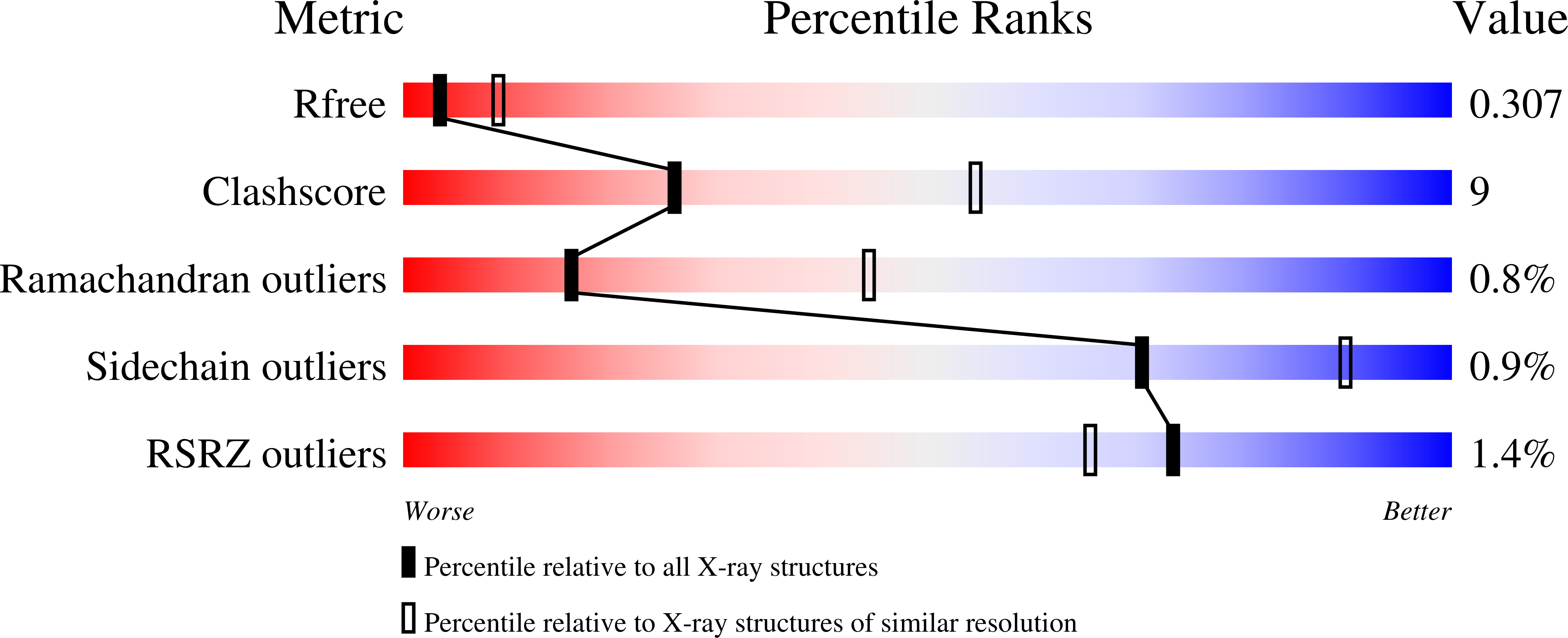
2.90 Å
R-Value Free:
0.30
R-Value Work:
0.23
R-Value Observed:
0.23
Space Group:
P 63
Macromolecular Entities
Protein Blast
Polymer Type:polypeptide(L)
Molecule:HYBRID TWO-COMPONENT SYSTEM P
Chain IDs:A, B
Chain Length:279
Number of Molecules:2
Biological Source:Bacteroides thetaiotaomicron
Ligand Molecules
Primary Citation
Constitutive activation of a hybrid two-component regulator reveals cross-regulation of polysaccharide utilization genes in Bacteroides.
J.Biol.Chem. ? 113195 113195 (2026)
PMID: 42190813 DOI: 10.1016/j.jbc.2026.113195

Abstact

Human gut microbes, such as Bacteroides, rely on specialized gene clusters known as polysaccharide utilization loci (PULs) to metabolize diverse dietary and host-derived glycans. A major class of transcription regulators of these PULs is the hybrid two-component system (HTCS) containing a histidine sensor kinase and a response regulator within a single transmembrane polypeptide chain. Characterizing HTCS-mediated PUL regulation is often challenging, because the specific glycan signals required to activate most HTCSs remain unknown. Here, we characterized structural details of a highly conserved HTCS activation mechanism and developed a universal activation strategy by mutating the interdomain latch motif that inhibits the DNA-binding activities. Using the response regulator portion of BT4124 from Bacteroides thetaiotaomicron as a model system, crystallographic analyses reveal a "closed" inactive conformation anchored by a hydrogen-bond network formed by the conserved latch residues between the receiver and DNA-binding domains. Molecular dynamic simulation with the deep-learning BioEmu shows that the "AD" mutation of the latch residues destabilizes the inhibitory interface, shifting the conformation equilibrium predominantly to an active, "open" conformation. This constitutively active variant, BT4124R(AD), allows us to map specific DNA-binding sites within the potential regulated promoters in vitro and characterize transcription regulation in cells. Induced expression of BT4124R(AD) not only down-regulates local homogalacturonan (HG) utilization genes, but also cross-represses multiple PULs associated with other homogalacturonan-related pectic glycans. These findings highlight a complex cross-regulatory network governing pectin degradation and establish the targeted latch mutation as a potential broadly applicable tool for deciphering the regulatory networks of HTCSs in Bacteroides.

Legend

Protein

Chemical

Disease

Primary Citation of related structures
Feedback Form
Name
Email
Institute
Feedback