

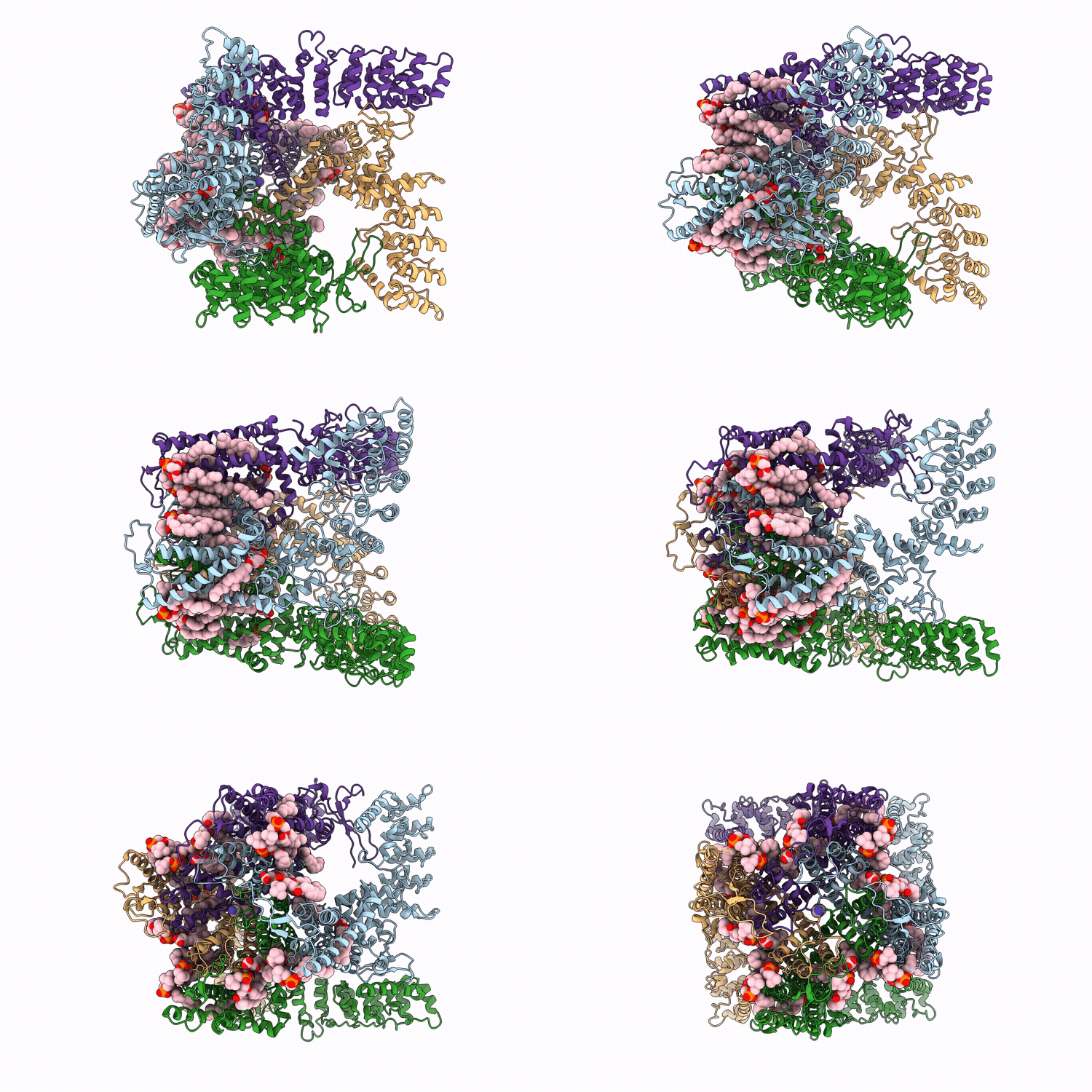
12AG image
Deposition Date 2026-03-23
Release Date 2026-06-10
Last Version Date 2026-06-10
Entry Detail
PDB ID:
12AG
Title:
Spermine-blocked open-state cryo-EM structure of human TRPV6 channel in cNW30 nanodiscs
Biological Source:
Source Organism(s):
Homo sapiens (Taxon ID: 9606)
Expression System(s):
Method Details:
Experimental Method:
Resolution:
3.48 Å
Aggregation State:
PARTICLE
Reconstruction Method:
SINGLE PARTICLE
Macromolecular Entities
Structures with similar UniProt ID
Protein Blast
Polymer Type:polypeptide(L)
Molecule:Transient receptor potential
Gene (Uniprot):TRPV6
Chain IDs:A, B, C, D
Chain Length:612
Number of Molecules:4
Biological Source:Homo sapiens
Primary Citation
Open-channel block of human TRPV6 by polyamine spermine.
Nat Commun 17 ? ? (2026)
PMID: 42204171 DOI: 10.1038/s41467-026-73653-5

Abstact

Polyamines are organic cations that are present at sub-millimolar concentrations in the cytoplasm and extracellular fluids and serve as versatile modulators of TRP channels, fine-tuning their functions in physiological and pathological contexts, including pain, inflammation and cancer. Despite extensive functional studies, the structural basis by which polyamines regulate TRP channels remains unclear. Here, we combine calcium imaging, electrophysiology, cryo-electron microscopy, mutagenesis and molecular dynamics simulations to study regulation of human TRPV6 by polyamine spermine. Our functional experiments demonstrate voltage-dependent block of TRPV6-mediated currents by spermine. Cryo-electron microscopy reveals that spermine binds in the open pore of TRPV6, extending along the pore axis through the selectivity filter and central cavity. Mutagenesis and molecular dynamics simulations confirm the main binding site of spermine in the selectivity filter and suggest a stepwise molecular mechanism of channel block that includes two more binding sites in the pore transiently occupied by spermine. Our findings enrich the knowledge about TRPV6 regulation by endogenous factors and provide details of the ion channel blocking mechanism that can be explored for inhibition of this channel in disease conditions.

Legend

Protein

Chemical

Disease

Primary Citation of related structures
Feedback Form
Name
Email
Institute
Feedback