

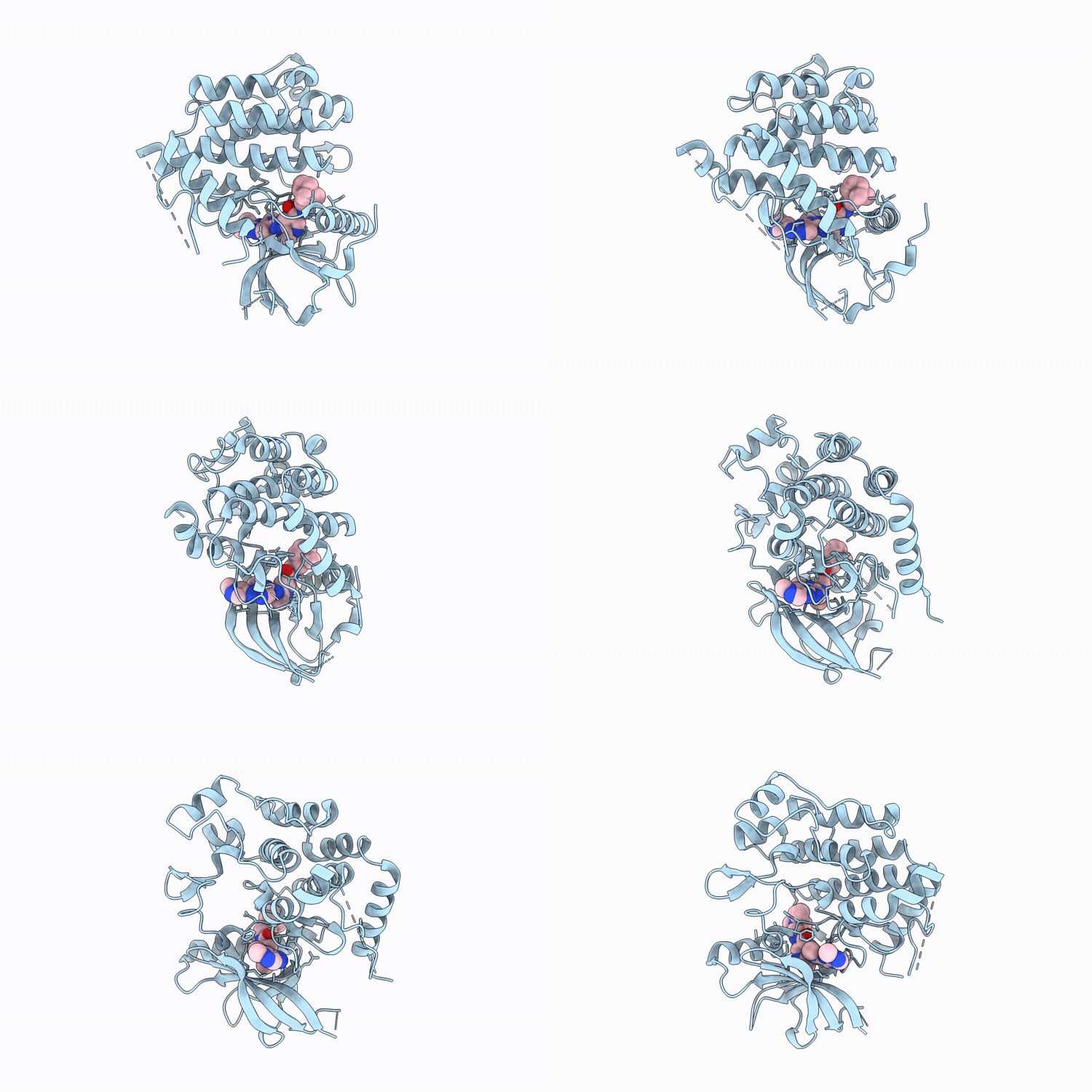
11UE image
Deposition Date 2026-03-13
Release Date 2026-05-20
Last Version Date 2026-05-20
Entry Detail
PDB ID:
11UE
Keywords:
Title:
Structure of PDGFRb Kinase Domain Bound to JNJ-PDGFRBi-1
Biological Source:
Source Organism(s):
Homo sapiens (Taxon ID: 9606)
Expression System(s):
Method Details:
Experimental Method:
Resolution:
2.32 Å
R-Value Free:
0.23
R-Value Work:
0.19
R-Value Observed:
0.19
Space Group:
P 31 2 1

Macromolecular Entities
Structures with similar UniProt ID
Protein Blast
Polymer Type:polypeptide(L)
Molecule:Platelet-derived growth facto
Gene (Uniprot):PDGFRB
Chain IDs:A
Chain Length:429
Number of Molecules:1
Biological Source:Homo sapiens
Ligand Molecules
Primary Citation
Identification of an Inhaled Pulmonary Selective PDGFR Inhibitor with Sustained Target Engagement.
J Aerosol Med Pulm Drug Deliv ? 19412711261449635 19412711261449635 (2026)
PMID: 42100928 DOI: 10.1177/19412711261449635

Abstact

BACKGROUND: Inhalation of corticosteroids, bronchodilators, antivirals, and antibiotics is well established to treat a variety of pulmonary diseases; however, no inhaled receptor tyrosine kinase (RTK) inhibitors have so far been approved for clinical use despite the key role of RTKs in several pulmonary diseases. We describe a detailed roadmap to identify, optimize, and derisk an inhaled platelet-derived growth factor receptor (PDGFR) inhibitor with extended activity in the lungs. METHODS: In this study, stable isotopes were used to model receptor turnover in vivo, a high-resolution crystal structure was generated to support structure-based drug design and enhancement of both potency and specificity, and critical physicochemical parameters that drive lung retention were identified. Since some RTK inhibitors are linked to adverse interstitial lung disease in humans, we developed a cell painting assay that helped to eliminate compounds with non-specific effects. RESULTS: We describe the steps we took to optimize the conditions for nebulized delivery to the deep lung and confirmed that >90% of PDGFR inhibition was maintained for at least 6 hours after nebulization of a 1 mg/kg dose in rats. Finally, modeling was used to calculate the projected human dose for this molecule. CONCLUSIONS: While the focus of this article is on the identification of an inhaled PDGFR inhibitor, our approach to develop a highly potent inhaled compound that has extended lung retention to minimize systemic effects could be adopted for other RTK drug discovery or lung targeting approaches.

Legend

Protein

Chemical

Disease

Primary Citation of related structures
Feedback Form
Name
Email
Institute
Feedback