

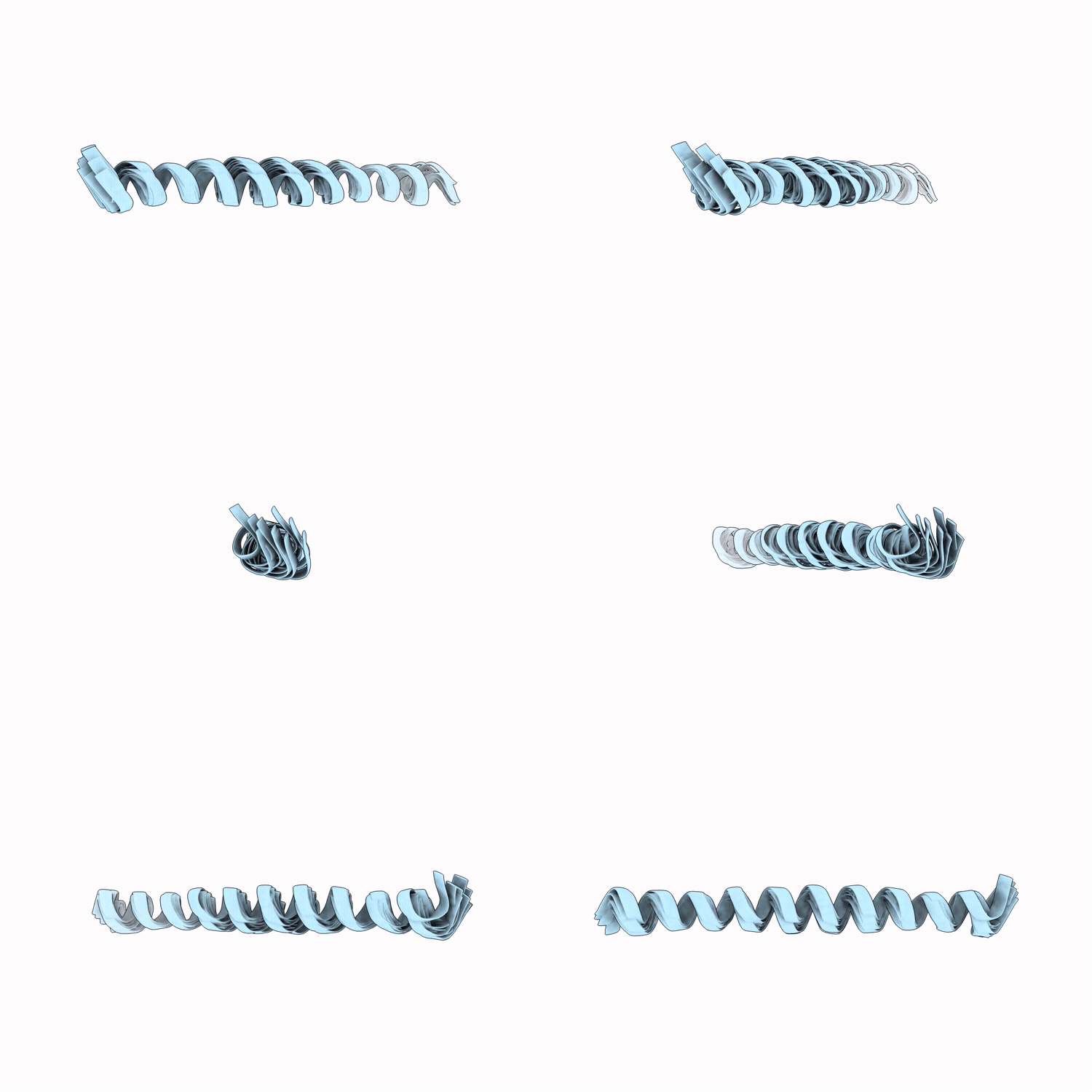
11TJ image
Deposition Date 2026-03-12
Release Date 2026-04-22
Last Version Date 2026-04-22
Entry Detail
PDB ID:
11TJ
Title:
NMR solution structure of Manduca sexta moricin-6
Biological Source:
Source Organism(s):
Manduca sexta (Taxon ID: 7130)
Method Details:
Experimental Method:
Conformers Calculated:
100
Conformers Submitted:
10
Selection Criteria:
structures with the lowest energy

Macromolecular Entities
Polymer Type:polypeptide(L)
Molecule:Moricin-6
Gene (Uniprot):O3G_MSEX006798
Chain IDs:A
Chain Length:38
Number of Molecules:1
Biological Source:Manduca sexta
Ligand Molecules
Primary Citation
Dipeptidyl peptidase IV processing activates Manduca sexta pro-moricin-6: structural basis of enhanced antimicrobial activity.
Insect Biochem. Mol. Biol. 191 104553 104553 (2026)
PMID: 41941917 DOI: 10.1016/j.ibmb.2026.104553

Abstact

Antimicrobial peptides (AMPs) are effectors of innate immunity, which directly kill invading microbes. In insects, alpha-helical AMPs such as moricins are synthesized as inactive precursors requiring proteolytic activation by dipeptidyl peptidase IVs (DPP4s). However, the biochemical basis and functional consequence of this process remain poorly understood. Here, we identify and characterize two DPP4 enzymes from Manduca sexta, DPP4A and DPP4B. Both genes were cloned and expressed in baculovirus-infected Sf9 cells. The recombinant enzymes were purified and biochemically characterized. DPP4A and DPP4B displayed distinct catalytic properties, with K(M) at 496 and 102 muM Ala-Pro-p-nitroanilide, V(max) at 30 and 91 U/mug, and optimal pH at 8.0 and 9.0, respectively. Expression profiling revealed immune inducibility in the fat body following a bacterial challenge, while DPP4B showed elevated expression in the midgut of larvae and pupae, suggesting roles in immunity, digestion, and development. To examine the functional significance of DPP4-mediated processing, we analyzed the activation of M. sexta pro-moricin-6, which has an N-terminal APEP tetrapeptide. Removal of this pro-region by DPP4A or DPP4B generated mature moricin-6 and resulted in a approximately 10-fold increase in antimicrobial activity against Bacillus megaterium, confirming sequential cleavage of two Xaa-Pro dipeptides as the activation mechanism. Structural analyses by solution NMR showed that mature moricin-6 adopts a stable, continuous alpha-helix, whereas pro-moricin-6 exhibits a localized helical distortion near the N-terminus. Molecular dynamics simulation of the peptides in a POPC membrane further demonstrated that proteolytic processing stabilizes an extended amphipathic alpha-helix optimized for antimicrobial function. Together, these results establish the biochemical and biological roles of DPP4A and DPP4B in AMP activation and reveal how limited proteolysis precisely regulates alpha-helical AMP structure and potency in insects.

Legend

Protein

Chemical

Disease

Primary Citation of related structures
Feedback Form
Name
Email
Institute
Feedback