

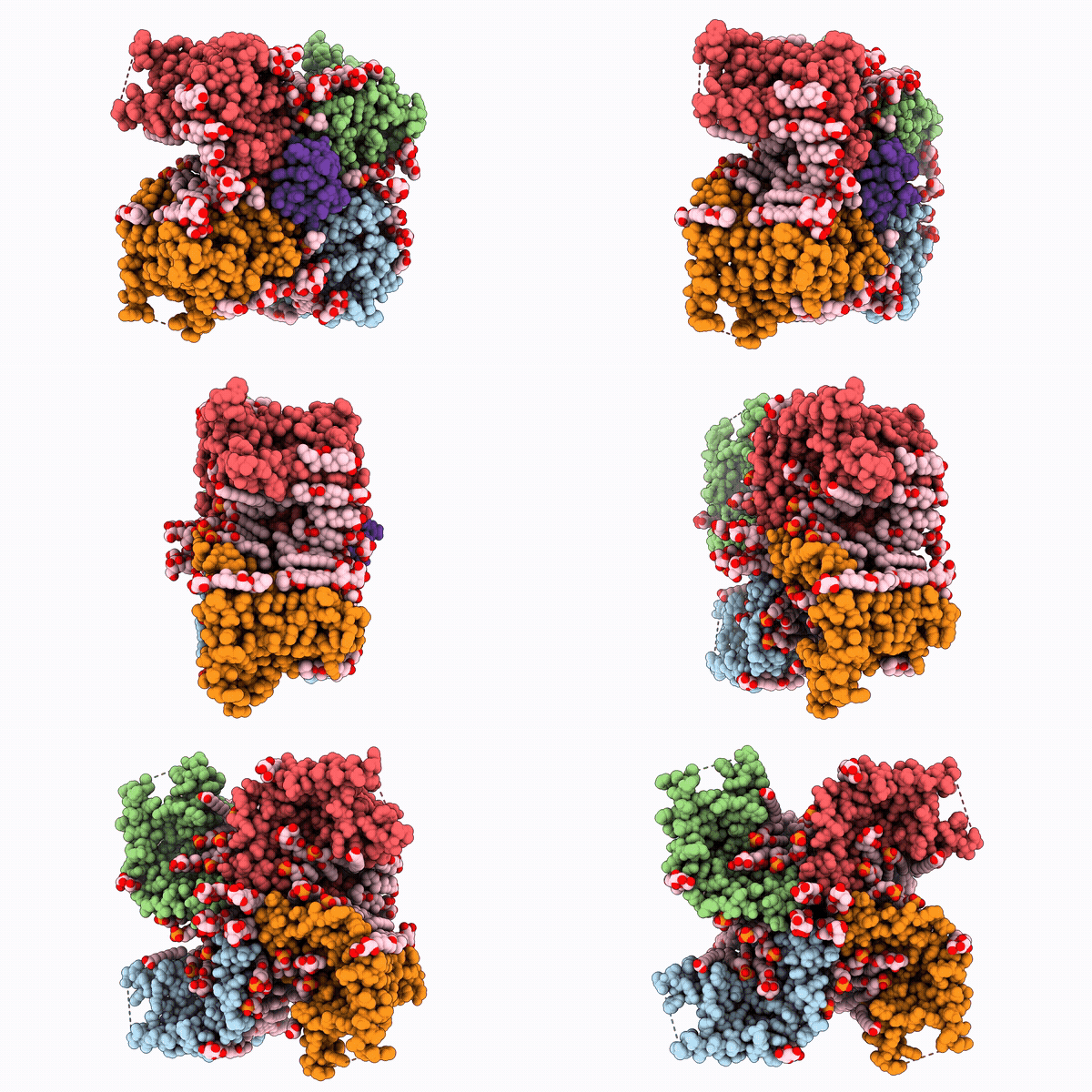
11DF image
Deposition Date 2026-02-18
Release Date 2026-09-23
Last Version Date 2026-09-23
Entry Detail
PDB ID:
11DF
Title:
Human Slo1-Iberiotoxin complex under divalent chelated condition - gating ring masked map
Biological Source:
Source Organism(s):
Expression System(s):
Method Details:
Experimental Method:
Resolution:
3.10 Å
Aggregation State:
PARTICLE
Reconstruction Method:
SINGLE PARTICLE
Macromolecular Entities
Polymer Type:polypeptide(L)
Molecule:Calcium-activated potassium c
Gene (Uniprot):KCNMA1
Chain IDs:A, B, C, D
Chain Length:0
Number of Molecules:4
Biological Source:Homo sapiens
Polymer Type:polypeptide(L)
Molecule:Potassium channel toxin alpha
Chain IDs:E (auth: Y)
Chain Length:0
Number of Molecules:1
Biological Source:Hottentotta tamulus
Modified Residue
Compound ID Chain ID Parent Comp ID Details 2D Image
PCA E GLN modified residue
Primary Citation
Structural underpinnings of human Slo1 inhibition by scorpion and fungal toxins.
Proc.Natl.Acad.Sci.USA 123 e2606537123 e2606537123 (2026)
PMID: 42735318 DOI: 10.1073/pnas.2606537123

Abstact

Slo1 channels regulate key electrochemical signaling events in a variety of excitable and nonexcitable cells. Here, we have investigated the mechanisms by which distinct small molecules inhibit human Slo1 (hSlo1) channel activity using single-particle cryo-EM, liposome flux, and toxin-binding assays. We find that unlike classical permeation blockers like scorpion toxins, indole diterpene (ID) class of fungal mycotoxins, paxilline and penitrem A, are ensconced in a binding pocket, deep within the putatively closed hSlo1 pore and sterically restrict its opening. Binding of paxilline to its gating inhibition site dramatically slows dissociation of a fluorescent charybdotoxin derivative, via an allosteric mechanism that likely involves a key residue on the S5 helix (W246). Although four paxilline molecules may concurrently engage the hSlo1 pore, binding of <4 molecules is sufficient for efficacious inhibition of channel opening but inefficient at arresting toxin dissociation. We also find evidence that under divalent and ID free conditions, the ID binding pocket of hSlo1 is occluded by lipids that extend into the hSlo1 pore lumen through interhelical crevices that become constricted in the divalent bound open state. These lipids may not only competitively regulate ID binding but also tune the energetics of channel gating, sterically or by altering the hydration state of the pore vestibule. Our study provides a framework to understand fundamental Slo1 gating mechanisms and aid future developments of therapeutically beneficial small molecule Slo1 inhibitors.

Legend

Protein

Chemical

Disease

Primary Citation of related structures
Feedback Form
Name
Email
Institute
Feedback