

11CN image
Deposition Date 2026-02-17
Release Date 2026-06-03
Last Version Date 2026-06-03
Entry Detail
PDB ID:
11CN
Title:
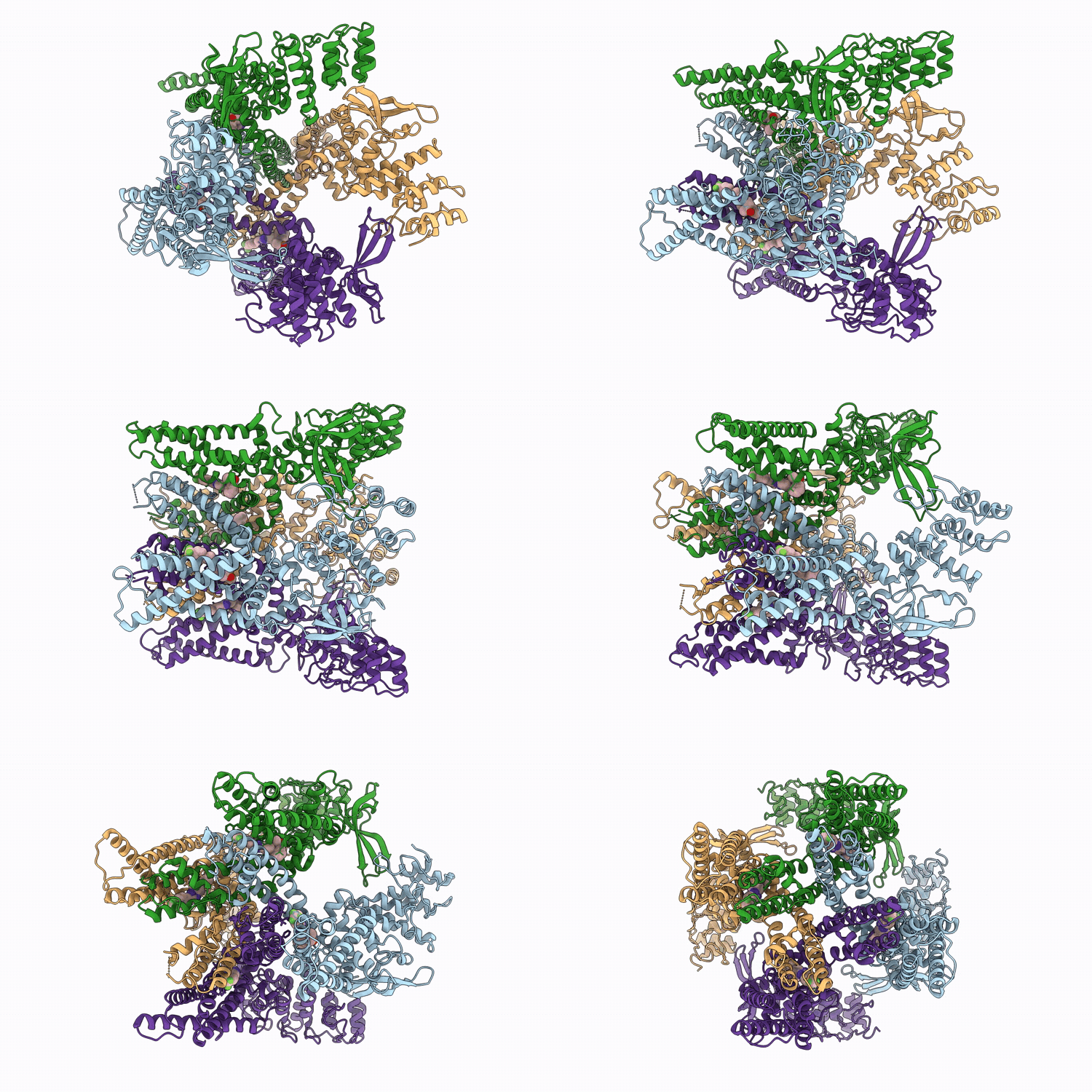
Structure of human TRPV1 in complex with Mavatrep
Biological Source:
Source Organism(s):
Homo sapiens (Taxon ID: 9606)
Expression System(s):
Method Details:
Experimental Method:
Resolution:
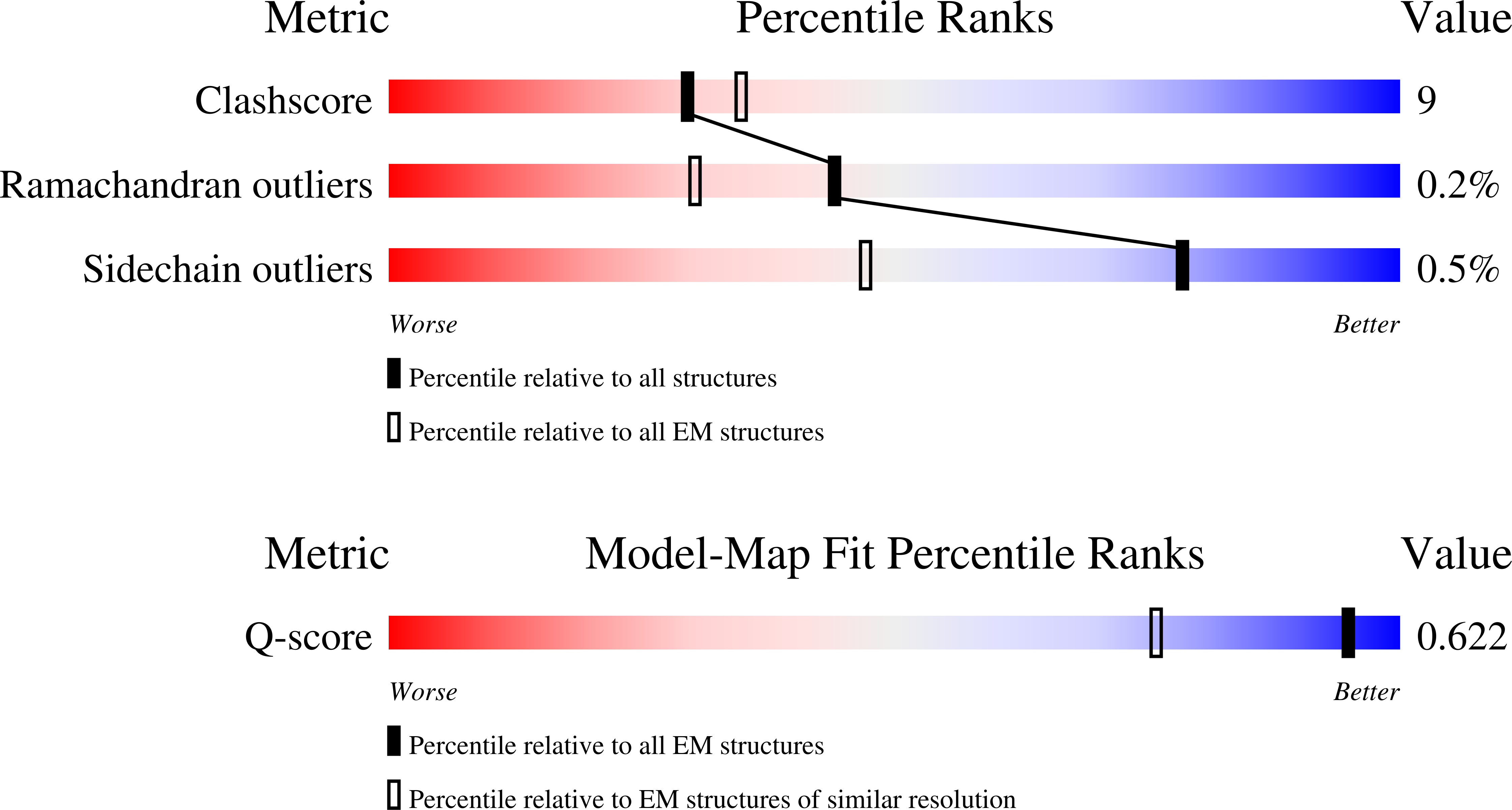
2.37 Å
Aggregation State:
PARTICLE
Reconstruction Method:
SINGLE PARTICLE
Macromolecular Entities
Structures with similar UniProt ID
Protein Blast
Polymer Type:polypeptide(L)
Molecule:Transient receptor potential
Gene (Uniprot):TRPV1
Chain IDs:A, B (auth: C), C (auth: B), D
Chain Length:1100
Number of Molecules:4
Biological Source:Homo sapiens
Ligand Molecules
Primary Citation
TRPV1 antagonism occurs through diverse structural mechanisms.
Biorxiv ? ? ? (2026)
PMID: 42094379 DOI: 10.64898/2026.04.27.721197

Abstact

Transient receptor potential vanilloid 1 (TRPV1) ion channel mediates thermosensation and pain and is a target for non-addictive analgesics; however, clinical candidates have failed due to thermoregulatory side effects. Limited structural data for human TRPV1 (hTRPV1) bound to clinically relevant antagonists has constrained mechanistic insight. Using chemoinformatics-informed cryo-EM and BRET assays, we define the structural basis of antagonism across diverse chemotypes, including failed clinical compounds. A structure of hTRPV1 bound to 6-iodo-dihydrocapsaicin shows how a single substitution converts an agonist into an antagonist. Additional structures with Asivatrep, Mavatrep, and JNJ-17203212 reveal vanilloid pocket plasticity and divergent interaction networks, including lipid co-binding. Despite this diversity, antagonists converge on a conserved inhibited state, showing high potency is maintained across flexible binding modes. These findings redefine our understanding of hTRPV1 antagonism and illustrate how chemically diverse ligands stabilize an inhibited state in polymodal ion channels, laying groundwork for next-generation analgesics with improved safety.

Legend

Protein

Chemical

Disease

Primary Citation of related structures
Feedback Form
Name
Email
Institute
Feedback