

10ZF image
Deposition Date 2026-02-12
Release Date 2026-07-01
Last Version Date 2026-07-01
Entry Detail
PDB ID:
10ZF
Keywords:
Title:
Structure of c-Cbl bound to compound 33
Biological Source:
Source Organism(s):
Expression System(s):
Method Details:
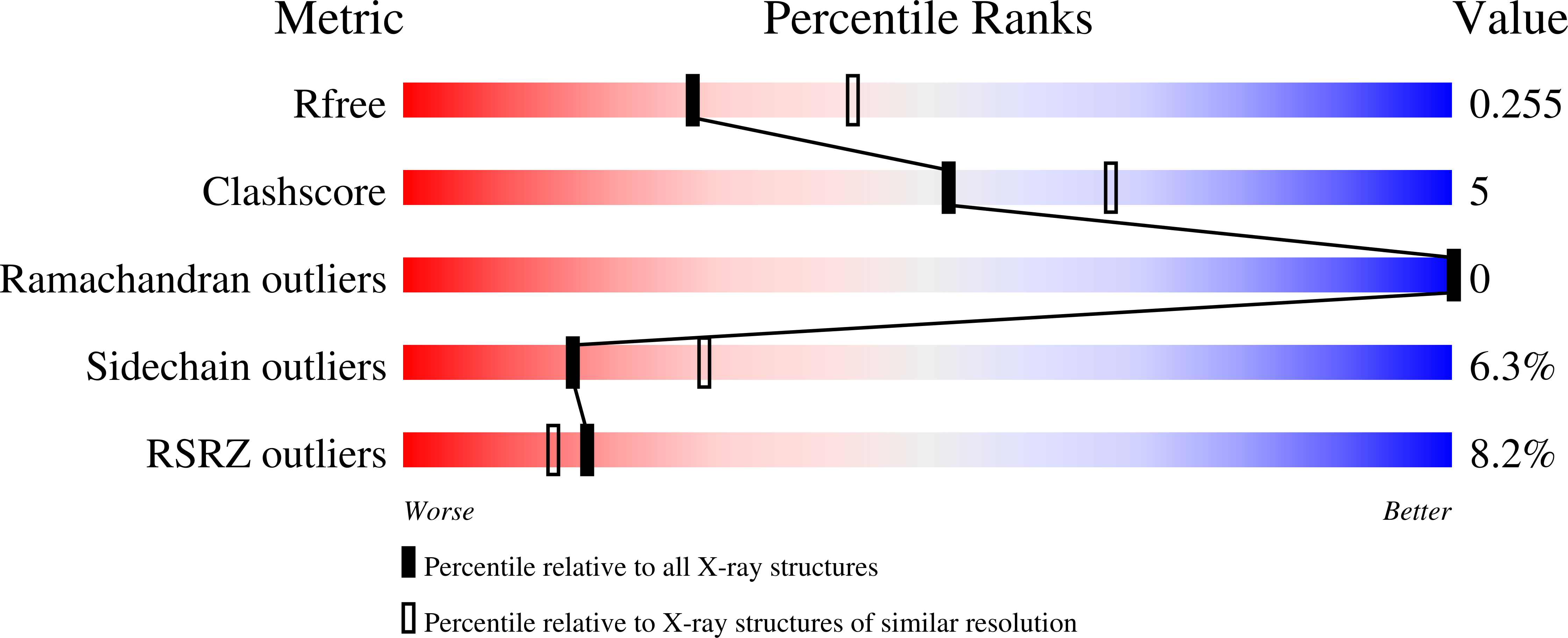
Experimental Method:
Resolution:
2.39 Å
R-Value Free:
0.25
R-Value Work:
0.19
R-Value Observed:
0.20
Space Group:
C 1 2 1
Macromolecular Entities
Protein Blast
Polymer Type:polypeptide(L)
Molecule:Glutathione S-transferase cla
Gene (Uniprot):CBL
Chain IDs:A
Chain Length:628
Number of Molecules:1
Biological Source:Schistosoma japonicum, Homo sapiens
Primary Citation

Abstact

In the preceding work in this issue (10.1021/acsmedchemlett.6c00103), we described our initial structure-activity relationship (SAR) optimization that led to a pan-Cbl inhibitor (6) that demonstrated efficacy in a mouse CT26 syngeneic model. Unfortunately, attempts to improve TGI with higher doses of 6 resulted in poor tolerability which we attributed to a lack of selectivity between Cbl-b and c-Cbl ( approximately 2x by surface plasmon resonance (SPR)). Herein, we report our continued efforts that led to a breakthrough in achieving Cbl-b selectivity (up to 37x). The lead compound 33 demonstrated 14x selectivity against c-Cbl by SPR, was potent in a PBMC cell assay, and showed good oral exposure in mice. When tested in a CT26 model, 33 displayed improved tumor growth inhibition compared to our previously reported pan-Cbl inhibitor 6 (TGI 145% vs 82%). More importantly, 33 was better tolerated than 6, supporting our hypothesis that a selective Cbl-b inhibitor could be advantageous relative to a pan-Cbl inhibitor.

Legend

Protein

Chemical

Disease

Primary Citation of related structures
Feedback Form
Name
Email
Institute
Feedback